
Tour du Vieux Chaillol in 5 days
 Hard
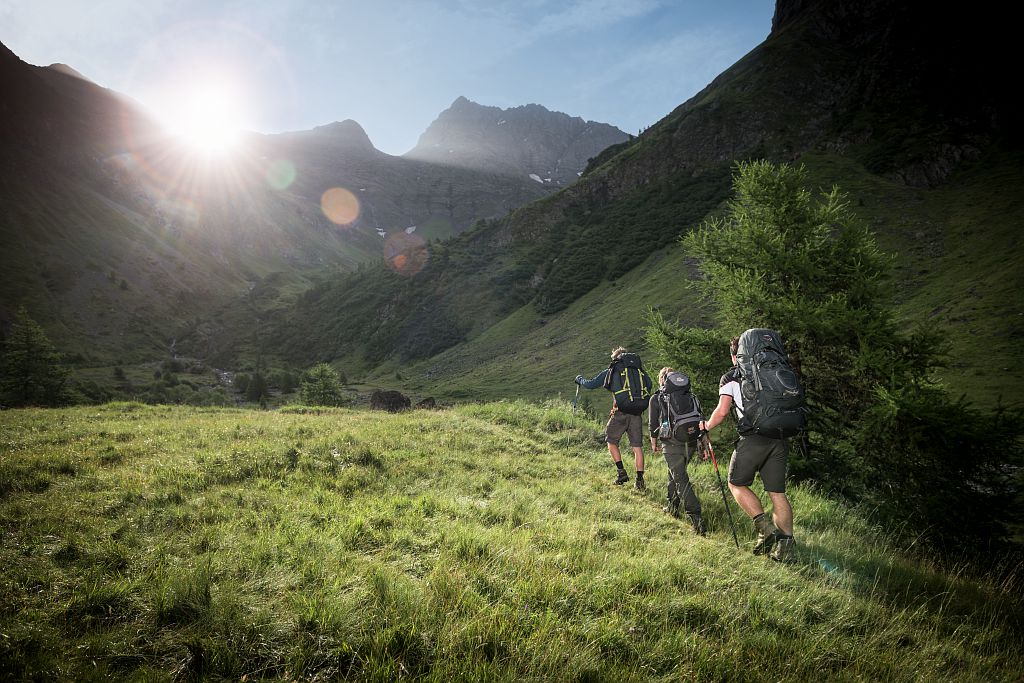
HardHere it is presented in five legs. This long hiking trail skirts the massif, straddles the Champsaur and the Valgaudemar and has its highest point in Vieux Chaillol at an altitude of 3163 m. It links up to the GR54 and has characteristics that are more physical in two spots: Villar-Loubière in the Valgaudemar, and the Pre de la Chaumette refuge.
5 steps
Description
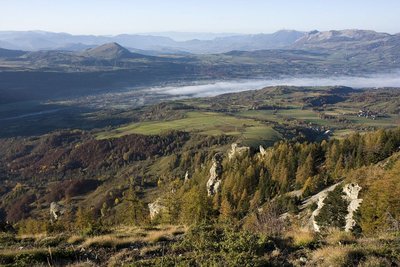
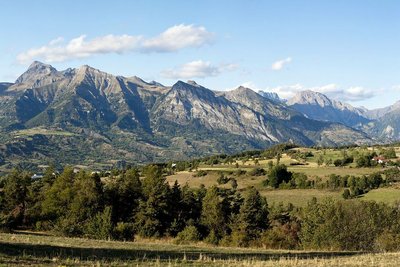
From the hamlet of Paris, continue along the irrigation canal and enter the long narrow Valgaudemar valley. From Villar-Loubière to the Pré de la Chaumettre hut via the Vallonpierre, Gouiran and La Vallette passes, the itinerary gains height as does the landscape with the magnificent Gioberney glacial cirque. This section is in common with the GR54 trail. Greater effort is necessary but the reward is in the setting and the high mountain atmosphere. This leg is situated almost entirely in the Ecrins National Park. Then the Champsaur will be then be walked on a ledge. From the Pré de la Chaumette hut, in the Champoleon valley, go along the impetuous Drac Blanc stream that leads into a bleak valley. From an east-west orientation, it bends to widen out and become north-south oriented, giving way to green pastures and hamlets. It is a wide valley that is influenced by the Mediterranean, and enchanting due to its more rural and mountainous landscape, its hamlets and villages and its light larch forests.
- Departure : Hameau des Paris, Saint-Jacques-en-Valgaudemar
- Arrival : Hameau des Paris, Saint-Jacques-en-Valgaudemar
- Towns crossed : Saint-Jacques-en-Valgodemard, Saint-Maurice-en-Valgodemard, Villar-Loubière, La Chapelle-en-Valgaudemar, Champoléon, Saint-Jean-Saint-Nicolas, Saint-Michel-de-Chaillol, Saint-Bonnet-en-Champsaur, Bénévent-et-Charbillac, Les Infournas, La Motte-en-Champsaur, Les Costes, and Chauffayer
45 points of interest
Le canal des Herbeys - Olivier Warluzelle - PNE  Vernacular heritage
Herbeys canal
Inhabitants of Valgaudemar have long tried to control water to compensate for dry summers. The Herbeys canal still functions and is well used. With more than 600 litres per second, it waters 289 ha in the districts of Chauffayer and St-Jacques. It is 28km long and was started and finished on the initiative of François Dupont de Poncharra des Herbeys'. It is maintained every year by the members of the users' union who spend several days cleaning out the canal as well as consolidating the vaults.
L'Olan et l'entrée de la vallée du Valgaudemar - PNE  Panorama
The Olan 'summits'
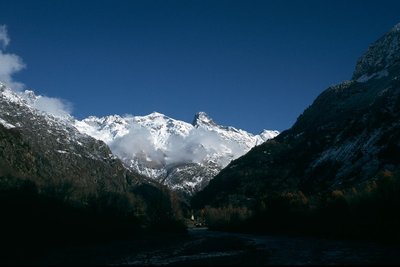
The Olan is one of the main summits of the Ecrins massif. It culminates at 3564 m and is made up of three summits the highest of which is the north summit. The central summit of the Olan was climbed for the first time on 8th July 1875, and the northern one on the 29th June 1877 by the renowned W.B.A. Coolidge and his guide Almer. With a guide, or good climbing abilities, this would be a good choice for climbing a summit in the Valgaudemar starting from the Olan hut.

 Know-how
Sundial by Rémy Potey
A real open-air museum piece in the rural landscape, the pictorial art of the sundial aims to foster silence and to be accessible to all. For walkers today and for travellers yesterday. A sundial is a call to reflection and meditation, visible in all its magnificence on religious buildings or carefully hidden, in the little streets of a mountain village. The the Hautes-Alpes department, with its sun-rich climate, has the highest concentration of this example of the people’s art. Today, through the work of the sundial maker Rémy Potey, chamois and golden eagles can be beside the imaginary birds of the mysterious and famous Zarbula, the 19th century Piedmont artist.
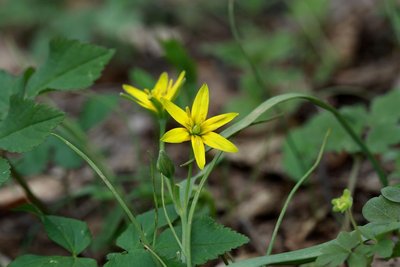
Gagée jaune - Cédric Dentant - PNE  Flora
FloraHayfields
Hayfields surround the village of La Chapelle. Unfortunately, such natural hayfields, and their flowers and insects, are more and more frequently replaced by temporary hayfields, in other words, certain years they are sowed. These prairies are still watered by the irrigation canals that are well maintained by the users with the help of the National Park. You will see the floodway of the Grande Levée canal not far from the stream as it nears the Sèveraisse. The canals are of great importance for preserving wetland flora, such as alternate-leaved golden saxifrage or yellow star-of-Bethlehem, both of which are protected species.
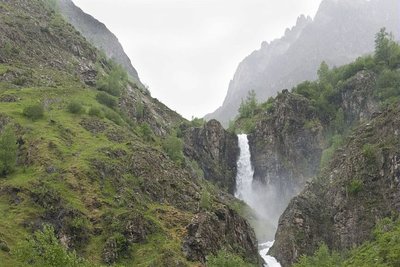
La cascade de Combefroide - Olivier Warluzelle - PNE PanoramaWaterfalls and view points over the valley
Along the itinerary, you will see the Combefroide and Casset waterfalls that are situated on the south facing slopes of the valley. The route also gives a good view to the east and the west of the Sèveraisse valley from the hamlet of Casset. Downstream, from the hamlet of Rif du Sap, a good example of a U-shaped valley is proof of shaping by the quaternary glaciers.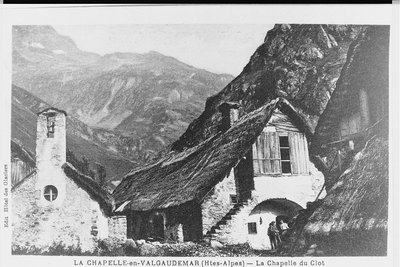
Chapelle et maisons du hameau du Clot avant l'incendie de 1934 - Jean-Claude Catelan (collection)  History
An itinerary packed with history
The Casset bridge is the oldest remaining bridge over the Sèveraisse that has not been washed away by floods. On the right bank of this magnificent "Roman" structure, the hamlet of Casset gets its name from the "casse" (large steep scree deposits at the foot of slopes) that surround it. This village, like that of Le Bourg, was partly covered by a landslide. As for Le Rif du Sap, an avalanche swept away the houses from the top of the hamlet in 1944. The hamlet of Le Clot, was flooded in 1928, and was totally abandoned in 1934 when a fire destroyed most of the dwellings.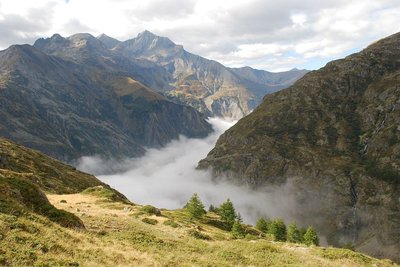
Itinéraire de Tirière vue sur la vallée de Valgaudemar - Olivier Warluzelle - PNE HistoryToponymy in the Valgaudemar area
Valgaudemar! The sound of this name resonates in our ears. Some claim that it is in reference to the valley of Mary "Gaude Marie" or "Rejoice Mary!" It is more reasonable to think that it is in reference to Gaudemar, the last king of the Burgundians (524) a Germanic tribe that invaded this area in 406...Vallis Gaudemarii can be read in texts as early as 1284. Poetic licence, legends and imagination are often red herrings when it comes to researching the origins of names.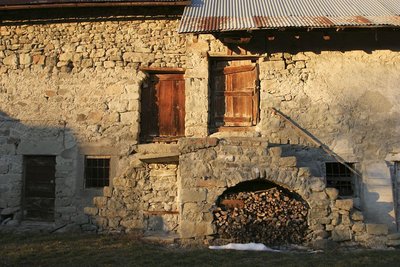
Maison aux portes, Valgaudemar - Stephan D'houwte - PNE  Architecture
Traditional dwellings
A few typical, old Valgaudemar houses can be seen in the hamlets of Casse, Le Bourg and Le Rif du Sap. A few thatched roofs, vaulted entrances to dwellings ("tounes"), and stone paving, are some fine examples of architecture that are worth saving. Cheaper and requiring less maintenance, sheet metal gradually replaced the thatch on the rooftops.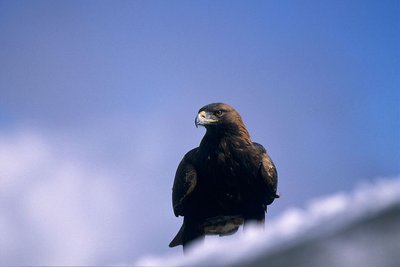
Aigle royal - Robert Chevalier - PNE  Fauna
FaunaGolden eagle
Between La Chapelle and Le Clot, it is not rare to see the golden eagle flying over the sunlit slopes. In the summer, this majestic bird of prey with its dark plumage (some have lovely white rosettes on the underside of their wings) mingles with the short-toed eagle, which is smaller and lighter-coloured, and the griffon vulture, which is larger, with a short tail and often flies in groups. There is nothing surprising about this as the south facing slopes provides thermal lift that enables them to fly high and far.
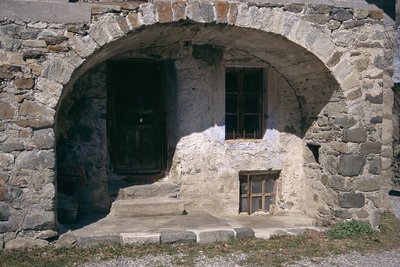
Architecture traditionnelle - Yves Baret - PNE Architecture"Toune"
This is an architectural feature of the Champsaur-Valgaudemar area and is the barrel-vaulted porch on the main facade of the house. It sheltered the entrance to the dwelling and stable and was sometimes used to stock items, such as wood, to keep it dry. The "toune" was often painted white to reflect the sunlight. They inhabitants would sit in them to do embroidery or darning, etc.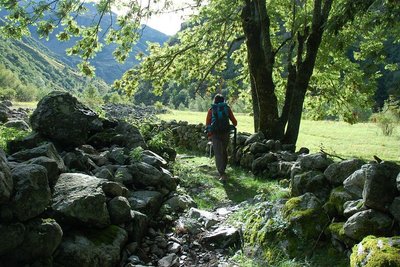
Via Clause du Clot - Dominique Vincent - PNE Vernacular heritageWalled paths
On certain stretches of the route, you will walk between two stone walls. Such "via clause" were built to stop the domestic animals, on their way up to the pastures, from walking on or eating the grass in the prairies that was intended for them in the winter. The most remarkable "via clause" is on the way out of the hamlet of Le Clot. It has been restored by the Ecrins National Park.
.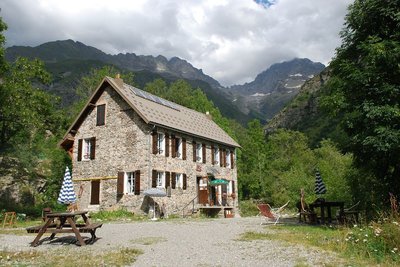
Refuge du Clot Xavier Blanc - Dominique Vincent - PNE  Hut
HutClot Xavier Blanc mountain refuge
What a strange idea to build this mountain refuge below the road leading to Gioberney, at an altitude of "only" 1397 m. In fact, it was already there more than a century ago, long before the road was built. This simple, sturdy building belonged to the Valgodemar Mining Company that operated in the area extracting copper and lead. When the business closed, the Club Alpin Français bought the building and named it after Xavier Blanc, in recognition of one of the founder members of the CAF, senator of the Hautes Alpes.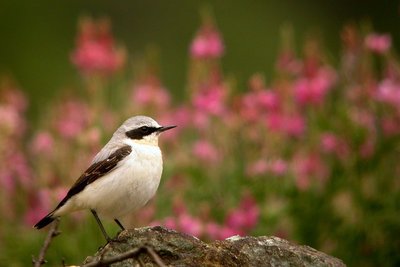
Traquet motteux - Damien Combrisson - PNE FaunaHigh altitude birds
Autumn is migration season. The mountains, which are too harsh in winter, loses their inhabitants. Some opt for a change in altitude and go lower down the valley or to the coast. This is the case for the alpine accentor, the redstart, the redpoll, or the Eurasian linette. Others head off on a long journey to warmer countries. The Sahara offers a milder winter to the common rock thrush, whinchat and wheatear. The lesser whitethroat will head to the east. In the summer, this fine bunch will meet up again in the mountains. It finds a sanctuary where the diversity of plants and invertebrates is preserved. The alpine pastures seem to be favourable for the reproduction of all of these species that are diminishing and need to be protected.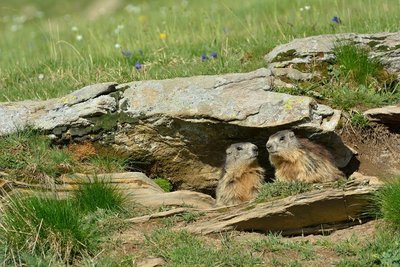
Marmottes à leur terrier - Mireille Coulon - PNE FaunaMarmot
A high-pitched whistle sounds in the mountain pastures it is the cry of the marmot on guard, warning its companions of the arrival of imminent danger from the sky. Any inattentive creature failing to take note should beware a golden eagle will carry them away in its talons to feed its young.
Native to the Alpine grassland, colonies of marmots live with their young until their third year. Gnawing and digging are their favourite pastimes, along with rolling down the slopes. And not forgetting an afternoon nap on a nice, warm rock and their long hibernation between October and March.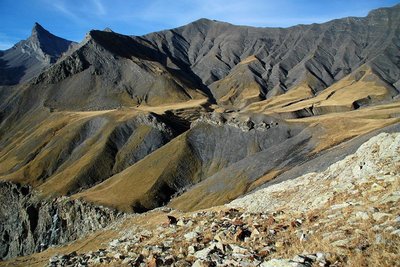
Vallon Plat, Col de Vallonpierre, Aiguille de Morges - Bernard Guidoni - PNE  Geology and geography
Impressive geology
From chabournéite, the native mineral of Valgaudemar, to the crystalline rock from the Sirac's gneiss, from the hollow of Vallonpierre made in sedimentary rock to the show that is given by the shale and tuffs on the Chevrettes pass, this circuit will take you back in time. The folds and the colours appear before you like an impressionist’s work of art.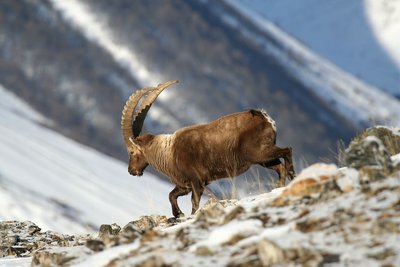
Bouquetin des Alpes - mâle - Jean-Philippe Telmon - PNE FaunaAlpine ibex
The species had almost completely disappeared from the French Alpine regions, and they survived thanks to our Italian neighbours, the kings of Savoy. Until the mid-15th century, they were still to be seen, but they were not wary of mankind and were hunted for their meat. Superstitious medical practice at the period also hastened their decline: their horns were ground into powder and used as a remedy for impotence, while the cross-shaped bone over their hearts was thought to ward off sudden death.
Successfully reintroduced into the Vanoise area in 1960, they were also brought back into the Champoléon valley over 20 years ago.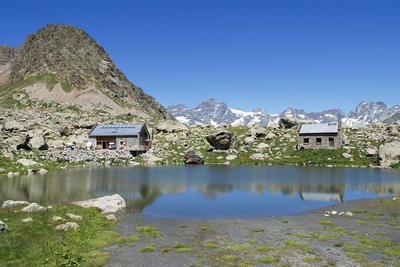
Le refuge de Vallonpierre - Dominique vincent - PNE HutThe Vallonpierre refuge
A small lake, pretty meadows and the benevolent Sirac... This magical setting would lead to the construction of a refuge at an altitude of 2270 m in 1942. However, it was a victim of its own success and in 2000 the decision was made to build a second, bigger one. It can accommodate 37 instead of 22. This new building was the first modern mountain refuge to be built using stones on site rather than imported materials. It copies the simplicity and the crow-stepped gable from the "small refuge" which has been kept as lodgings for a warden's helper.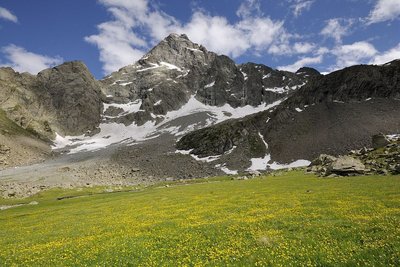
Le Sirac depuis Vallonpierre - Mireille Coulon - PNE  Top
TopThe Sirac
To the south of the Ecrins mountains, the Sirac is the last major summit at 3441 m. It stands proudly at the end of the Séveraisse valley. Often during the hike, you will lift your head in wonder and greet this noble lord with its crown. You will walk at its foot and see its hanging glaciers above you. It’s magic!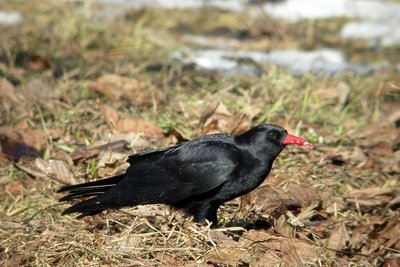
Crave à bec rouge - Damien Combrisson - PNE FaunaRed-billed chough
The red-billed chough is in many ways a surprising bird. It lives near cliffs and plays among the clouds, breaking the silence with a brief, strident, almost metallic cry. Hearing the echo from the cliff walls, its companions reply. With its confident gait and regular step, the red-billed chough patrols the Alpine pastures in small groups, meticulously searching for small worms and meadow grasshoppers. Apart from a few brief seasonal excursions in search of available food, the chough is a sedentary bird.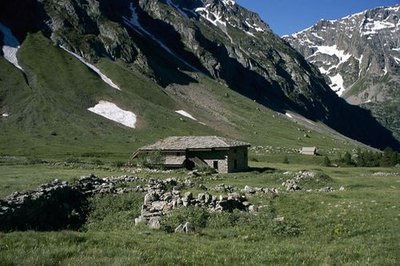
Le refuge du Pré de la Chaumette, Champoléon - Marc Corail - PNE  Pastoralism
Chaumette Meadow
The refuge is situated in a vast meadow formed by alpine grasslands that benefit from deep soil, on gentle slopes that are covered with snow on an average of eight months a year.
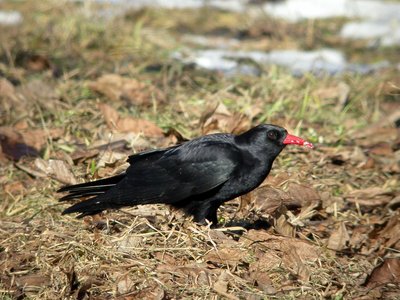
Crave à bec rouge - PNE - Combrisson Damien FaunaRed Billed Chough
The Red Billed Chough is a surprizing bird in many ways. It lives near to the cliffs and plays in the clouds, breaking the silence with its brief, strident and almost metallic cry. Alerted by the echo coming from the mountain wall, its companions reply to it. Its confident gait with a rhythmic step, the Red Billed Chough strides meticulously across the prairie in little groups to find small worm and crickets in the pasture... Except for occasional seasonal escapes linked to the availability of food, the Chough is sedentary.
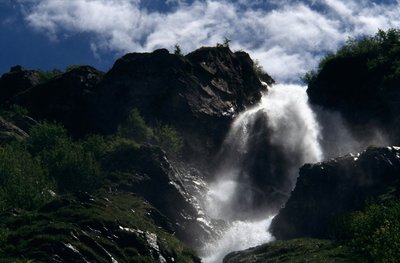
Cascade de Prelles - PNE  Water
WaterPrelles Waterfall
The waterfall feeds in to the Drac blanc. The minor bed of the torrent is very large giving an idea of its violence and its capacity to wash away stone boulders.
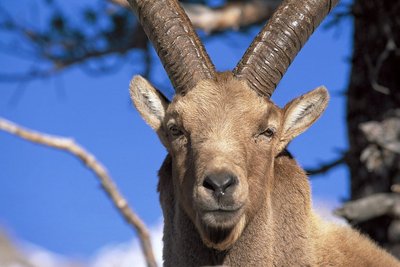
Bouquetin des Alpes - PNE - Chevalier Robert FaunaAlpine Ibex
The Alpine Ibex, also known as the « rock goat », is solid and covered with a coat that is chocolate coloured or beige depending on the season and its sex... Males and females both have ringed horns which grow throughout their life. The Alpine Ibex lives in groups, males on one side, etagnes (females) and the young on the other. In the winter, the females mix with the males during the mating period and give birth at the beginning of Summer. In order to observe it, look over on to the facing slope, the Alpine Ibex is sometimes visible in Spring.
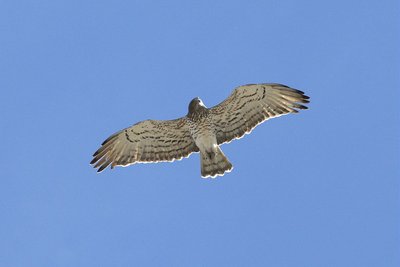
Circaète Jean-le-Blanc en vol - PNE - Saulay Pascal FaunaShort-toed Snake Eagle
Spring has only just returned when you can hear cries as loud as the church bells. You have to lift your head up to admire two large birds flying together, alternating aerobatics and hovering in the sky like two silver coloured kites playing with the wind.. Their light stocky silhouette and their darker head enable you to identify the Short-toed Snake Eagle. It mainly feeds on reptiles (lizards and snakes) which it captures by the head, which it can then regurgitate in order to feed its young.
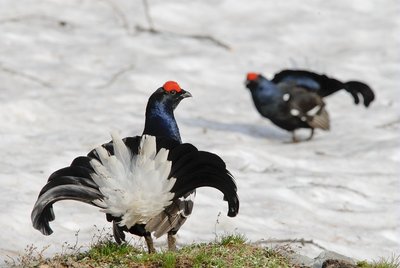
Tétras-lyre mâle en parade - PNE - Papet Rodolphe FaunaBlack Grouse
To observe Black Grouse in summer, you must get up early. In France, Black Grouse or the ‘Heather Cock’ is only found in the Alps. In Spring, the male with black feathers, a lyre shaped tail and white feathers under its tail puts on a display to impress the hens. In winter, it spends most of its time taking refuge in igloos dug in to the snow to protect itself from the cold. This is a time when it is particularly sensitive because it cannot compensate for the energy that it uses when it leaves its igloo too hastily disturbed by off-piste skier or a hiker with snowshoes.
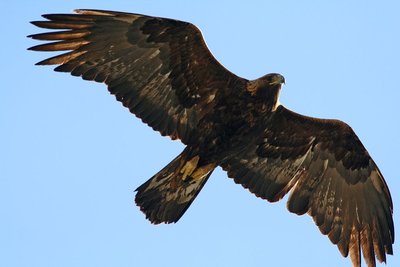
Aigle royal en vol - PNE - Couloumy Christian FaunaRoyal Eagle
The Royal Eagle is one of the most rare and protected species in Europe. Its large size, its dark colouring, its rectangular wings and its frequent movements in the open air enable it to be easily recognized. In the hottest hours of the day, it turns about regularly benefiting from the rising wind in order to gain altitude. Thanks to its excellent sight the Royal Eagle scans its surroundings in search of an imprudent marmot or a young chamois. In winter it regularly feeds off the cadavers of animals...
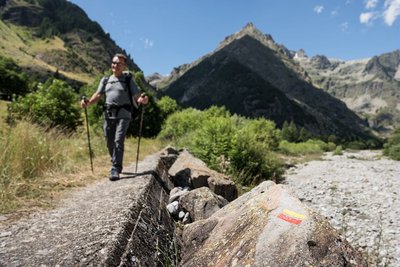
Randonneur sur les bords du Drac Blanc - © Parc national des Ecrins - Carlos Ayesta Know-howThe Drac dyke
Like all mountain valleys, the Champoléon valley is susceptible to the vagaries of the weather, torrential flooding in particular. The phenomenon is extreme when high rainfall coincides with the snowmelt. The water level then rises dramatically, carrying with it lots of sediment including large boulders. On All Saints' Day 1790, the ancient church of Saint-Vincent aux Borels and its cemetery were destroyed. In more recent times, the floods of October 2006 are still fresh in the memory. The dyke, therefore, helps to limit the damage and directs the water flow towards uninhabited areas.
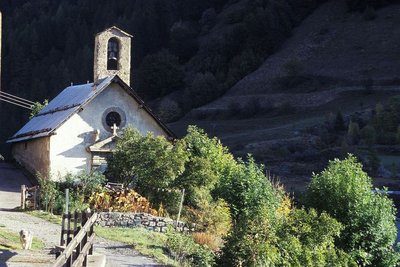
La chapelle des Gondouins - Marc Corail - PNE HistoryThe old landscape
While roaming the Champoléon valley, you will have noticed the size of the Drac riverbed. At the time that the valley had 600 habitants (in 1789 compared to 110 nowadays), it is said that people threw the scythe hammer from one bank to the other over this impetuous stream...An abundant workforce built and maintained the walls and dikes that retained the earth and was carried on the backs of men or donkeys. After the devastating floods of 1914, the Drac washed away land and pasture. Several hamlets, such as Gondouins, were abandoned.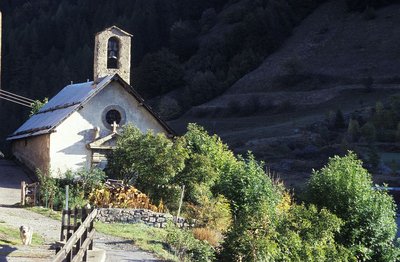
© Parc national des Écrins - Marc Corail Vernacular heritageThe chapel in Les Gondouins
Built in 1700 by the Pourroy family, the chapel of Saint-Jean-Baptiste stands at an altitude of 1,311 metres, in the hamlet of Les Gondouins. It has a worked doorway surmounted by a small cross, an unusual feature for a mountain chapel, and an elegant bell turret (a "panelle") with a bell which extends above the roof ridgeline. The interior is simple and unembellished, apart from a painting depicting Jesus being baptised by Saint John the Baptist.
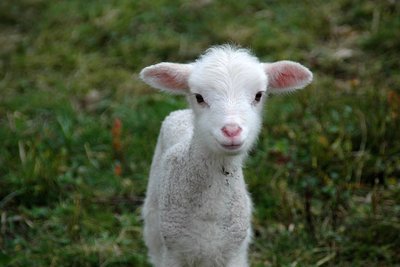
Agneau - Dominique Vincent - PNE PastoralismTardons
"Tardons" are lambs that are raised on mother's milk in the pastures of the Ecrins massifs. These lambs are celebrated every autumn at the Champoléon agricultural fair. This event spotlights pastoralism and assembles breeders, shepherds and the general public. On the agenda: the sale of sheep, produce market, lamb-based meals and entertainment.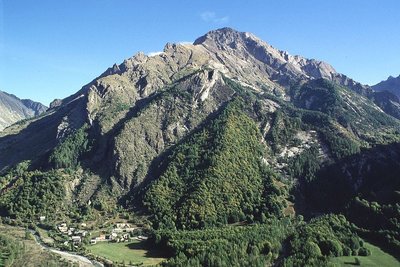
Le village des Borels - Marc Corail - PNE HistoryLes Borels
This is most important village in the Chamoléon district (no hamlet bears this name). Until towards the first world war in 1914, the valley lived in a closed circuit for all everyday items. At the Borels there was a weaver (wool and hemp), a miller-baker, an ironmonger, a mason, a breeches-maker and in the other hamlets, a cobbler, two millers, a joiner and two shoemakers. The latter worked from home.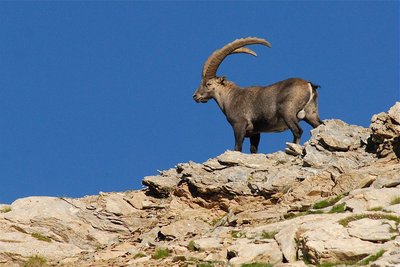
Bouquetin en été - Rodolphe Papet - PNE FaunaAlpine ibex
If you take a few minutes' walk at the end of the valley, you will be able to see some Alpine ibex. In September 1994, in Champoléon, some thirty animals from Vanoise area were released by Ecrins National Park rangers. This superb animal is heavier (100 kg) and less timid than the chamois, and is closely related to the domestic goat. It was almost extinct in the Alps. Today it is totally protected in France and is now safe extinction.
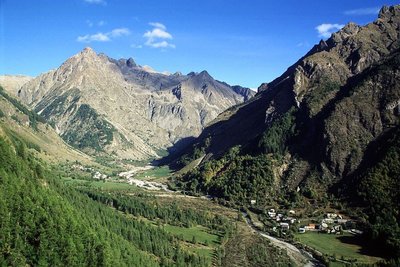
La vallée de Champoléon - Marc Corail - PNE HistoryChampoleon
To the 24 questions asked by the attorney general of the Dauphiné in 1789, the Champoléon Council replied, "Champoléon is in the most atrocious place of the Haut-Dauphiné. The community has 16 villages, 80 families and 600 souls spread over the slopes of the mountain. All of the roofs are thatched [...] the rivers and streams cause serious damage." Indeed, on All Saints Day in 1790, the Champoléon church was destroyed by flooding. Part of the graveyard was washed away taking coffins and corpses away from Champoléon too.- Geology and geography
Geology
Upstream from Les Borels, the right-hand side of Champoléon is dominated by peaks without stratification, made up of crystalline rocks (granite and gneiss). They are protruding and pushing back the older, softer sedimentary rocks found on the other side (limestone and sandstone). These movements have caused faults and mineralisation which was exploited in past times (pyrite, galena, copper…)
- Vernacular heritage
Les Richards
Perched up at an altitude of 1548 m above Pont-du-Fossé in the commune of Saint-Jean-Saint-Nicolas, the village of Les Richards is a haven of tranquillity. The view is breathtaking over the Autanes and the Champsaur woodlands. This is the starting point for a very popular hiking trail around the mountains or to the summit of the Palastre, and a take-off area for long-distance hang-gliders. It is not unusual for a hang-glider to land in Grenoble and sometimes even in Chamonix after a long day's flight from Les Richards! The record is 162 km, with a landing in Chamonix in 2002.
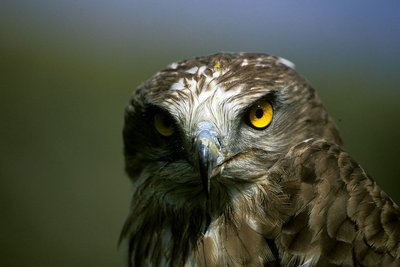
Circaète Jean-le-Blanc - Marc Corail - PNE FaunaShort-toed snake eagle
This bird of prey can be recognised because of its large head, its quite impressive wingspan (1.80m) and the white plumage under its wings and body. Despite its size, it rarely eat small mammals. Its food mainly consists of lizards and snakes. When it hunts, it takes up a particular position against the wind, poised in the air with its wings fully outstretched.
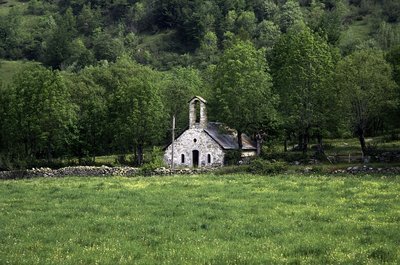
La Chapelle des Roranches - © Parc national des Écrins - Michel Francou Vernacular heritageLes Roranches Chapel
Built in 1780 on the site of a former chapel dedicated to Our Lady of the Assumption, the Roranches chapel is dedicated to Saint Pancras, the protector of farm animals and pets. It was built using humble architectural techniques, and is highly representative of the small places of worship in the Champsaur woodlands where, as so often in the mountains, the materials used were those that were ready to hand. Two renovation projects have been carried out on the chapel since 2013 with the support of the Ecrins National Park. The first was aimed at stabilising the barrel vault and renewing the framework and roof using the original material, slate. The second project was to restore the plasterwork inside and outside, as well as the whitewash, windows and flooring.
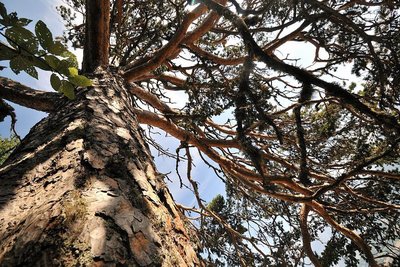
Vieux Pin sylvestre - Mireille Coulon - PNE FloraScots pine
The Scots pine can be recognised by its long reddish brown trunk and sparse foliage. The needles are grey-green, slightly curved and paired. It needs a great deal of sunshine, but can make do with poor, sandy soil that is unsuited to other trees. Its wood is light and of high quality.
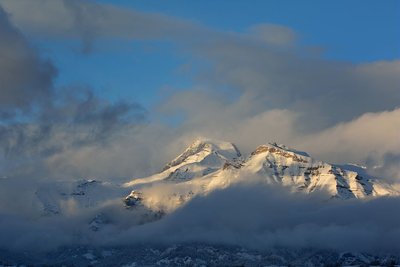
Le Vieux Chaillol, nuages et lumière du soir depuis Ancelle - Mireille Coulon - PNE Geology and geographyLe Vieux Chaillol
Easily visible from Champsaur and from beyond Gap, Le Vieux Chaillol is, like the Ecrins range, made up of granite rocks originating in the bedrock of the Cambrian era and which suddenly rose up some 5 million years ago. But the rocks of Le Vieux Chaillol have undergone a particular recrystallisation and have been transformed into metamorphic conglomerates and schists.
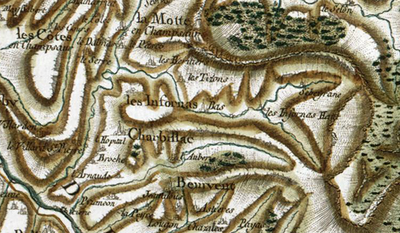
Carte de Cassini - IGN HistoryThe origin of the name "Champsaur"
A dozen origins explain the name "Champsaur". Obviously the prettiest one, and the least likely, is that it means "champ d'or" (Field of gold) as Napolean is said to have shouted out "what a beautiful field of gold" upon discovering the area. Other explanations are "field of lizards (sauros meaning lizard in greek) or "Sarrasins field" (campus sauracenorum) due to their numerous invasions. However, the most likely explanation is that it comes from "campus saurus" the field or the land of Saurus, the name of the owner at the time.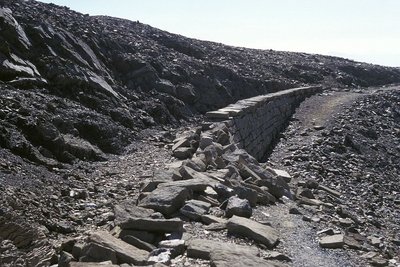
Le canal de Malcros en aval de la cabane des Parisiens - Gabriel Gonsolin - PNE Vernacular heritageMal Cros Canal
Although it became necessary to create an irrigation system for the Champsaur as early as 1819, following a particularly severe drought, work on construction of a canal did not start until 1871. Starting at the Mal Cros glacier at 2750 m in altitude, it was built of dry stone and larch wood from the Pisse pass. Water for watering crops was distributed from the basin by a system of floodgates. Completed in 1878 it would only remain in operation for 27 years, as maintenance work was too expensive.
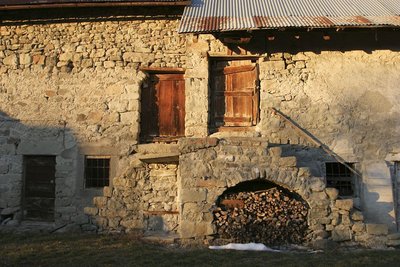
Une ferme aux Roranches, Champsaur - Marc Corail - PNE ArchitectureChampsaur architecture
Today's landscapes and the houses are no accident. They bear the trace of humans, who were less concerned with building attractive places, than with striving to find the best rigorously functional solutions for the area. In the northern part of the Drac valley, an area often faced with a cold wind, hedges were planted, buildings were close together and almost blind on the north-facing side. On the balconies to the east, as in St-Michel-de-Chaillol or St-Julien-en-Chapsaur, the aim was to find sunlight and the facade often had a large porch.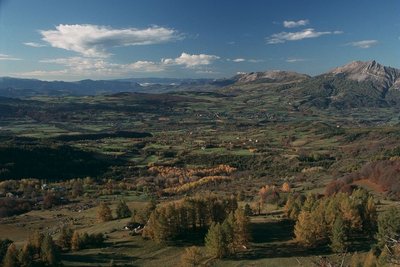
Le bocage du Champsaur, Saint-Michel-de-Chaillol - PNE FloraHedging
Hedged landscapes were quite common in France before the war, but here, above an altitude of 1000 m, a wonderful diversity has been maintained. A patchwork of hedgerows, prairies and woods are home to an array of birds. Amongst them are many common sparrows (red-backed shrikes, stonechats, sparrows, quails and wrynecks) whose numbers are in decline in France, sometimes alarmingly so. Richness is therefore not solely due to rarity.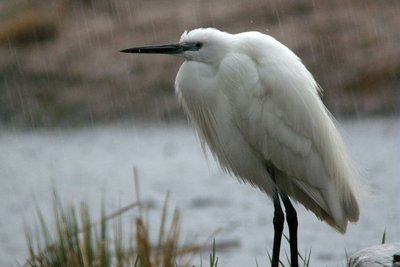
Aigrette garzette - Damien Combrisson - PNE FaunaOrnithologial diversity
Thirty years of careful inventories have identified 220 species of bird in the valley. This exceptional variety is not only due to the landscapes (hedges, wetlands, forests and high mountains) but also to the Champsaur's geographical position: not quite north-alpine, wide open to the south with the Manse and Bayard thresholds, ideal for exchange and for migratory birds such as herons, ducks, red-footed falcons or flycatchers.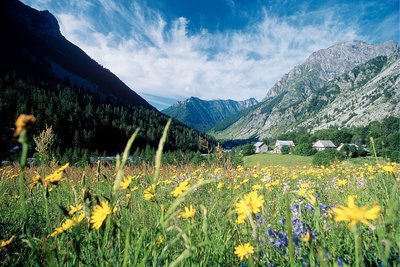
Prairie de fauche dans la vallée de Champoléon - PNE FloraHayfields
When they have not been disturbed by modern fertilisation techniques and silage, around fifty species of plant can still be found in the hayfields. The most symbolic are the poet's daffodil, alpine salsify, meadow sage, sainfoin and globeflower that punctuate the landscape with their different colours.
Forecast
Altimetric profile
Sensitive areas
Peregrine falcon
- Impacted practices:
- Aerial, Vertical
- Sensitivity periods:
- FebMarAprMayJun
- Contact:
- Parc National des Écrins
Julien Charron
julien.charron@ecrins-parcnational.fr
Golden eagle
- Impacted practices:
- Aerial, , Vertical
- Sensitivity periods:
- JanFebMarAprMayJunJulAug
- Contact:
- Parc National des Écrins
Julien Charron
julien.charron@ecrins-parcnational.fr
Bearded vulture
- Impacted practices:
- Aerial, , Vertical
- Sensitivity periods:
- JanFebMarAprMayJunJulAugNovDec
- Contact:
- Parc National des Ecrins - Yoann Bunz- 06 99 77 37 65 yoann.bunz@ecrins-parcnational.fr
Golden eagle
- Impacted practices:
- Aerial, , Vertical
- Sensitivity periods:
- JanFebMarAprMayJunJulAug
- Contact:
- Parc National des Écrins
Julien Charron
julien.charron@ecrins-parcnational.fr
Golden eagle
- Impacted practices:
- Aerial, , Vertical
- Sensitivity periods:
- JanFebMarAprMayJunJulAug
- Contact:
- Parc National des Écrins
Julien Charron
julien.charron@ecrins-parcnational.fr
Golden eagle
- Impacted practices:
- Aerial, , Vertical
- Sensitivity periods:
- JanFebMarAprMayJunJulAug
- Contact:
- Parc National des Écrins
Julien Charron
julien.charron@ecrins-parcnational.fr
Golden eagle
- Impacted practices:
- Aerial, , Vertical
- Sensitivity periods:
- JanFebMarAprMayJunJulAug
- Contact:
- Parc National des Écrins
Julien Charron
julien.charron@ecrins-parcnational.fr
Peregrine falcon
- Impacted practices:
- Aerial, Vertical
- Sensitivity periods:
- FebMarAprMayJun
- Contact:
- Parc National des Écrins
Julien Charron
julien.charron@ecrins-parcnational.fr
Short-toed snake eagle
- Impacted practices:
- Aerial,
- Sensitivity periods:
- MarAprMayJunJulAugSep
- Contact:
- Parc National des Écrins
Julien Charron
julien.charron@ecrins-parcnational.fr
Short-toed snake eagle
- Impacted practices:
- Aerial,
- Sensitivity periods:
- MarAprMayJunJulAugSep
- Contact:
- Parc National des Écrins
Julien Charron
julien.charron@ecrins-parcnational.fr
Short-toed snake eagle
- Impacted practices:
- Aerial,
- Sensitivity periods:
- MarAprMayJunJulAugSep
- Contact:
- Parc National des Écrins
Julien Charron
julien.charron@ecrins-parcnational.fr
Black grouse - winter
- Impacted practices:
- , Land
- Sensitivity periods:
- JanFebMarAprDec
- Contact:
- Fédération départementale des chasseurs des Hautes-Alpes :
Pierre-Frédéric Galvin : pierre-frederic.galvin@fdc05.com
Membre de l'Observatoire des Galliformes de montagne
Virginie Dos Santos : ogm.vds@gmail.com
Blandine Amblard : ogm.amblard@gmail.com
Black grouse - winter
- Impacted practices:
- , Land
- Sensitivity periods:
- JanFebMarAprDec
- Contact:
- Fédération départementale des chasseurs des Hautes-Alpes :
Pierre-Frédéric Galvin : pierre-frederic.galvin@fdc05.com
Membre de l'Observatoire des Galliformes de montagne
Virginie Dos Santos : ogm.vds@gmail.com
Blandine Amblard : ogm.amblard@gmail.com
Recommandations
Refer to the specific guidelines for each leg.


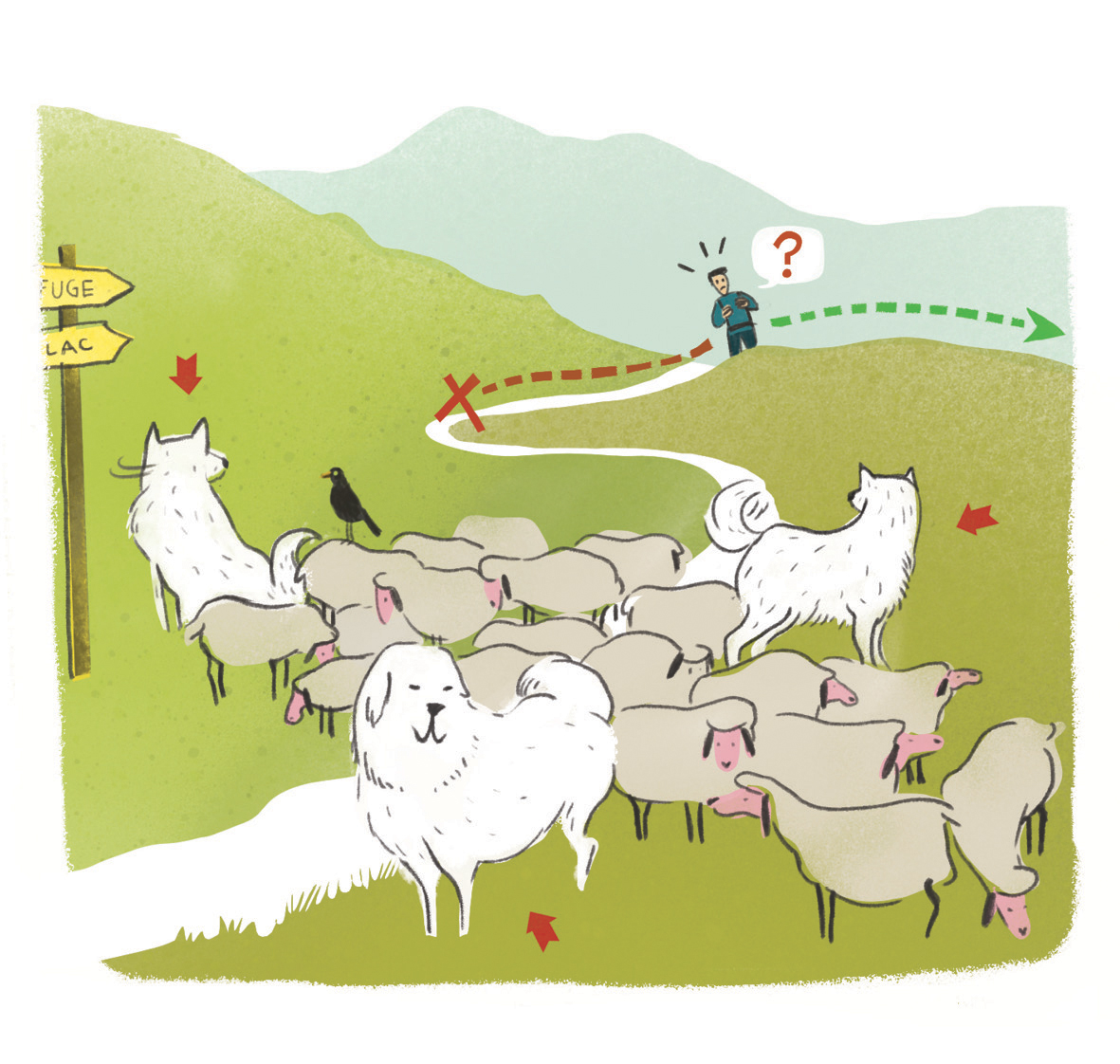 In mountain pastures, protection dogs are there to protect the herds from predators (wolves, etc.).
When I hike I adapt my behavior by going around the herd and pausing for the dog to identify me.
Find out more about the actions to adopt with the article "Protection dogs: a context and actions to adopt".
Tell us about your meeting by answering this survey.
Information desks
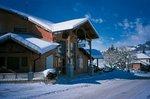
House of Champsaur
05260 Pont-du-Fossé
Information and documentation, temporary exhibitions. Sale of products and works of the Park. In the same space, home office Tourist High Champsaur. Free admission. All animations of the Park are free unless otherwise stated.
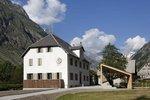
Valgaudemar Park house
Ancien Asile Saint-Paul, 05800 La Chapelle-en-Valgaudemar
Information, documentation and a reception area with permanent and temporary exhibitions. La Maison du Parc is labeled "Tourism and Disability". Free admission. All animations of the Park are free unless otherwise stated.
Tourisme Office of Champsaur & Valgaudemar
Les Barraques, 05500 La Fare en Champsaur
Transport
On the Grenoble-Gap bus route, stop at Saint-Firmin (2 km from Paris)
Access and parking
From the N85, take the D16 towards Lallée where you will follow the D16a and the D316. Take the first road on the right after Entrepierre.
Parking :
More information

Source

Report a problem or an error
If you have found an error on this page or if you have noticed any problems during your hike, please report them to us here: