
Orcières Lakes
 Easy
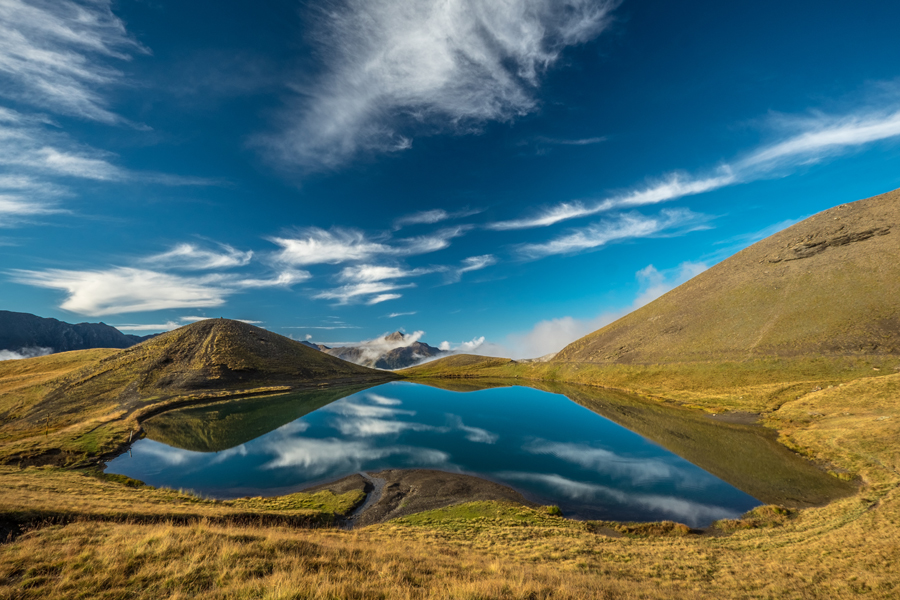
EasyLac des Estaris, at 2550m, is the biggest of the Orcières lakes and listed as a nature reserve. The descent then unveils the Jumeaux, Profond, Long and Sirènes lakes...
Important information
Dans le Parc national des Écrins, les sentiers sont généralement praticables de la mi-juin à fin septembre.
Toutefois, les périodes d'accessibilité des itinéraires et les dates de pose des passerelles varient d’une année à l’autre en fonction de l’enneigement, des dégâts survenus en hiver et des conditions météorologiques. Par ailleurs, l’état des sentiers n’est pas contrôlé quotidiennement et peut évoluer rapidement après un évènement météorologique (orage, crue...). Il est nécessaire de se renseigner auprès des maisons du parc national et des offices de tourisme du territoire avant votre sortie. Pendant la randonnée, en cas de passage dégradé ou dangereux, faites demi-tour et signalez-le.
Description
Take the hybrid lift at the summit of Le Drouvet and make for Lac des Estaris (1 hr). Then continue on to the Jumeaux, Profond and Long Lakes. Carry on to the Chalet de Rocherousse. For the return, you take the hybrid lift from Rocherousse to the resort. Also possible to return on foot via Jujal, Pré La Baume, Forest des Estaris, then Orcières Merlette 1850.
- Departure : Orcières Merlette 1850
- Towns crossed : Orcières and Champoléon
8 points of interest
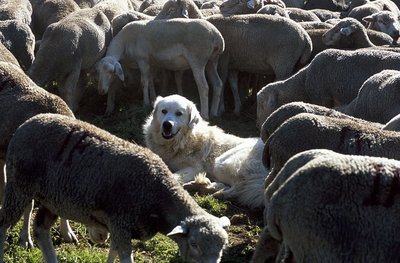
Patou surveillant le troupeau - PNE - Nicollet Jean-Pierre  Pastoralism
Flocks of sheep
Out of respect for the work of the shepherd, certain precautions are to be taken should you encounter a flock of sheep. Walk widely around the flock when possible; avoid walking through it. Sometimes flocks are guarded by "patous", large dogs that are trained to protect the flock against intrusion. It is considered part of the flock. In its presence, stay calm; stop to give it time to see who you are. Do not stroke it, do not make any sudden movements.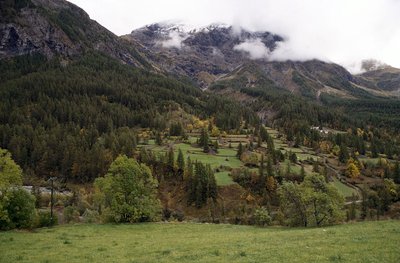
L'ubac d'Orcières - PNE - D'Houwt Stéphane  PanoramaHere you have a view of the mineral framework of Orcières and its terraces.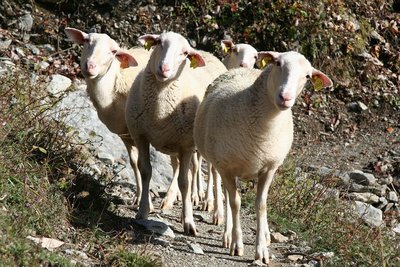
Brebis - PNE - Telmon Jean-Philippe PastoralismA valley of pastoralism
Roughly 2000 cattle graze in the Orcières valley, which is managed by mountain breeders. The pastures are divided into sectors according to snowmelt. As the summer progressively settles in, the flock goes to a higher altitude to graze on the fresh grass. Along with salt blocks, these meadows are the sole source of nourishment during the summer season.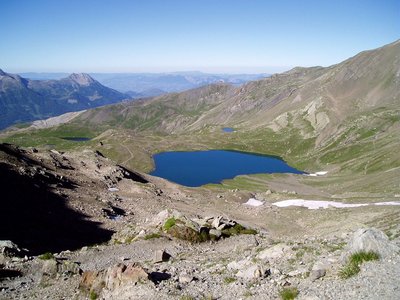
Le grand lac des Estaris - PNE - Telmon Jean-Philippe  Lake
LakeGrand lac des Estaris
The lakes were created in different ways. "Barrier" lakes were formed by either moraine deposits left by glaciers that scooped out the basin or flat terrain, or by landslides coming from the steep slopes. "Basin" lakes were formed by the large glaciers of the quarternary age that carved out the softer rock as they advanced from Lyons to Sisteron. When the glaciers melted, 8000 years ago, these dips became lakes known as "basin lakes" The Estaris lake is a 'mixed' lake as it was created by a combination of both phenomena.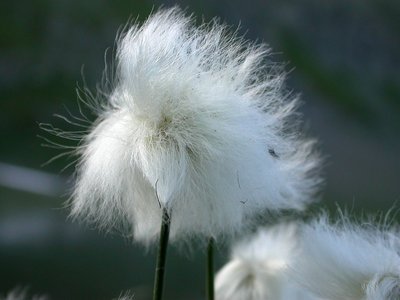
Linaigrette de Scheuchzer - PNE - Albert Christophe  Flora
FloraWhite cotton grass
As is often the case, it is when the plant has its fruit that it catches the eye. White cotton grows mainly near to lakes and on high altitude wetlands. Feather-like, packed white balls blow in the slightest mountain breeze. The smooth, round stalks only have a few sheathing leaves.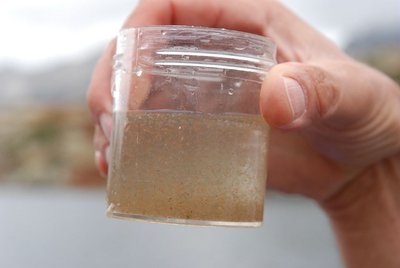
Récolte de plancton, suivi des lacs - PNE - Warluzelle Olivier LakeMonitoring of high altitude lakes
The lake monitoring network was established by several concerned parties in order to create an observatory of altitude: to keep check on species but also on temperature, depth (bathymetry), turbidity, dissolved oxygen concentrations, conductivity, sediments, etc. The purpose of monitoring the lakes is to better understand their function and to anticipate the effects of global changes (climate, pollution, introduction of species of fish and so on) at the level of a catchment area.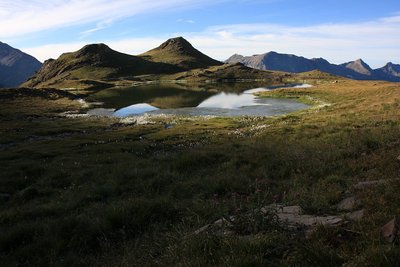
La zone jumide autour du lac des Jumeaux - PNE - Corail Marc LakeLake wetlands
The wetlands are a crossover area between the lakes and the land. They are home to considerable biodiversity. Their hydrological function means they can take water, stock it and restore it. Wetlands are part of a complex network made up of groundwater, lakes, streams, coombs...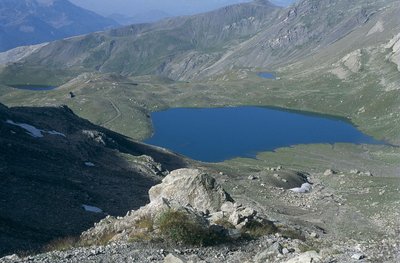
Grand lac des Estaris - PNE - Gonsolin Gabriel LakeAltitude lakes
Just as the glaciers, lakes are emblematic of the mountain landscape. They are an invaluable source of water and represent a priceless aesthetic and touristic heritage that well deserves our attention. Their altitude ecosystems are home to fauna and flora that are specific to such an environment. Their stability is fragile however. Indeed, the lakes "collect" waste from the mountain refuges, animal droppings and even atmospheric pollution from further afield.
Forecast
Altimetric profile
Sensitive areas
Alpine ibex
- Impacted practices:
- Aerial, , Land, Vertical
- Sensitivity periods:
- JunJulAugSep
- Contact:
- Parc National des Écrins
Julien Charron
julien.charron@ecrins-parcnational.fr
Access and parking
From the RN85, take the D114, then the D944 to the Orcières Merlette 1850 resort.
Parking :
Source

Report a problem or an error
If you have found an error on this page or if you have noticed any problems during your hike, please report them to us here: