
Les Oulles du Diable
 Very easy
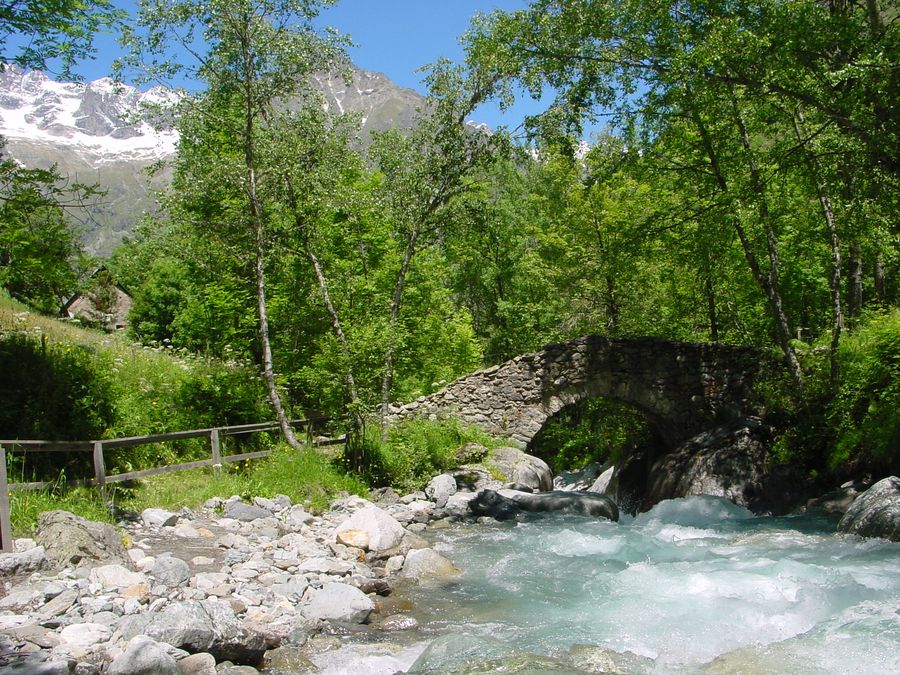
The circuit will take you on a shaded ascent as far as the traditional hamlet of Les Portes. After that, you cross the Navette torrent and its giant boiling devils’ cauldrons, the "Oulles du Diable", across the Romanesque Oulles bridge.
The result of incredible natural forces, the Oulles du Diable are one of the marvels of the Valgaudemar valley. But take care with this dangerous torrent.
Important information
Dans le Parc national des Écrins, les sentiers sont généralement praticables de la mi-juin à fin septembre.
Toutefois, les périodes d'accessibilité des itinéraires et les dates de pose des passerelles varient d’une année à l’autre en fonction de l’enneigement, des dégâts survenus en hiver et des conditions météorologiques. Par ailleurs, l’état des sentiers n’est pas contrôlé quotidiennement et peut évoluer rapidement après un évènement météorologique (orage, crue...). Il est nécessaire de se renseigner auprès des maisons du parc national et des offices de tourisme du territoire avant votre sortie. Pendant la randonnée, en cas de passage dégradé ou dangereux, faites demi-tour et signalez-le.
Description
Go up to the village of Les Portes, then make for Pont des Oulles and descend as far as the bridge. On the way back, follow the path along the right bank.
- Departure : La Chapelle-en-Valgaudemar
- Towns crossed : La Chapelle-en-Valgaudemar
4 points of interest
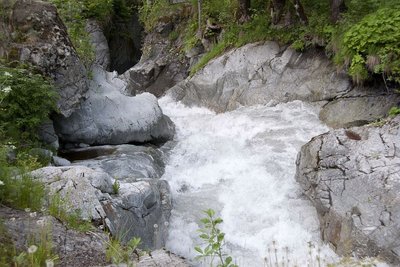
Les Oules du diable - La Chapelle en Valgaudemar - Adeline Gautier - PNE  Water
Oules du diable
The word "oule" is from the Latin olla, which means CAULDRON The Devil's Oules are made up of a series of waterfalls in a narrow gorge. Over time, the water and the pebbles of the Séveraisse river have eroded the hard rock. Spectacularly shaped, polished cavities have been created by the swirling movement. Barriers have been put up following mortal accidents.
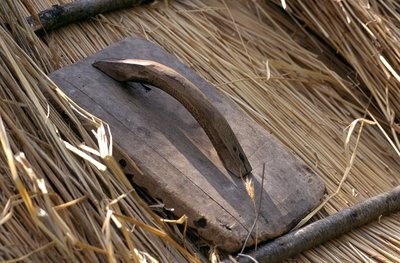
Une batte - PNE - D'Houwt Stéphane  Know-how
Thatched house
Up to the end of the nineteenth century, thatch was widely used as a roof covering, primarily in rural areas. The practice then fell out of use, replaced by slate and tiling. Traditionally, houses were built with materials gleaned from the local area: stones were used for masonry and, in the mountains, rye was used for the roofs. The construction of a thatch roof required local skills that were traditionally handed down through generations of thatchers. The straw is threshed, sifted, combed and tied into bundles (called a cleu in the Valgaudemar) before being installed on a wooden structure. It is laid in such a way as to shed rainwater and this helps prevent rotting. A wooden bat is used to beat the straw in order to give the roof the desired shape. The thickness of this covering varies from 25 to 40 cm and it also offers significant heat insulation. This house, situated in the hamlet of Les Portes, has been restored using reeds from Camargue.
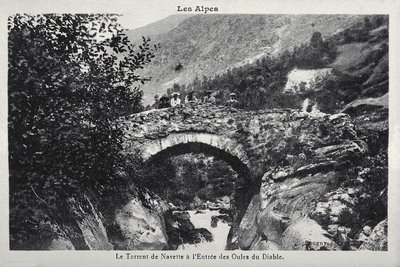
Le torrent de Navette à l'entrée des Oules du Diable - Collection PNE  Architecture
Pont des Oules
Located uphill from the village of La Chapelle, the Oules du Diable form a very narrow and deeply incised ravine, through which the Navette mountain stream flows to join the Séveraisse in a succession of waterfalls with a total drop of 300 metres. Over millennia, the erosive force of the mountain stream has carved these oules out of the very hard rock. The word comes from the Latin Olla meaning cooking pot or cauldron. Thought to be of Roman construction, the stone bridge spans over these characteristic Oules. After some fatal accidents, guardrails have been installeds.
 Know-how
Sundial by Rémy Potey
A real open-air museum piece in the rural landscape, the pictorial art of the sundial aims to foster silence and to be accessible to all. For walkers today and for travellers yesterday. A sundial is a call to reflection and meditation, visible in all its magnificence on religious buildings or carefully hidden, in the little streets of a mountain village. The the Hautes-Alpes department, with its sun-rich climate, has the highest concentration of this example of the people’s art. Today, through the work of the sundial maker Rémy Potey, chamois and golden eagles can be beside the imaginary birds of the mysterious and famous Zarbula, the 19th century Piedmont artist.
Forecast
Altimetric profile
Recommandations
The Oulles are dangerous. To make sure you have a safe visit, keep behind the safety barriers along the footpath.
Access and parking
From St Firmin, take the D985a as far as the village of La Chapelle-en-Valgaudemar.
Parking :
Source

Report a problem or an error
If you have found an error on this page or if you have noticed any problems during your hike, please report them to us here: