
GR®54 - Tour of L'Oisans and Les Écrins starting from La Chapelle-en-Valgaudemar
 Hard
HardEmbarking on one of the most difficult GR® routes in France, a challenge for experienced hikers. On the route: 14 passes, elevation changes of almost 12,000 metres and 190 kilometres to cover in 12 days in the majestic Massif des Écrins. Leave the beaten path behind and enjoy a variety of breathtaking landscapes along variants of the GR®54, over three Stages of the circuit.
Important information
Dans le Parc national des Écrins, les sentiers sont généralement praticables de la mi-juin à fin septembre.
Toutefois, les périodes d'accessibilité des itinéraires et les dates de pose des passerelles varient d’une année à l’autre en fonction de l’enneigement, des dégâts survenus en hiver et des conditions météorologiques. Par ailleurs, l’état des sentiers n’est pas contrôlé quotidiennement et peut évoluer rapidement après un évènement météorologique (orage, crue...). Il est nécessaire de se renseigner auprès des maisons du parc national et des offices de tourisme du territoire avant votre sortie. Pendant la randonnée, en cas de passage dégradé ou dangereux, faites demi-tour et signalez-le.
12 steps

Description
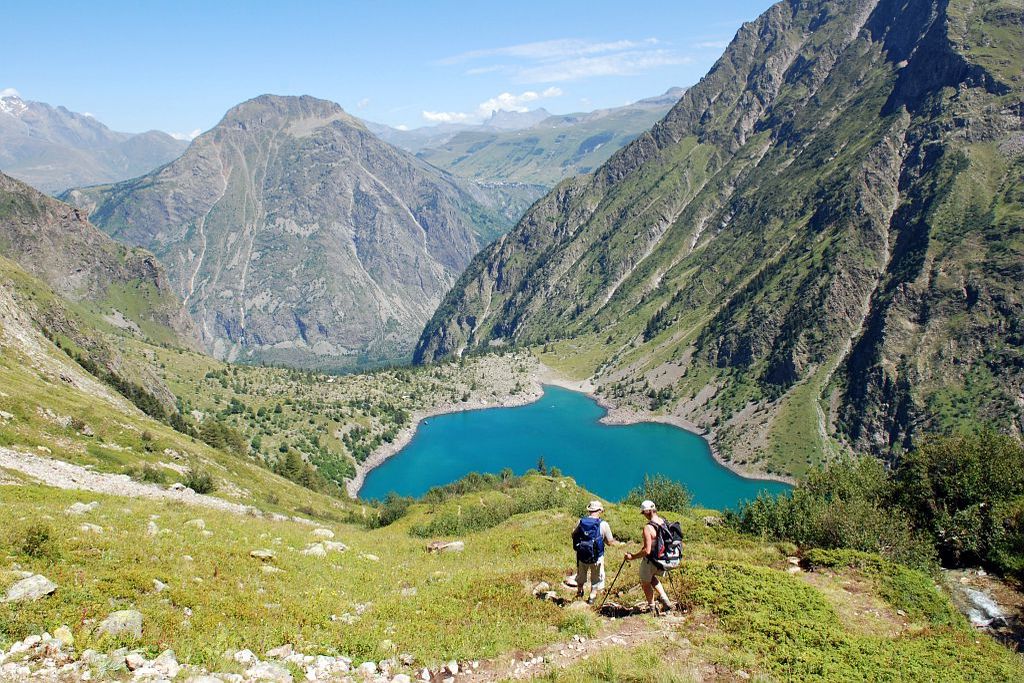
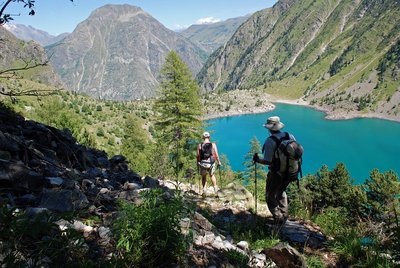
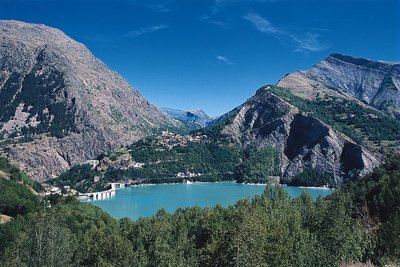
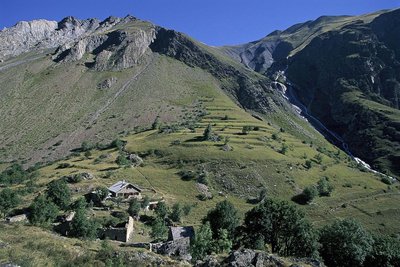
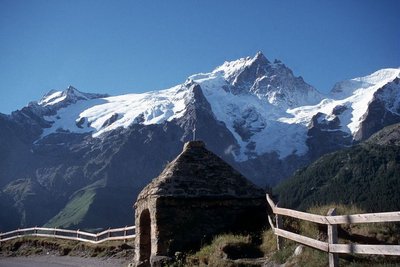
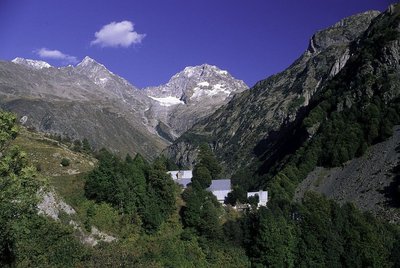
Starting from La Chapelle-en-Valgaudemar, the Tour of L'Oisans and Les Écrins begins gently along the Séveraisse river before striding up the southern slope of the Pic des Souffles which offers an unrivalled view of the Valgaudemar valley. The next day's Stage consists in crossing the impressive Col de la Vaurze. Equally impressive is the descent down into the wild Valjouffrey. The verdant Col de Côte Belle leads to the village of Valsenestre in the Béranger valley. Take a restorative break at the end of this Stage before setting off again on variant B of the GR®54, which is the longest stage of the route in terms of time and one of the most difficult due to its significant elevation changes. Via the Col de la Romeïou, the variant takes you past numerous lakes, one of which is the most iconic on the Oisans side of Les Écrins: Lac du Lauvitel (1,530 m altitude). The next stage then takes you close to the famous Les Deux Alpes winter sports resort on both slopes (Vénosc and Mont-de-Lans) linked by variant C of the GR®54, and comes to the pretty village of Mizoen. The path continues, rising in altitude up the mountain side and shadowing the shore of the large Lac du Chambon below, before it reaches the refuges at the foot of the Emparis plateau. Above, the Col de Souchet offers a five-star view over La Meije. A descent of almost 1,000 metres brings you to La Grave. Here, you have to follow the Romanche river until you reach its source on the alpine pasture of Villar d'Arène. When you reach the Col d’Arsine, the scene is stunning. The surrounding realm of high peaks invites a visit to the glacial Lacs d’Arsine before embarking on a long descent following the mountain stream Le Petit Tabuc, down to the valley of La Guisane and Monêtier-les-Bains. Objective: La Vallouise via the Col de l’Eychauda and the tranquil chalets of Chambrain. Eight kilometres of motor road following the mountain stream L'Onde brings you to the alpine pastures of Jas Lacroix. Crossing the Col de l'Aup Martin, the highest pass on the route, is always a high point of the adventure, and the descent to the Pré de la Chaumette is equally exhilarating. To reach Lac de Vallonpierre, no fewer than three passes cut through the shale have to be negotiated with care. The last stage consists of a long descent into the valley of Valgaudemar where the path comes to La Chapelle en Valgaudemar, the culmination of the GR®.
- Departure : The Park Centre ("Maison du Parc") in La Chapelle-en-Valgaudemar
- Towns crossed : La Chapelle-en-Valgaudemar, Villar-Loubière, Valjouffrey, Le Périer, Le Bourg-d'Oisans, Les Deux Alpes, Mizoën, La Grave, Villar-d'Arêne, Le Monêtier-les-Bains, Vallouise-Pelvoux, L'Argentière-la-Bessée, and Champoléon
146 points of interest
Le moulin de Villar-Loubière - Florence Chalandon ©  History
Villar-Loubière windmill
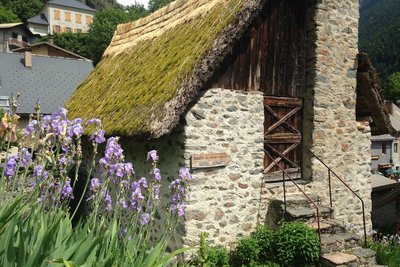
As you begin the steep climb towards the Col de la Vaurze, don’t miss the unusual Villar windmill, covered in vegetation. Built in 1838, this legacy from past times has been perfectly preserved with its curious horizontal wheel. It was still in use 50 years ago, milling wheat, but also nuts and rapeseed. It was restored in 1979 and is the last working windmill in the Valgaudemar valley.

Les arraches - Olivier Warluzelle - PNE  Geology and geography
Arraches
From the refuge, or during the climb, a peculiar geological formation may catch your eye on the opposite bank, above the old hamlet of Peines. Sedimentary rocks are trapped in the middle of crystalline formations where erosion has created a specific pattern of erosion that looks like a giant tiger has clawed at the rock. This morphology is what gave it the name Arraches.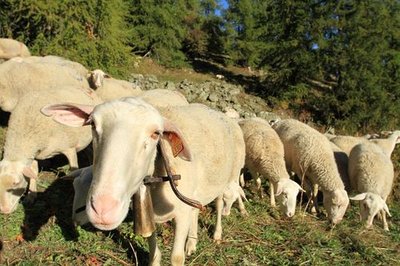
Brebis dans un mélézin - Jean-Philippe Telmon - PNE  Pastoralism
Sheep on the mountain pasture
During your walk, you might come across sheep on the mountain pastures. This is an old form of pastoralism, as proven by the dry stone enclosures that you will see. These are known as 'jas'. You will also notice a rock shelter near to the Clot. The sheep that are in these pastures belong to breeders from the valley or from the Bas Champsaur area.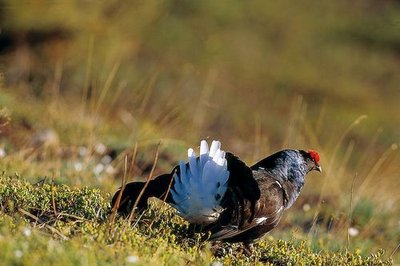
Tétra lyre mâle - Robert Chevalier - PNE  Fauna
FaunaBlack Grouse
The upper limit of the forest is where you are likely to see the black grouse. The female has faith in her bland-coloured feathering that camouflages her in the vegetation, making her difficult to spot. On the other hand, the male, which is black and white with red "eyebrows”, is not so private, particularly during the reproduction season when their cooing and hissing sounds echo in the mountain in the early morning.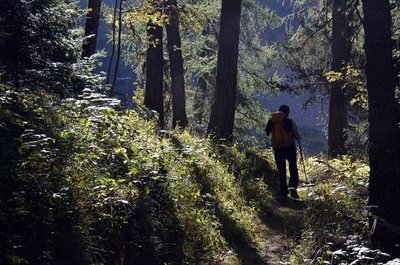
Montée au refuge des Souffles par la forêt de mélèze du Lautier - Bernard Guidoni - PNE  Flora
FloraVariety of the natural environment
This walk is a summary of south facing slopes in the Valgaudemar area. It starts in the warm scree that it more or less vegetated. It then progresses over lawns and moors of juniper, blueberries or bearberries... They give way to mountain ash, whitebeam and amelanchiers indicating that the forest will soon take over. Higher up, the beech forest casts shade on the walkers, next a beautiful larch forest is a sign that the forest environment will give way to the high altitude moors and lawns. The Lautier lake and the surrounding ponds are a haven for aquatic species. Still higher, is the realm of rocks and chamois.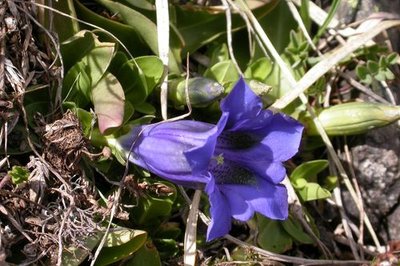
Gentiane - Olivier Warluzelle - PNE FloraVariety of plant life
There is a large variety of plant life along the itinerary, particularly on the slopes above the refuge, due to the exposure, the soil types and the altitude. Marjoram, lis, laserwort, houseleek, stinecrop, gentian, columbine, aconite and many others are present. History
Paravalanche
In 1961 and 1962 big avalanches descended as far as the riverbed of the Bonne, threatening the houses in the hamlet at Désert en Vajouffrey. In 1982 major works enabled the construction of a paravalanche in order to increase the safety of the hamlet and the prairies, by diverting possible threats coming from the Côte-belle valley.
- Geology and geography
New path
The last section of the path allows access to the mountain pass has required numerous days of maintenance since its creation. In fact the unstable character of the soil associated with the steepness of the slope have made it necessary for the rangers to create wooden benches to contain the weight of the earth.. In Autumn 2012, it was decided to create a new section of the path by using part of a sheep track further East in the direction of the Marmes mountain pass. The work was carried out by a team creating 50 m per day during 26 days with pick-axes and courage. In total, it is a section measuring 1300 m which has been created, which makes the path less steep and much more stable.
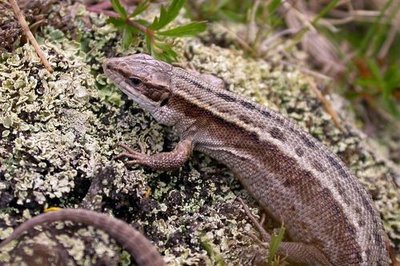
Lézard vivipare - Damien Combrisson - PNE FaunaViviparous Lizard
The viviparous lizard can be distinguished from the wall lizard by its rounded muzzle. It is capable of living at an altitude of 2500m and you will most often see them in the meadows. It likes to warm itself in the sun, resting on the grass or the dry moss to hunt grasshoppers, crickets or spiders. During the winter, it buries under the ground where in a lethargic state it can survive negative temperatures. The viviparous lizard is named like this because the females keep their eggs in their abdomen up until they hatch. So the young are completely formed when they are born, it is an adaptation to the cold environment.
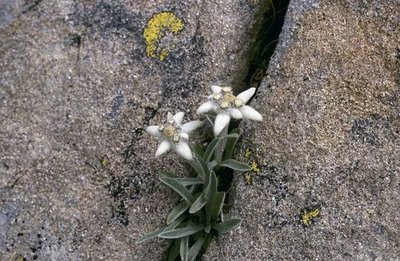
Edelweiss - Marie-Geneviève Nicolas - PNE FloraEdelweiss
In Latin léontopodium signifies the foot of the lion which is the general shape of the edelweiss. By looking at it closely, you realize that it is not one flower but a group of 5 to 10 flowers grouped in a flower head. The edelweiss is in the astéracées family like dandelions. It is a white plant, milky and perennial growing in rocky alpine meadows at subalpine level up to 2900 m. It often mixes with the Alpine Aster. The emblem of numerous guides, it symbolizes the high mountains and represents strength in the language of flowers...
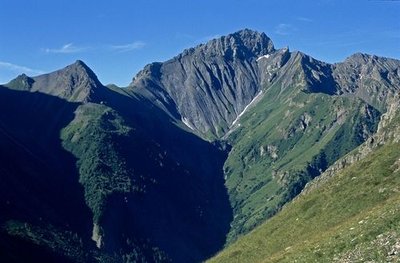
Pic de Valsenestre - Bernard Patin - PNE  Panorama
Landscape of the cirque de Valsenestre
From the mountain pass, climb the little summit above to better see the landscape which shows the cirque de Valsenestre : on the left is the Signal du Lauvitel (2901m) and the Clapier du Perron (3169m), the mountain pass at Muzelle (2613m) where the GR54 is. At this level you can really see a geological fault separating the Grandes Rousses which are granite from the Muzelle block in gneiss. On the right, the principal summits are the Roche de la Muzelle (3465 m), and the pointe Swan (3294m). Le col de Côte-Belle separates the Pic de Valsenestre (2752m) on the left from the l’Aiguille des Marmes (3046 m) on the right.
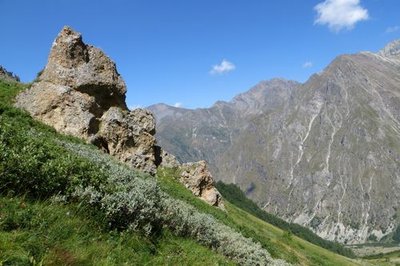
Saule soyeux - Bernard Nicollet - PNE FloraEuropean violet willow
This is a shrub in the subalpine tier. It is less than one metre tall and grows in small groups on the ubac. At lower altitude, it may grow taller. You can recognise it from a distance through its characteristic shiny, silvery colour and its growth in circular beds. Adult leaves feel very silky on both sides.
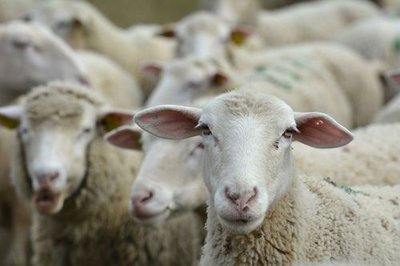
Troupeau de brebis - Mireille Coulon - PNE PastoralismFlock of sheep
A flock of sheep belonging to local farmers graze at the summit of the mountain pass near the Pic de Valsenestre. In summer these animals with their thick woolly coats can enjoy the shade of the willows that you can see just before arriving at the col (alt. 2220 m).
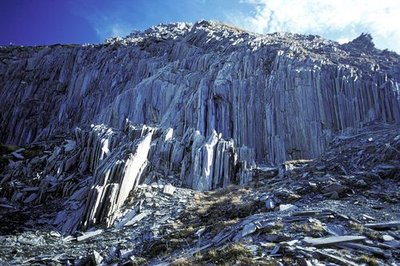
Les orgues au col de Côte Belle - Lucien Tron - PNE Geology and geographyCôte Belle organs
A striking geological phenomenon, the big organs , also known as the big library, were formed when the Alps were born. They were formed by thin grey-blue limestone sheets and by more highly eroded soft schistose marl. A series of perpendicular cracks in the layers divide the slabs into remarkable columns.
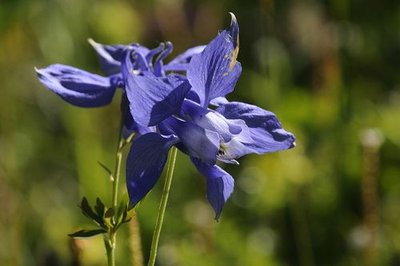
Ancolie des Alpes - Mireille Coulon - PNE FloraAlpine columbine
This is an uncommon and protected species, measuring 30 to 60 cm. The flowers are quite large and have a magnificent blue colour, blossoming at the head of the stem, and are the only ones with afive petals in the corolla. They are not to be confused with the common columbine, which has smaller flowers and is more widespread.
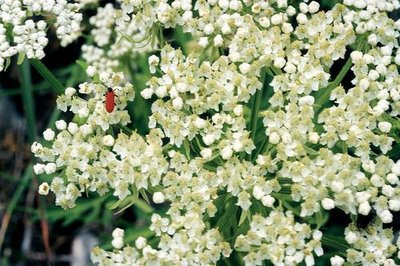
Pleurosperme d'Autriche - Bernard Nicollet FloraPleurospermum austriacum
This robust hardy perennial with a thick, hollow and grooved stalk belongs to the parsley and carrot family, and can grow from 60 to 150 cm high. Its large umbels of white flowers bloom from July to September. Very little known, in France it only grows in the Alpine areas and for this reason is worthy of attention.
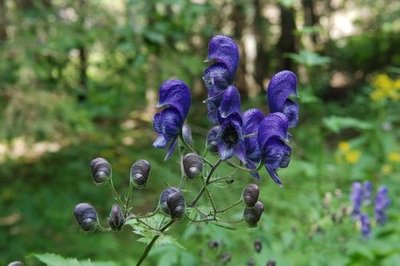
Aconit paniculé - Bernard Nicollet - PNE FloraMonkshood
This is a typical plant in tall herb fringe communities, measuring 50 to 100 cm. It has royal blue flowers shaped like helmets and grouped together in loose bunches. Their particularity is that they are highly toxic! Herbivores are aware of this and don’t eat them.
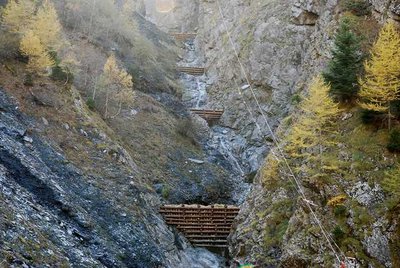
Barrages du torrent du Béranger - Samy Jendoubi - PNE  Water
WaterTimber dams
In the Combe des Echarennes, as you take the path to the left, you can see, in the gorges of the Béranger mountain stream, wooden dams made by the RTM (mountain terrain restoration department of the National Forests Office) to hold back the flow of debris carried down from the mountains during heavy rain and floods.
Mégaphorbiaie - Pierre-Emmanuel Dequest -PNE FloraTall herb fringe communities
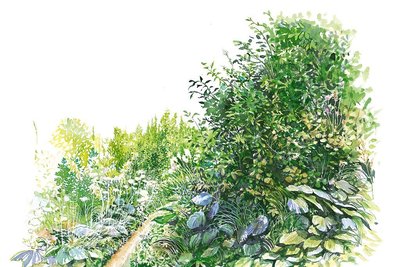
Tall herb fringe communities form a landscape linked to very precise conditions in terms of climate (wet summers and snowy winters), topography (long ubac slopes where névé sometimes remains on the ground deep into the summer), altitude (subalpine tier from 1600 to 2100 metres) and soil (unsaturated soils with large water reserves).
Prairie de fauche - Marc Corail - PNE FloraNatural Hayfields
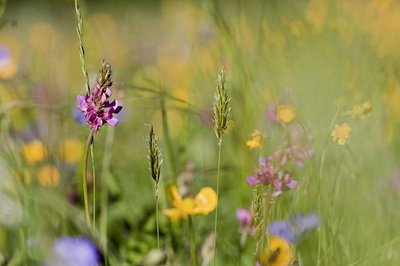
Agricultural specialists consider a meadow as natural if it has not been ploughed or fertilised over the last ten years. This is the case for those that you will see, surrounded by hedges, at the start of the hike. The meadows have an important variety of plant life and consequently attract multitudes of pollinating insects, including domesticated bees of course.- Flora
Alpine garden
More than fifty years ago, a botany lover, who is now elderly, created a small alpine garden in the centre of the village. Although it is less well kept nowadays, it still presents a stunning array of colour and a collection of spectacular plants belonging to alpine flora. 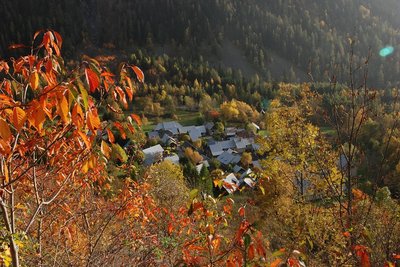
Valsenestre - Marion Digier - PNE HistoryViewpoint over the hamlet of Vasenestre
In the 19th century, the hamlet of Valsenestre had roughly one hundred inhabitants. The main activity was breeding. In 1851, a marble quarry opened in the bottom of the valley on the way up to the Muzelle pass. This was an opportunity for the village. It welcomed the quarry workers and benefitted from an improved road. Marble production stopped in 1905. Up until 1926, children laughing and shouting could still be heard in the village. The school had about thirty pupils. It was closed a few years later and the last permanent inhabitant of the village left in 1948.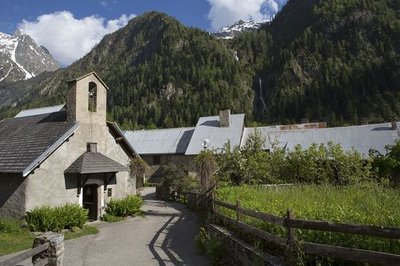
Le village de Valsenestre - Pascal Saulay - PNE  Architecture
Restored village
Valsenestre is a flower-filled village that has been superbly restored and is now made up of holiday homes The road is not cleared of snow in the winter. When the village had one hundred or so inhabitants it had a school (that has since been changed into a gîte d'étape (bed and breakfast halt), that closed in 1936. It was entirely buried by an avalanche in the 19th century. The main activity was still breeding but the opening of a marble quarry from 1840 brought complimentary resources to workers in the village. The last permanent inhabitant left Valsenestre in 1959.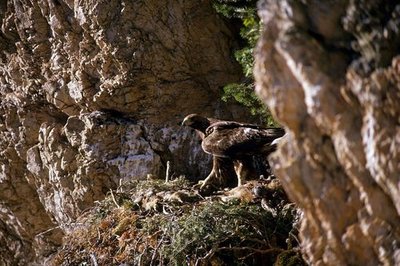
Aigle royal sur son aire - Robert Chevalier - PNE FaunaAlpine ibex and golden eagle
Reintroduced into the Valbonnais area in 1989 and 1990, the number of ibex is slowly increasing on the high summits of Valouffrey. A population of about fifty spend the winter on the well-exposed slopes of the Valsenestre valley. Some of them spend weeks on the rocky ledges of Peys above the village, waiting for brighter days. Some years, the golden eagle also comes to build its nest and raise its young. It is not rare to see it or hear it yapping above the footpath.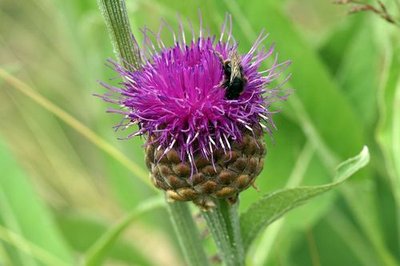
Rhapontique scarieux - Cédric Dentant - PNE FloraGiant scabiosa
This giant of the subalpine lawn looks like and is the size of an artichoke? In addition, it has a large round deep pink flower head with a pearly rim. Its huge leaves, that are white and velvet-like on the underside, are impressive and make it easy to identify. Sound nutrition for several species of beetle, its flower head is also a treat for butterflies. This plant species is not common and is protected on a national level even outside the Park.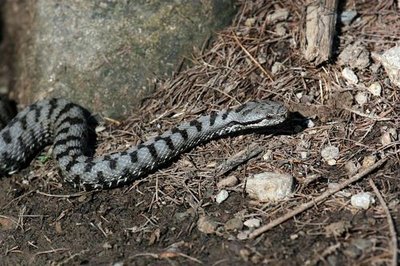
Vipère aspic - Jean-Philippe Telmon - PNE FaunaThe aspic viper
It has been a victim of legends and a bad reputation for centuries, but walkers that have been bitten are rare. This reptile that is, on average, fifty centimetres long, has a snubbed nose and a black, thin, vertical pupil, likes the well-exposed slopes. It seeks refuge in piles of stones and thorny thickets where it has no trouble catching small rodents and insects.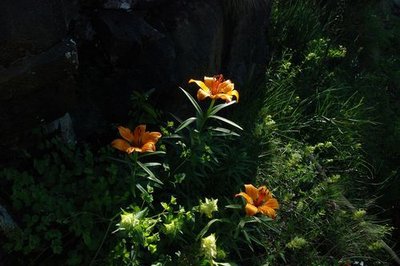
Lis orangé - Bernard Nicollet - PNE FloraOrange Lis
Due to its original and bright colour, it is easy to recognise on the steep terraces and rocky ledges. The orange lily is a rock lover that needs light and warmth, but not too much. This is why it blossoms at the beginning of summer to avoid strong heat. It is forbidden to pick it within the mountain National Parks, but also in several counties including the Hautes Alpes. Elsewhere picking is limited by decree.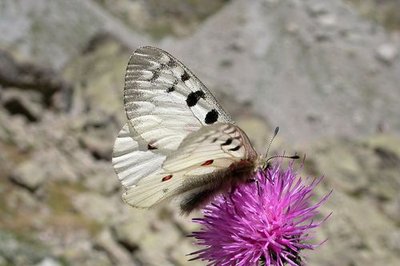
Grand Apollon - Christophe Albert - PNE FaunaMountain Apollo
One of the most beautiful butterflies you will come across in the mountains, its generally calm behaviour means it is easy to observe. It is linked to "camel" plants such as houseleeks that grow in dry conditions. They lay their eggs on this host plant, so that the larvae will be able to eat them.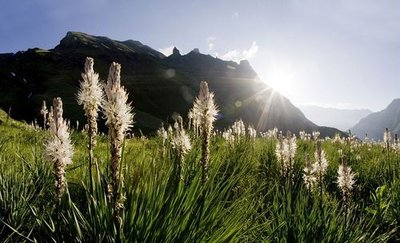
Asphodèles - Pascal Saulay - PNE FloraWhite asphodel
They grow in groups, often accompanied by the yellow gentian, on the old hayfields, which have deep soil. Its tall candle-like appearance is easy to recognise and its flowers that are grouped together in a flower spike, blossom one after the other over several weeks at the beginning of summer. Its fleshy tuber attracts underground rodents. It was previously used in the form of flour, to feed the mountain people in times of food shortage.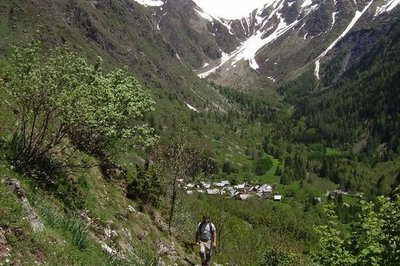
Montée à Combe Guyon - Bernard Nicollet - PNE PastoralismCombe Guyon pastures
They grow in groups, often accompanied by the yellow gentian, on the old hayfields, which have deep soil. Its tall candle-like appearance is easy to recognise and its flowers that are grouped together in a flower spike, blossom one after the other over several weeks at the beginning of summer. Its fleshy tuber attracts underground rodents. It was previously used in the form of flour, to feed the mountain people in times of food shortage.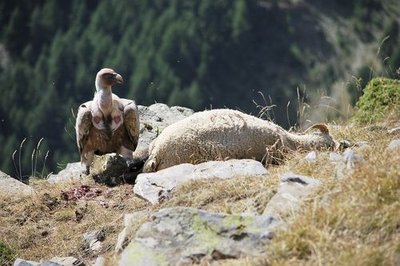
Vautour fauve - Marion Molina FaunaGriffon vulture
This enormous bird of prey, that has a span of almost three metres, is new to the mountains, thanks to a programme to reintroduce them dating from the end of the 20th century. In the summer, they swirl in the sky incessantly as a group looking for sheep corpses or other large wild mammals that they can tear apart for food. This impressive scavenger plays a welcome role in the healthy condition of the pastures.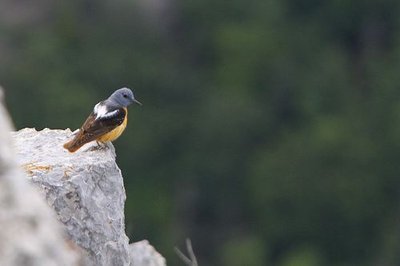
Monticole de roche - Pascal Saulay - PNE FaunaCommon rock thrush
Generally known as the rock blackbird, the male thrush stands out due to its bright contrasting colours and its melodic song. African in winter and alpine in summer, this magnificent migratory bird chooses open areas above the forests where it settles on rocky perches to sing and nests in the scree or other rocky nooks and crannies.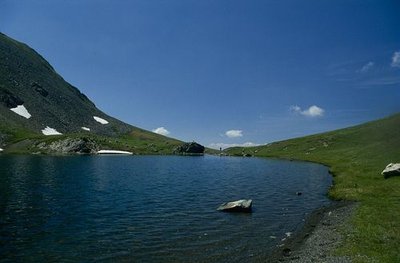
Le lac Labarre - Jean-Pierre Nicollet - PNE  Lake
LakeLabarre Lake
This medium sized lake, like many in the Alps, formed in the natural hollow or a cirque at the time of the great glacier retreat at the end of the 18th century. It was due to their force that, over time, they were able to sink into the soft rock and pass over the harder ones. Melt waters from the surrounding névé form runoffs filled with fine rock debris that flow into the one and a half hectare, 8 metre deep Labarre Lake. This is what gives it its distinct colour.
This medium sized lake, like many in the Alps, formed in the natural hollow or a cirque at the time of the great glacier retreat at the end of the 18th century. It was due to their force that, over time, they were able to sink into the soft rock and pass over the harder ones. Melt waters from the surrounding névé form runoffs filled with fine rock debris that flow into the one and a half hectare, 8 metre deep Labarre Lake. This is what gives it its distinct colour.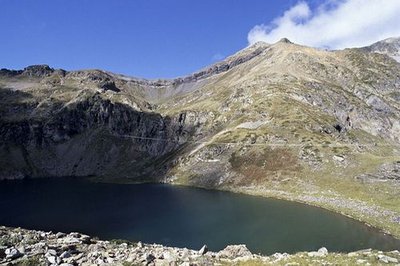
Le lac de Plan Vianney - Denis Fiat - PNE LakeLac de plan Vianney
The Plan Vianney lake is home to a good population of brook trout, also known as brook charr or speckled trout. Demanding concerning water quality, this species requires clear, cool well-oxygenated water. Here its reproduction is not through rearing. Fishing is not authorised by decree made the Ecrins National Park's director. Exceptions are made for fishing as part of scientific studies only.- Geology and geography
Vaugnerites
On the footpath leading to the Plan Vianney lake, essentially in the coomb of l'Héritière, outcrops of vaugnerites can be seen. These are dark rocks containing many mica flakes. Chemically similar to lamproite (magmatic rocks with high potassium content), they form enclaves of different sizes from 10 cm to several tens of metres, in the Rochail granite. 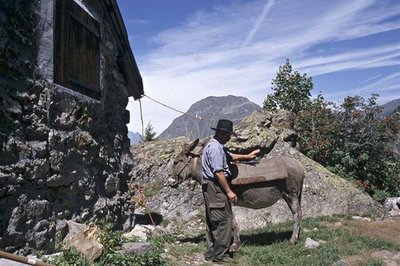
Au châlet de pêche - Denis Fiat - PNE HistoryChalets at altitude
On the Lauvitel dam are ancient prairie chalets as well as chalets that were built between the two World Wars to welcome hunters and anglers. Formally a private property, this valley was rented out to the ‘Bourgeoisie Dauphinoise’ for hunting. Angling, on the other hand, is still practised: it is managed by the Lauvitel Society for private angling. One of the chalets is still used to today to house agents from the Ecrins National Park and scientists from the nature reserve.
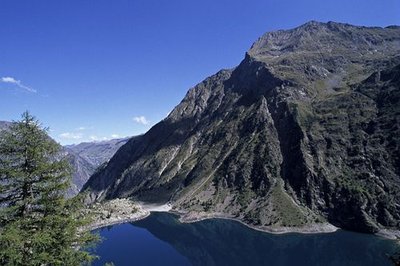
La digue du lac du Lauvitel - Denis Fiat - PNE Geology and geographyNatural Dam
Around 4000 years ago, a rocky landslide added to an existing glacial moraine to form a natural dam capable of retaining this large volume of water. The seasonal variation of the level of the lake of 20 to 25 m is due to the permeability of the materials making the dam. In fact the lake does not have a spillway and the water infiltrates the boulders of the dam. It offers a beautiful view of the lake which infact inspired the painters at l'Abbé Guétal.
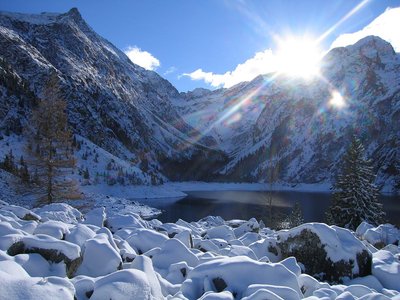
Lac du Lauvitel enneigé - PNE LakeLauvitel Lake
Lauvitel Lake is the biggest (around 25-35 ha) and the deepest (40-65 m) in the Ecrins National Park. A rocky landslide around 4000 years ago, added to an existing glacial moraine to form a natural dam capable of retaining such a volume of water. The waters of the lake are cold and well oxygenated. They suit several species of fish including the Arctic Char or the Brown Trout which were introduced for anglers. Today the Lake Lauvitel is the subject of numerous scientific studies: physical parameters, sediment, phyto et zooplankton are collected and analyzed.
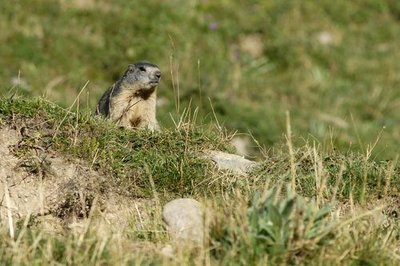
Marmotte sur son terrier - Mireille Coulon - PNE FaunaMarmots
The marmots are some of the permanent inhabitants of the grassland at the alpine level. . The view is very open, the herbaceous food is abundant and the soil sufficiently soft for them to be able to dig their burrows which are necessary for their survival. Although this animal is wild animal, it can become accustomed to the presence of humans and some marmots have started the bad habit of begging for pieces of biscuit from hikers, crisps and apples. Please do not feed them ! These foods, which are unsuitable to their needs, damage their health and survival. Would you think of eating grass in order to survive?
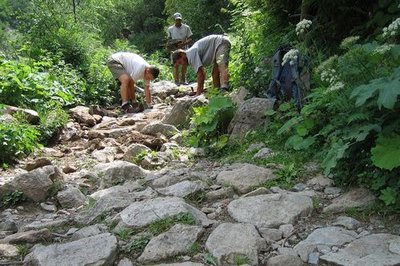
Pavage sur le sentier du Lauvitel - Cyril Coursier - PNE  Know-how
Traditional Paving
The Lauvitel path is often used especially during the summer. To limit the occurrence of erosion linked to the impact of human use but also to water flowing from melting ice or rain water it is covered with traditional paving, maintained thanks to annual restoration.
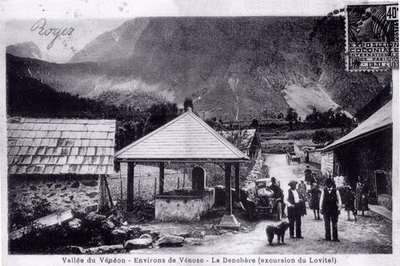
Le hameau de la Danchère - PNE ArchitectureDanchère Hamlet
With its paved lanes, its fountains and its stone wash-house, the Danchère offers an ideal starting point for going to Lauvitel which attracts 30 000 visitors every year. It is one of the numerous hamlets that make up the commune of Vénosc.
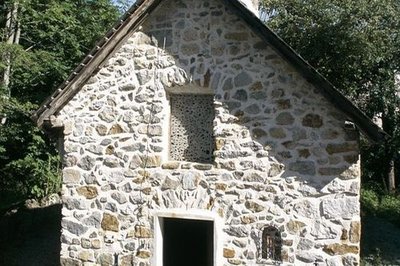
Les décharges de la chapelle de la Danchère - Cyril Coursier - PNE ArchitectureDanchère Chapel
Dedicated to Saint Louis and to Saint Claude, Danchère Chapel displays its agreeable proportions to visitors. The stones forming the arc of a circle above the entrance and the window do not only have aesthetic value. They are rightly called "a relieving structure" because they help to redistribute the weight of the facade on both sides of the openings. In the recess hidden behind wire netting is a ceramic statue of Saint Louis created in the Tarn region.
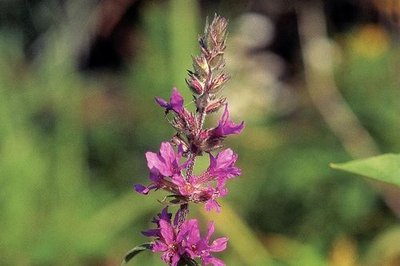
Salicaire - PNE FloraPurple Loosestrife
During the whole summer, the Purple Loosestrife, with its beautiful purple spikes, sprinkles the small Lovitel lake with colour. Considered to be a weed to be destroyed, it does however hold a position among the most useful plants (plants with medicinal properties). Its astringent properties, among others, deem it to be a good remedy against colic in infants when teething. In the kitchen, its young shoots and the flesh of its stalks used to be consumed as a vegetable. The leaves could also be infused like tea.
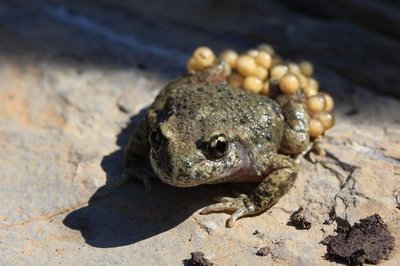
Alyte accoucheur - Marc Corail - PNE FaunaCommon Midwife Toad
In Spring, a short note emitted at regular intervals resonates around the lake. It is the mating season for this small terrestrial grey toad, mottled with black and brown; it is the male toad’s song to attract the females. A peculiarity of this anuran is that the male uses his back legs to surround the string of ova laid by the female to fertilize them with a jet of semen mixed with urine. In this way he watches over the eggs for several weeks. When they are on the point of hatching, he goes to the water and frees the young frogspawn.
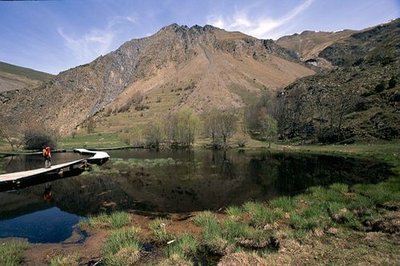
Le sentier de découverte des Clots, Mizoën - Cyril Coursier - PNE LakeLovitel Lake
In addition to being one of the rare wetlands at altitude on the highest part of the Romanche, Lovitel Lake unusually partially dries out during the summer and turns in to a marsh. In this way it becomes ideal for the development of amphibians who benefit from the absence of fish, their predators. Furthermore, the ecological quality of the environment is remarkable... Several species of great natural value are present at this site, notably the Adder’s Tongue Fern and the Small Meadow Rue, both protected regionally.
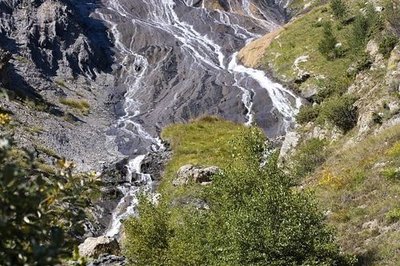
Les Clots, la fontaine pétrifiante - Gérald Lucas Geology and geographyPetrifying Fountain
The water that crosses the Emparis plateau which is composed of permeable sedimentary rock, fills up with Calcium bicarbonate. When, lower down, it comes in to contact with the impermeable crystalline rock layer of the Hercynien granitic base, the water follows a fault plane established between two layers and finishes in an aerial waterfall. The dissolved carbonates are transformed into a soft rock called Tuff by their contact with the air which has accumulated there for millennium. This resurgence, or petrifying fountain, is one of the most beautiful in France.
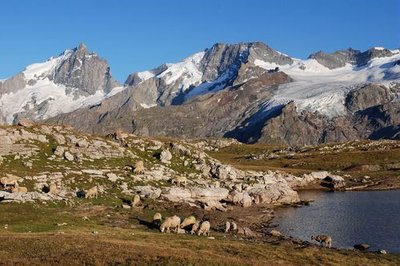
Troupeau d'ovins sur le plateau d'Emparis - Denis Fiat - PNE PanoramaThe Emparis Plateau
The mule path follows the edge of the Southern border of the plateau which is completely dedicated to pastoralism and tourism. It offers an exceptional view of the Meije whose marked relief contrasts with this gentle landscape. It welcomes 7 refuges and pastoral cabins as well as remarkable fauna, like the Mountain Hare and the Mountain Apollo butterfly. The challenge for this site is to preserve its pastoral character.
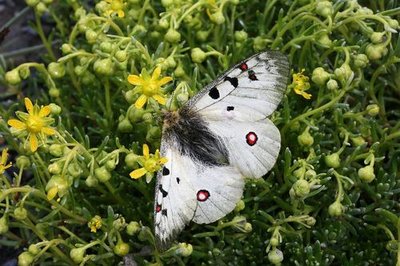
Petit apollon sur sa plante hôte (saxifrage faux aizoon) - Bernard Nicollet - PNE FaunaSmall Apollo
The Small Apollo is a rare and protected butterfly. It has finely striped black and white antennae, and a tiny red ocellus (eye) on each of its forewings. With a wingspan of 60 to 80 mm, it is the lord and master of the orangey-yellow beds of mountain saxifrages where it takes care of its eggs and feeds its caterpillars.
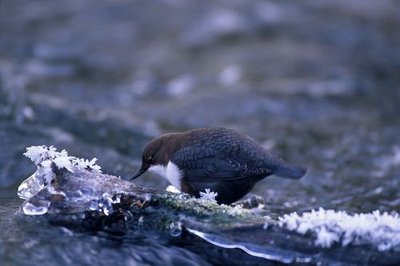
Cincle plongeur - Robert Chevalier - PNE FaunaWhite-throated dipper
Perched on a large, partly immersed pebble, the dipper sways to and fro with its tail aloft, and then dives down head first into the swirling water. This surprising passerine is unusual in moving underwater against the current in search of food. Thanks to a thin membrane protecting its eyes from the water, it can spot its prey (worms, small shellfish, water insect larva), before lifting its head out of the water and letting the current carry it gently along. It then takes up a new surveillance position and starts the process all over again.
- Panorama
Chazelet perch
To test your head for heights, there is nothing like this new, life-size game played facing the Meije a steel walkway suspended over empty space. The first few steps are daunting, but reaching the end of the walkway – or rather, empty space – calls for even more courage! Beneath your feet, all the way down below is the village of Les Fréaux, nestling against the Romanche, and above you, the giants of ice. If you add in the element of air, with gusts of wind blowing all around you, then strong sensations are guaranteed!
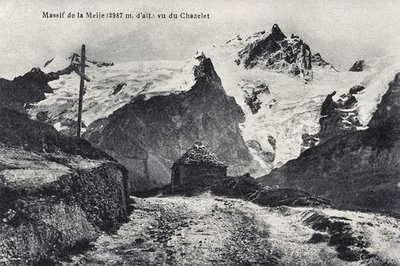
Massif de la Meije vu du Chazelet - PNE ArchitectureSainte-Anne du Chazelet oratory
Although it stands beside an ordinary road, the Chazelet oratory is famous for one of the most beautiful panoramas of the Alps and the Meije mountains. Built in dry stone, the edifice is at 1 834 m and overlooks the valley and the Ecrins and Meije mountains. It has been sketched, photographed and painted many times, including in the famous Meije by the Japanese painter Foujita.
Recently a new orientation table was placed a few metres above the oratory. In two parts, it shows the northern slope of the Meije and the southern slope in the direction of Chazelet and Savoie.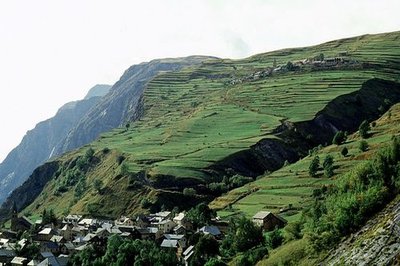
Terrasses, au hameau des Terrasses - Jean-Pierre Nicollet - PNE  Vernacular heritage
La Grave terraces
On the south-facing slope of La Grave, terraced farmland and villages are inseparable. This is a European-wide landscape uniting many architectural, archaeological and natural elements. This mountain farming system was shaped mainly by past and present agricultural activity. The steep terrain at the time required terracing for it to be farmed. These former planted terraces are today natural meadowland, which is mowed or used for grazing. It is highly sensitive to this new pastoral usage, and is little by little showing signs of soil erosion.
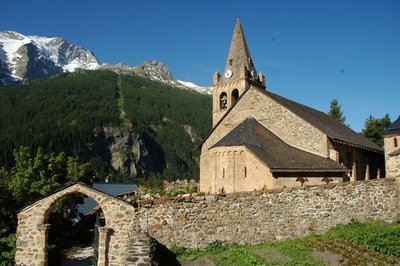
Eglise ND de l'Assomption à la Grave - Jenny Selberg - OT Hautes Vallées ArchitectureNotre-Dame de l’Assomption Church
Listed as an historic monument, Notre Dame de l'Assomption church towers over La Grave. In First Romanesque style, this remarkable building is thought to date from the 11th century, making it the oldest building in the town. All around the church is a cemetery with graves marked by wooden crosses and decorated with brass hearts, facing the giants of ice.
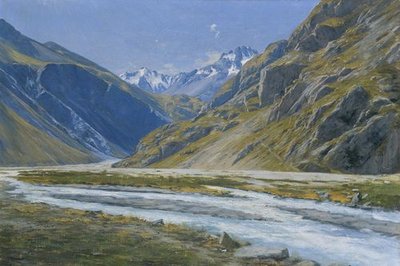
Vallée de la Romanche, Charles Bertier - © Musée de Grenoble HistoryRomanche valley, Charles Bertier
The Romanche was a source of inspiration for many mountain artists and it have been painted repeatedly. Charles Bertier (1860-1924) was inspired to paint Vallée de la Romanche au Pied-du-Col and Les Fréaux près de la Grave, two oil paintings that were painted in 1894. The artist from Grenoble learnt to paint landscapes with Jean Achard, and mountains with the abbot Guétal and did not hesitate to set up his easel on the high summits of the Dauphiné Alps. More to the point, his mission was to make his contemporaries 'understand the mountains'!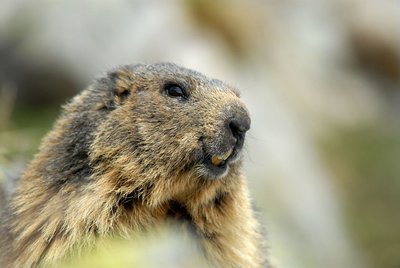
Marmotte au printemps - PNE - Papet Rodolphe FaunaThe marmots’ "bosse"
The alpine marmot is naturally present on grass at altitude. Here, it occupies a singular place which we call the marmots’ "bosse». This hibernating rodent is only visible between April and October. The marmot lives in a family and respects a hierarchy. Games, grooming, fighting and biting ensure the dominance of a couple as well as the cohesion of the group. Each animal participates in the delimitation of the territory by rubbing its cheeks on rocks and also by urinating and defecating there. When there is danger, the marmot emits a high and powerful whistle in order to warn the others.
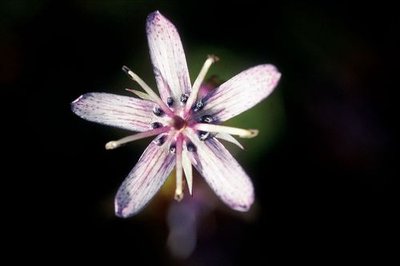
Swertie vivace - Bernard Nicollet - PNE FloraFelwort
In early August, the felwort’s violet stars open in the sunshine. At the base of each of its five petals, two shiny pits full of nectar attract insects. A member of the gentian family, this beautiful flower is a perennial that survives the cold season with its persistent winter bud close to the ground, surrounded by a rosette of protecting leaves.
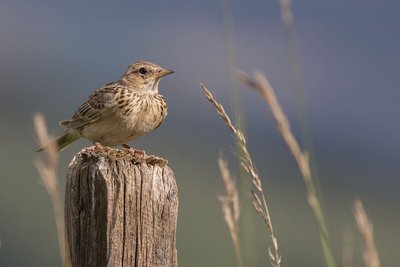
L’alouette des champs - PNE - Saulay Pascal FaunaSkylark
This bird is like a tightrope walker suspended in the sky, sounding out a long chorus of notes. Then, triangular wings back, and in a perfect spiral, the bird lands in the middle of the prairie. On the ground, it is difficult to see: its varying shades of brown means it is very well camouflaged. In its search for food, its movements, which are a succession of small sprints and sudden halts, enable it to spot possible predators.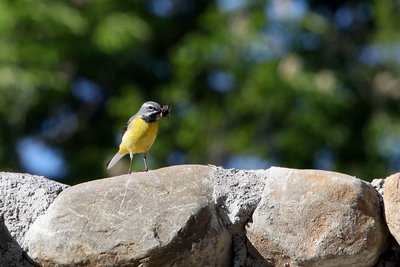
La bergeronnette des ruisseaux - PNE - Saulay Pascal FaunaGrey wagtail
The grey wagtail elegantly hops along the rocks at the riverside. They are found in mountain streams, but also near all waterways in the mountains, in the countryside or in towns, and even small high-altitude lakes. Like other wagtails, they continually wag their long black tails edged with white. They have yellow breasts like the western yellow wagtail, but their backs are ash grey. In the mating season, males proudly show off their black throats, making it easier to tell them apart from females, whose throats and breasts are partly white. Their pinkish claws are specific to the breed, since other wagtails’ claws are black.
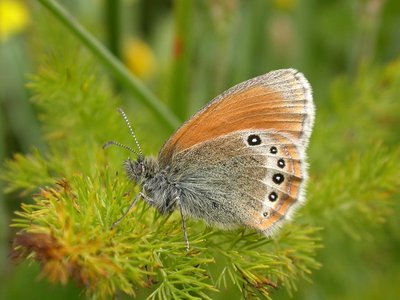
Satyrion (papillon de jour) - PNE - Delenatte Blandine FaunaButterflies and moths
Butterflies can be distinguished from moths by the shape of their antennae. You will also notice that when resting, the butterflies wings are vertically folded over the body for necessary discretion while the moth's cover them. The moorland clouded yellow butterfly has another unusual habit: as soon as it becomes too cold to fly, it settles and bends its side to the sun to absorb energy. It can even lean slightly, whereas others tend to fully, and dangerously spread themselves out.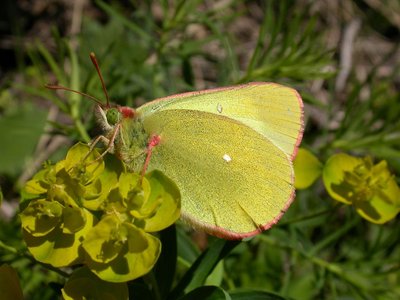
Solitaire mâle sur une euphorbe - PNE - Delenatte Blandine FaunaMoorland clouded yellow
The heath surrounded by heather and willows is the home of a population of unusual and protected butterflies: the moorland cloud yellow. Elsewhere, it lives in different environments, such as blueberry heaths and peatland, where the moorland clouded yellow is rare and hard to spot. It can be recognised by its yellow display delicately sprinkled with grey under the rear wings of the male, while the female of the species has adopted almost purely white wings. They both wear a simple pink border highlighting the edge of their wings, with a tiny white ocellus (eye) encircled with brown and a discrete grey crescent.
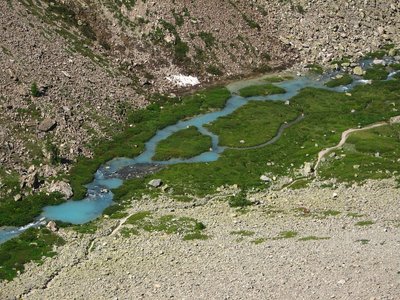
Eaux turquoises du Petit Tabuc - PNE - Coursier Cyril WaterWater colour in the meanders
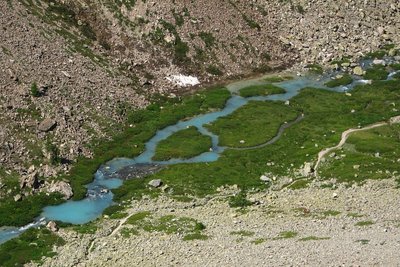
The turquoise colour of the water that meanders from the Petit Tabuc stream gives a special character to this remarkable site. The valley is popular among photographers and artists for its photographic and pictorial quality.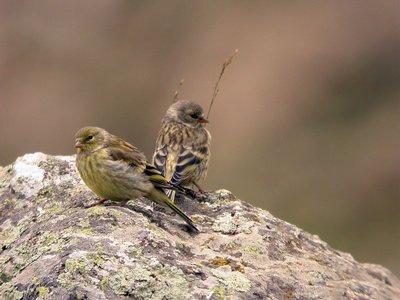
Deux venturons montagnards - PNE - Combrisson Damien FaunaAlpine citril finch
A small green-yellow-grey bird sways on a tall branch. Chet! The Alpine citril finch flies off to land on a scrap of threadbare grass. It looks like a small greenfinch, but the strident cry it makes during its short flight clearly sets it apart. Its head and breast flanks are a pretty blue-grey colour. Its yellow wing stripes can be easily seen. When flying over longer distances, its undulating flight is reminiscent of a goldfinch’s. And just like its cousin, the finch is sociable and moves about in small groups when exploring some sparse group of nettles or grass.
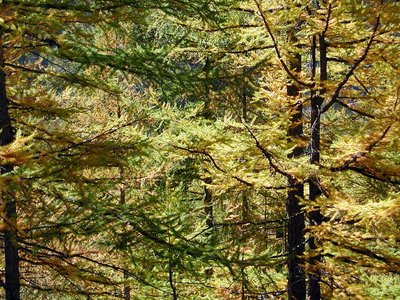
Mélezin - PNE - Quellier Hélène FloraLarch
The larch is the only European resinous tree to lose its needles in winter. Its wood is red-brown. It stands out in the landscape with its leaves ranging from a soft green colour in spring to gold in autumn. Its pink flowers attract naturalists and photographers in the spring. The larch tree is a coloniser of mountain slopes. Although it is at home in the harsh conditions of the mountainside, it cannot bear competition from other trees. The Petit Tabuc site is a fine example of its colonising capacity, even though it is regularly hit by avalanches.
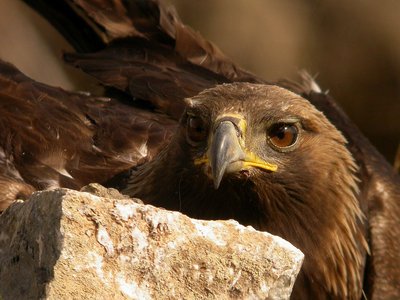
Aigle royal - PNE - Combrisson Damien FaunaGolden eagle, the Ecrins' mascot
The Petit Tabuc site is ideal for the golden eagle to nest. The golden eagle is amongst the protected species that are considered rare in Europe. The size of the populations that have been registered in the Ecrins massif, bestow a strong responsibility on the Park for conservation of the species. Counting takes place regularly since 1985 along with monitoring of reproduction, causes of disturbance and mortality.
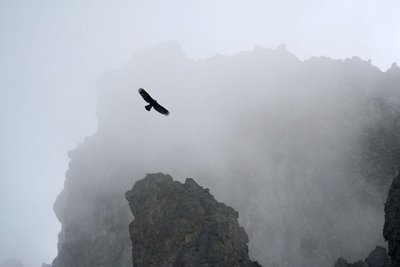
Aigle royal dans la brume - PNE - Telmon Jean-Philippe FaunaA flying predator
The eagle is the archetypal predator. Everything about it suggests strength and daring. Its appearance, of course, with its impressive expression highlighted by the prominent brow ridge, but above all its fearsome weapons: rapid flight, which can be adapted to even the most acrobatic situations, and sharp, powerful talons. Its keen eyesight helps it detect its prey, from the marmot to the young chamois, ptarmigans and hares. In winter, it often takes its food from the dead bodies of animals, helping towards the natural cleansing of nature.
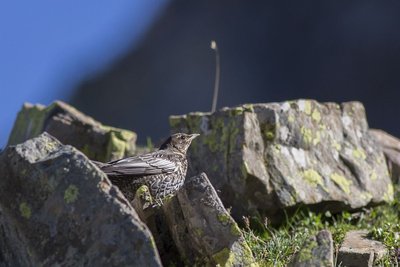
Jeune merle à plastron - PNE - Saulay Pascal FaunaRing ouzel
In the pastures covered with larch or 'bush", a cry of alarm followed the start of a song resounds. A blackbird? Yes, but more specifically a ring ouzel. This shy, swift mountain blackbird lives on the fringe of the larch, scots pine, spruce or Swiss pine forests between 1000 and 2500 m in altitude. The ring ouzel is a migratory bird that spends winter in Spain or North Africa before coming back to the mountains around March.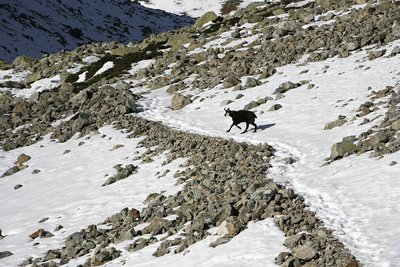
Chamois mâle au moment du rut dans le vallon du petit Tabuc, à proximité du Mônetier-les-bains - Cyril Coursier - PNE FaunaChamois
Rupicapra rupicapra, the mountain goat was not at first solely a creature of the mountains. The species is more attached to rocky escarpments and steep slopes than high altitude. But strong human pressure on chamois made them withdraw ever higher. Coveted as a hunting target, they have found refuge here in the Ecrins National Park.
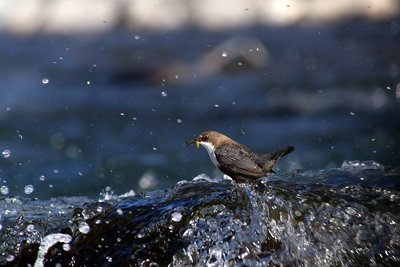
Cincle plongueur avec son repas dans le bec - Damien Combrisson - PNE FaunaWhite-throated dipper
The mountain streams relinquish their secrets to an attentive hiker. The master of this little world is a small brown, red and grey bird with a short tail and a pure white breast, separated from the darker abdomen by a light brown stripe. We can often see it in the air, flying close to the water to snap up insects. The dipper owes its name to its eating habits to find water larva, it dips its head into the water and grips the riverbed to walk against the current.
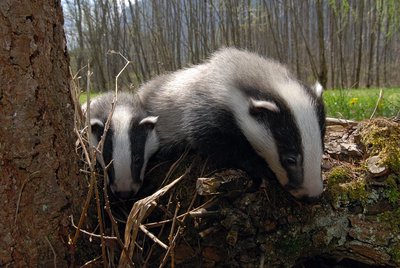
Deux jeunes blaireaux - PNE - Fiat Denis FaunaEuropean badger
You will often see a badger at nighttime on the edge of a path, a road or an embankment. The gentle pace and portly gait of this member of the mustelid family are reminiscent of a small bear you may get a glimpse of his black and the white stripes on his head before he hurries away. Worms, reptiles, frogs, fruit and plants are his staple diet. Families of badgers live in sometimes very extensive and very old burrows, with numerous chambers and galleries. They are tolerant animals, since they will sometimes share their home with rabbits and foxes. Badgers are among the unobtrusive neighbours whose presence goes undetected, except for their footprints made up of five nearly parallel toes and the tracks of their long claws.
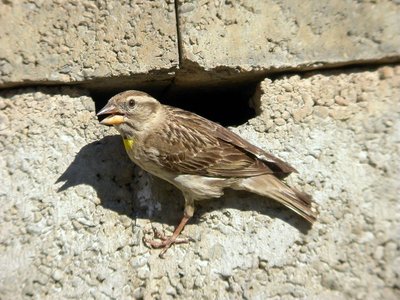
Le moineau soulcie - PNE - Combrisson Damien FaunaLover of old stones
The rock sparrow is a sedentary bird. It generally settles in well-exposed, agricultural areas where there are lots of stones, stone terraces, ruins, piles of stones, old buildings. This southern sparrow can be found up to an altitude of 2000 m provided there is an open landscape and many mineral elements. It nests in the hole of a rock, in a wall and sometimes under the roof of a house. It will then mingle with the house sparrow. A sociable bird, it lives in small, dispersed colonies.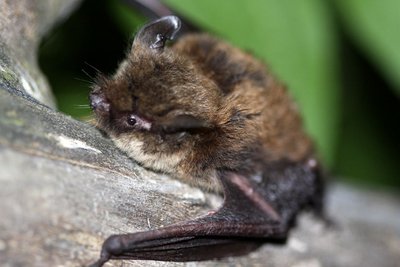
Le murin à moustaches - PNE - Corail Marc FaunaWhiskered bat
The whiskered bat is a dark-faced bat. It is quite common in certain mountain regions and is one of the most frequent species after it cousin the common pipistrelle. It likes trees, be they on the banks of a river or in the high altitude forests, but it is also possible to catch sight of them in gardens and villages such as the hamlet of Casset. This small mammal lives on flying insects and thus helps in controlling their numbers. Like all mammals, the female feeds her sole offspring with her milk.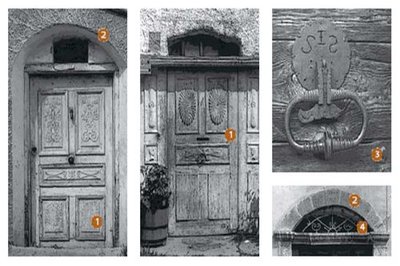
1.Ventaux de porte décorés, 2.Arcs en plein-cintre, 3.Marteau en bronze forgé, 4.Imposte en éventail - PNE ArchitectureDoors and courtyards
As you stroll through the streets of Le Casset, some house doors will attract your notice, as they bring together most of the decorative elements of the facades. Made of larch wood, they have been moulded or sculpted with geometric or floral patterns and have a tympanum above them, often with a grating. Behind the door is the courtyard, the shared entrance for people and animals. The way people lived and organised their homes resulted in this single entrance, an area giving access both to the stable and to the living quarters. Between the world inside and outside, the courtyard provided a passageway, insulation, but also storage space.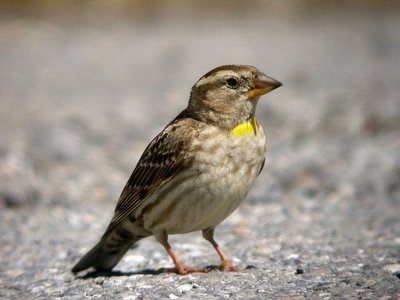
Le moineau soulcie - PNE - Combrisson Damien FaunaRock sparrow
The rock sparrow is here at the north-western limit and highest altitude of its home territory and regularly nests in the area. The species is in decline nationally and is on the endangered ‘red’ list in Rhône-Alpes and is being studied in the PACA region. People sometimes pay little attention to house sparrows since they are so familiar, which is a pity. The rock sparrow is bigger and although its plumage is similar to a female house sparrow’s, its call sets it apart at once: pi-yip or pi-yui or even a chay sound that is similar to a brambling’s!
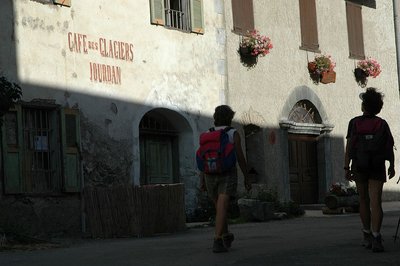
Dans le hameau du Casset - PNE - Masclaux Pierre HistoryLe Casset
At the entrance to the valley, Le Casset is a stone shell village surrounded by farming landscapes. Its name comes from the verb 'cassare' ('to break, to shatter' in late Latin), describing a place covered with stones. In fact there are many such villages in this mountain valley carved out by a vast glacier. Le Casset, on the left bank of the Guisane, is sheltered from avalanches beneath the watchful eye of the prestigious summits and glaciers that “move” in a different time scale from our own.
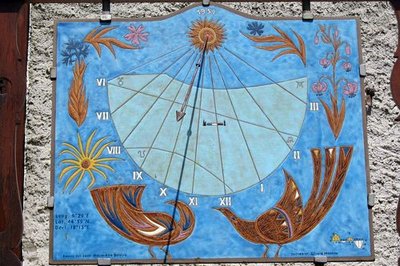
Cadran solaire au hameau du Casset - Claire Broquet - PNE ArchitectureSundials
As you walk through the village of Lauzet, you will see recently made sundials made in traditional style. Easy to see from the main village streets, they adorn the beautifully restored facades of the old houses.- Architecture
Saint Claude’s church in Le Casset
With its disproportionately high spire, the Casset church never goes unnoticed. Its four-sided Comtois steeple was modelled on the collegiate church in Briançon. The church is listed as a Historic Monument and is placed under the protection of Saint Claude. In its present condition, it dates from the 18th century. The previous building was constructed prior to the 16th century. Inside, the eye is immediately attracted by the choir ogives, creating an intimate atmosphere, particularly since the unusually large spire does not suggest an interior of such a small size. The choir was rebuilt in 1716-1717, probably after the previous chapel burnt down. Traces from this period can be seen on the keystone. The wrought-iron choir gate has the inscription "HM 1717", a date that can also be seen in the apse, on the wrought iron railing of the impost of the axial window, and on the baptismal font.
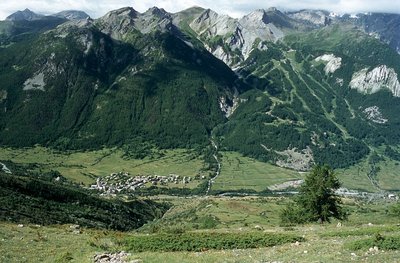
La station de Serre Chevalier 1500 au-dessus du hameau des Guibertes - © Parc national des Écrins - Jean-Pierre Nicollet HistoryThe Serre Chevalier resort
At the edge of the Ecrins National Park, the Serre Chevalier ski resort extends over several towns and villages on the right bank of the Guisane, from Monêtier-les-Bains to Briançon. Founded in 1941 with the Chantemerle cable car, it has the biggest ski area in the southern Alps with 61 ski lifts on all levels from an altitude of 1,200 m to 2,830 m to Pic de l'Yret (Le Monêtier-les-Bains). The resort’s logo is an eagle, in reference to Baron Borel du Bez, Briançon’s representative in 1792 at the Legislative Assembly, which ruled France between 1792 and 1795, during the French Revolution. Le Bez is a hamlet in Villeneuve that was united with the Chantemerle ski resort in the 1970s.
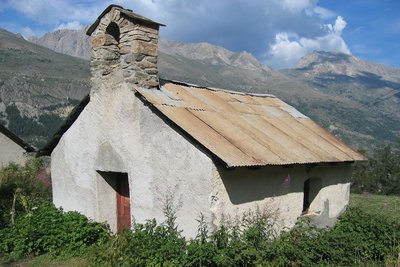
Chapelle Saint-Antoine du Charvet - © Florence Chalandon HistoryCharvet Chapel
Near the arrival of the old Charvet button lift, dating from 1948 (still present, but disused since the end of the 2003/2004 season), is the Charvet chapel, which was built in 1755. Easy to access both in summer and winter from Le Monêtier, it provides hikers with a wonderful panorama over the southern Guisane valley.
It is quite unusual for a chapel in the region to be dedicated to Saint Anthony of Padua rather than to Saint Anthony the Great. Was there a shift in patronage over time? The fact the saints had the same name led to the particular qualities of each one being mixed up.
Vallon de l'Eychauda - Office de tourisme Pays des Écrins PastoralismThe old hay meadows
Lower down as you cross the area, near the pastoral Cabane de l'Eychauda, you can make out piles of stones, the clapiers formed by the removal of stones from the hay meadows. In order to feed the livestock right through the winter, it was necessary to garner a large amount of hay! With changes in livestock farming practices, there are no longer cut for hay, but used for grazing. Only a tiny area of the valley - the flattest - is still mown for hay, mechanically.
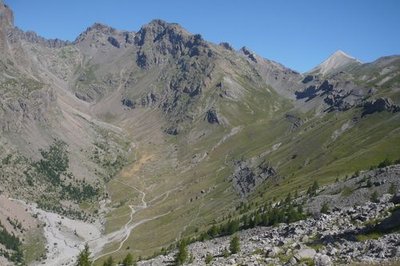
Les deux versants du vallon de Chambran - Marie-Geneviève Nicolas Geology and geographyThe front of the nappes
The two slopes of the Chambran valley are very different: the right bank, minerals are very present. There are granites and gneiss making up the crystalline base of the Ecrins massif. On the left bank, the prairies are sandstone and chalky. These are part of the glacial thrust sheet: they are ancient sediments deposited mostly to the East, in the Alpine ocean, then carried here by compression at the time of the formation of the Alps.
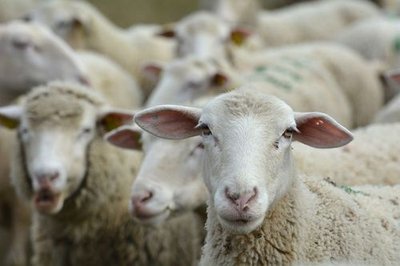
Troupeau de brebis - Mireille Coulon - PNE PastoralismEvolution of pastoralism
In the valley, the ruins of numerous piles of stones resulting from the removal of stones in the hay meadows are witness to another age. Most of these old prairies are now grazed by sheep. Pastoralism has evolved: no more local flocks so less hay, the valley is now occupied by a large flock from the Haute-Provence Alps.
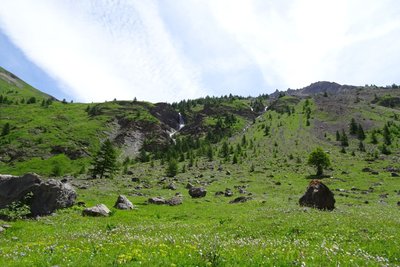
Parc à moutons - Office de tourisme Pays des Écrins PastoralismThe realm of sheep
Together with its entire catchment area, the Chambran valley constitutes an enormous alpine pasture. Sheep belonging to several different owners are gathered here for the summer grazing season. Many of them come from the department of Alpes-de-Haute-Provence. The landscape (sheep paths, old hay meadows), vegetation, built structures (old dairy, pastoral cabins)... everything has been marked by centuries of animal husbandry.
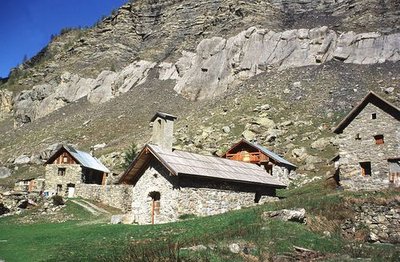
Le hameau de Chambran - Marie-Geneviève Nicolas - PNE HistoryChambran Hamlet
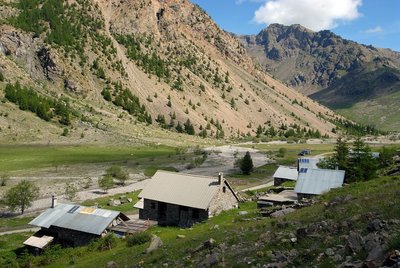
At an altitude of 1700 meters, this hamlet is inhabited in summer, at the beginning of the summer pasture. The old dairy has been spruced up to become a snack bar. It’s pretty little chapel dedicated to Saint Jean is very simple and bare.
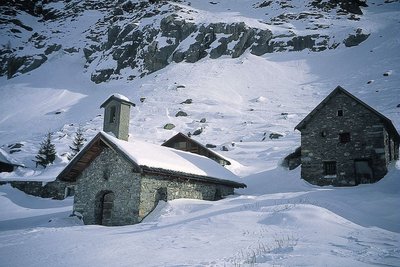
Les chalets de Chambran sous la neige - Marie-Genevève Nicolas - PNE Vernacular heritageChambran chalets
Remnants of a way of life that has disappeared, the Chambran chalets were once a high-altitude village where flocks stayed during the summer months. Today this is a welcome stop along the GR54 and the starting point for hikes towards Lake Eychauda.
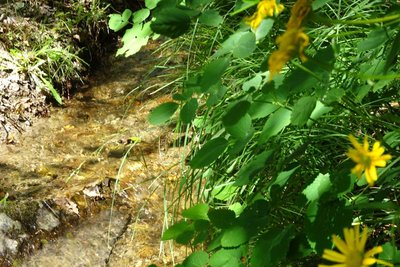
Le Canal du Béal Neuf - Office de tourisme Pays des Écrins WaterASA of Béal Neuf
The ASA (authorised water user association) of Béal Neuf is the owner of the canal. The association manages, maintains and develops the Béal Neuf canal which carries water to the entire network of irrigation canals.
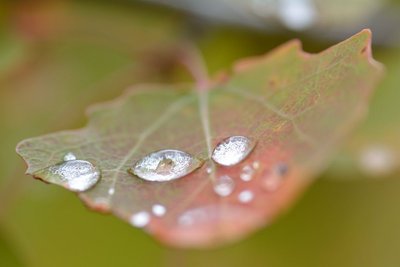
Gouttes d'eau sur une feuille de tremble - Mireille Coulon - Parc national des Écrins FloraThe aspen
The path runs through a small aspen wood. This tree with a smooth, greenish trunk and rounded, crenelated leaves takes on magnificent autumn colours. The stem, or petiole, of aspen leaves is flat and twisted, so it can be caught by the slightest breeze making the foliage «quake» hence its common name, the quaking aspen. It grows in places where the soil is quite damp.
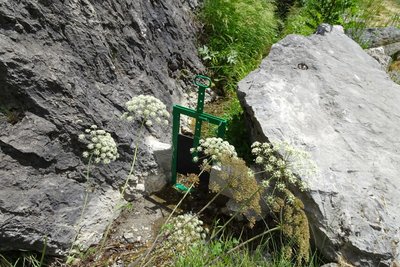
Martelière qui assure la distribution de l'eau - Office de tourisme Pays des Écrins WaterWater in the mountains
Since the Middle Ages, canals have been dug to carry water to the crops. The water is diverted by the canals: through the action of gravity, the water flows down the mountain sides. Use of the water is regulated and for any draw-off, the volume is measured.
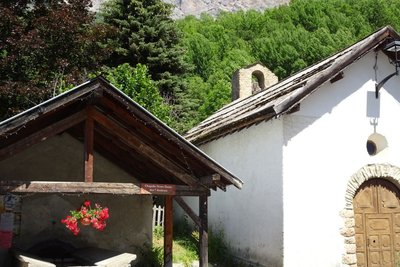
La chapelle aau Fangeas - Office de tourisme Pays des Écrins Vernacular heritageThe minor heritage of Pelvoux
Every hamlet has its own chapel. In the territory of Pelvoux, Les Claux has the chapel of Sainte-Barbe with a restored sun dial dating from 1792. The seventeenth-century chapel of Saint-Pancrace is in Le Poët. In Le Sarret, you can admire the chapel of Saint-Joseph and the chapel of Notre-Dame des Sept Douleurs stands in Le Fangeas. Every hamlet has its own communal oven and water fountains as well. Finally, the church of Saint-Antoine is located in the hamlet of Saint-Antoine. It has a sun dial dating from 1810.
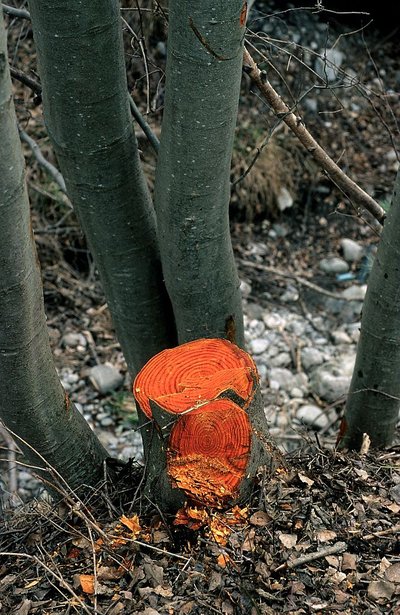
L'aulne blanc - Nicollet Bernard - Parc national des Ecrins FloraThe grey alder
In the valleys of the Alps and the Jura, the grey alder often grows in place of the black alder, present in many parts of France. Like its cousin, it grows on riversides and plays an important role in stabilising the banks. If it is cut down, its wood is bright orange in colour. But why cut it down?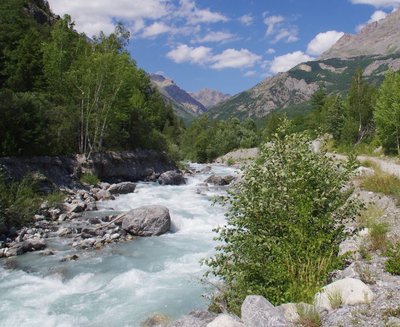
Le Gyr - Office de tourisme du Pays des Écrins WaterThe Gyr
Humans are decidedly bizarre animals: they build, knock down and start again. To protect the new infrastructures of Pelvoux, the Gyr was dammed. But, not able to flow as it did before, it deepened its bed, thus placing the foundations in danger of damage. And so works were carried out to widen its bed, allowing it to flow more naturally. This is also more favourable for biodiversity, as well as protecting the developed urban areas.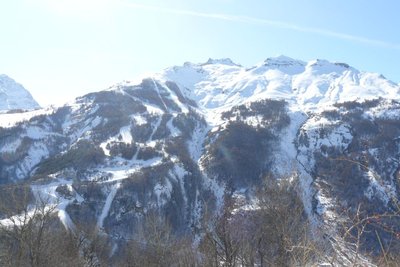
Vue sur la station de Pelvoux-Vallouise - Pelvoux Office de tourisme du Pays des Écrins Vernacular heritageThe ski resort of Pelvoux-Vallouise
The route first leads through the small ski resort of Pelvoux-Vallouise, built in 1982. Very family-focused, in winter it's the ideal place for young children to learn to ski, with small lifts lower down, while their big brothers and sisters can ski higher up.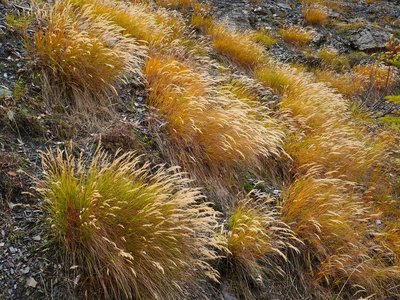
Le calamagrostide argentée - Nicolas Marie-Geneviève - Parc national des Écrins FloraSilver spike grass
A grass grows in large clumps on the embankment: silver spike grass. It is adapted to stony, dry and sunny ground. Its inflorescences reflecting silvery-gold glints create a beautiful effect, but they are particularly noticeable in the late summer, when it forms large shimmering bouquets in the evening sunlight.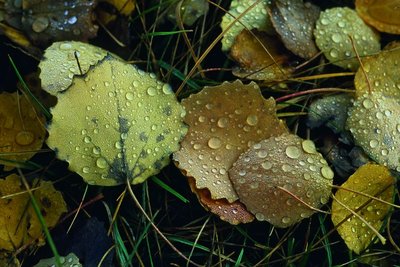
Des feuilles de tremble - Bernard Nicollet - Parc national des Écrins FloraThe aspen
On the right, a stand of aspens with smooth, greenish trunks and rounded, crenelated leaves take on magnificent colours in autumn. The stem, or petiole, of aspen leaves is flat and twisted, so it can be caught by the slightest breeze making the foliage «quake» hence its common name, the quaking aspen.
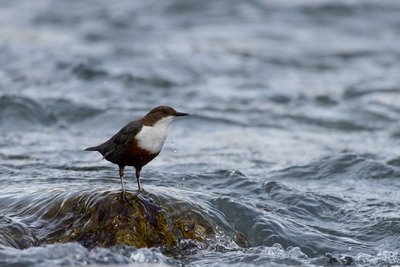
Cincle plongeur - Mireille Coulon - Parc national des Ecrins FaunaThe white-throated dipper
Perched on a rock in the middle of the river, a squat bird with a short tail, brown with a large white bib, bobs up and down with his tail in the air. He then dives and only reappears a few moments later. This is how this bird hunts, diving into the water and then walking against the current along the river bed searching for aquatic insect larvae, small crustaceans or small fish, lifting pebbles with its beak to dislodge them.
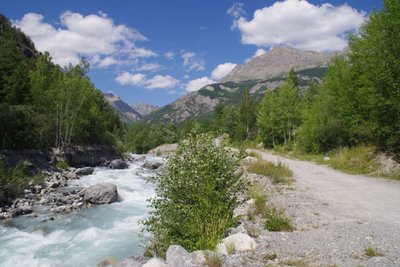
Forêt au bord du Gyr - Office de tourisme Pays des Écrins FloraForest on the water's edge
This small wood is a fragment of the riparian forest: natural forest growing adjacent to a body of water. Reduced everywhere due to urbanisation, this type of forest is made up of alder, willow and oak, and also poplar, birch and aspen, among others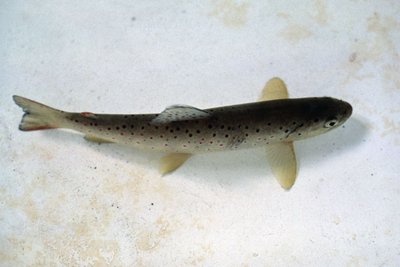
La truite fario - Parc national des Écrins FaunaThe trout
But what's the angler angling for? The brown trout of course! This is the mountain fish par excellence, with a streamlined body to withstand the current more efficiently and light brown skin speckled with black and red. It lives in cold, oxygen-rich waters.
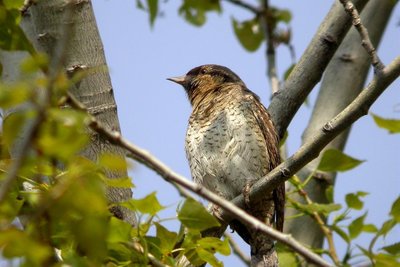
Torcol fourmilier - Damien Combrisson - Parc national des Écrins FaunaThe northern wryneck
The old trees in the orchard are home to the northern wryneck. It has a loud song, rather like that of the green woodpecker, only slower. This bird owes its name to the extreme way it extends and twists its neck when it feels threatened. Its French name torcol fourmilier is a reference to the fact that it feeds on ants (fourmils in French). Difficult to spot because its plumage merges into the colour of the tree trunks, it gives its presence away by its song when it returns from its migration.
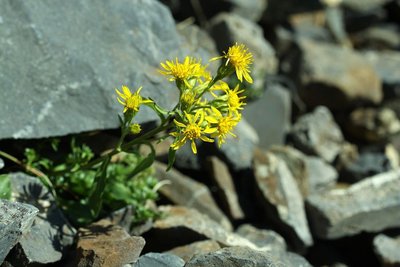
Petite verge d'or - Cédric Dentan - Parc national des Écrins FloraThe great goldenrod
In damp spots on the edge of the track, swathes of tall plants grow. It forms great plumes of tiny yellow plants. The great goldenrod, still known as the tête d'or or "head of gold" is a plant native to North America and introduced into Europe in the eighteenth century as an ornamental. Since then, it has colonised a large are of Europe and in some places it even competes with the local flora.
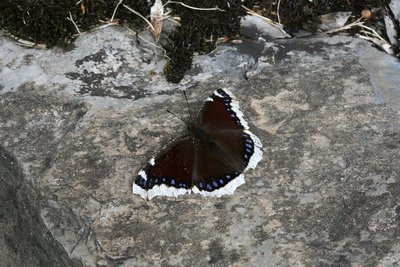
Le morio - Bernard Nicollet - Parc national des Écrins FaunaThe morio
With wings edged with creamy white and sporting a string of little blue dots, a large butterfly takes flight from the path as the walker approaches. This is the morio. Its common French name is manteau royal, or royal cloak (although her cloak is not edged with ermine!) It lives near willow and beech trees because it loves the sap that flows from wounds in these trees. It is one of the few butterflies to hibernate as an adult.
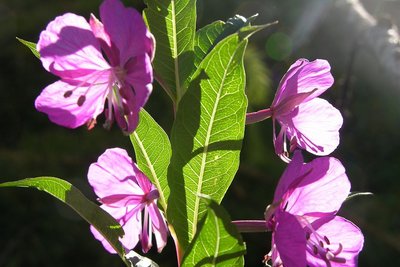
Epilobe en épis - Thierry Maillet - Parc national des Écrins FloraThe rosebay willowherb
The rosebay willowherb is a tall, upright plant with elongated leaves. Its numerous purple-pink flowers are arranged in loose spikes at the top of the stem. It forms large clumps, which produce a beautiful display when in bloom. It is a pioneer plant and favours road embankments and disturbed ground. In late summer, its very numerous seeds, each with a little plume, float away en masse glowing in the advancing twilight…
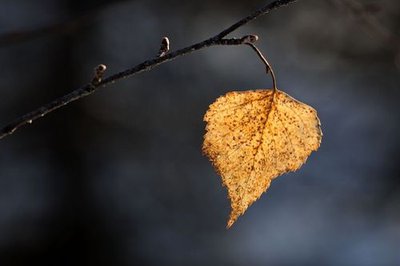
Feuille de bouleau - Mireille Coulon - PNE FloraSilver birch
On the edge of the Onde, once you have crossed the footbridge, the stone footpath weaves its way between the birch trees. This tree is easy to recognize amongst all the others due to it thin white bark. Due to the tar that it contains, birch bark stays intact even after the wood has rotted inside. It was used as parchment and as tannin in boreal regions. In this area, the birch's young twigs were mostly used to make brooms.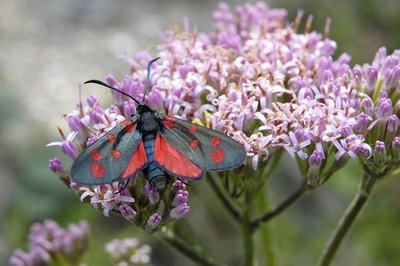
Zygène transalpine - Mireille Coulon - PNE FaunaSoutherly burnet
These small moths that come out during the day, are part of thirty species of burnet in France. Their long wings are black or sometimes bluish and have red spots. Such bright colours are a warning of toxicity to their predators. Burnets are capable of extracting chemical components similar to cyanide from plants. They then secrete this poison through their mouth and joints when faced with danger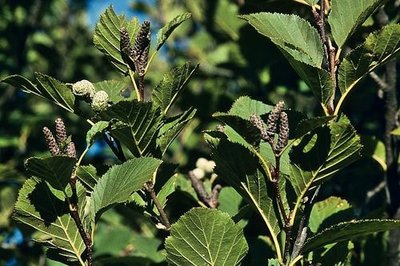
Aulne vert - Bernard Nicollet - PNE FloraGreen alder
This bushy shrub grows in entangled thickets, which are a refuge to birds and chamois that are in search of coolness and quiet. It is a pioneer and not afraid of settling in poor, steep terrains. Its strong roots mean it can latch on where everything else slides. Its flexibility means avalanches slide over it as it bends under the weight of the snow. The male catkins dangle when they are mature showing the pale yellow of their flowers. The female flowers will bear characteristic fruit like small pinecones that are first green, and then brown that persist all year round.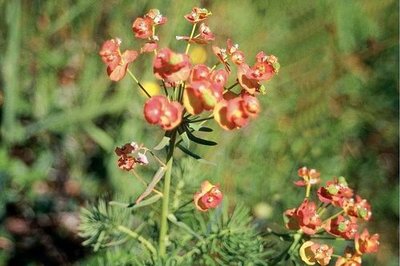
Euphorbe faux cyprès - Catherine Boutteau FloraCypress spurge
This is also referred to as "milk herb" in relation to the sticky white liquid that flows when it is cut. This is a toxic, irritating latex. It is identifiable due to its thin soft leaves and its original flowers that change colour and group together in inflorescence. By looking closer, in the middle of a 'cup' made from two bracts, it is possible to distinguish a female flower which is reduced to a ball (ovary) on a long stem, and males flowers with a sole stamen and four crescent-shaped nectar glands.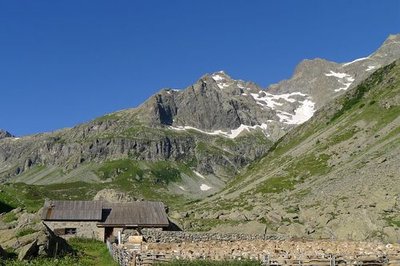
Brebis parquées près de la cabane de Jas Lacroix - Thierry Maillet - PNE PastoralismThe pastoral hut and the walkers' shelter
The Jas Lacroix pastoral hut is where the shepherd lives during the mountain pasture period. This where she herds the flock to count or nurse the animals. To the right of the hut there is a shelter for walkers on the GR54 route. It is maintained by a volunteer from the valley. Please leave it in the state of cleanliness you would like to find it.
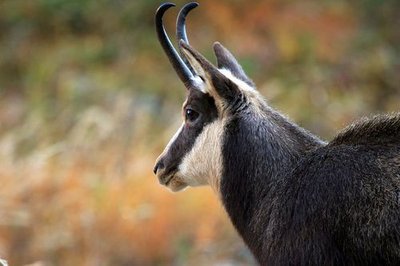
Chamois mâle dans le vallon de Celse Nière - Christophe Albert - PNE FaunaChamois
In the summer, it is at the coolest times of the day that you are likely to see a chamois busy grazing. When the sun heats the valley, they prefer to lie in the shade of the green alders, or otherwise stay on the névés. Their hearing and their sense of smell are highly developped and makes it difficult to approach them. You will need binoculars to see them. If the end of their horns are curved, it's a male, a buck. Open horns, it's a female, a doe. If the horns are shorter than the ears, it's an 'éterlou', a young male chamois in its second year. Barely visible horns, it's a kid.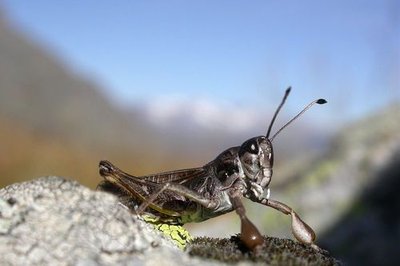
Gomphocère des alpages - Blandine Delenatte - PNE Fauna"Popeye" grasshopper
In the pastures, in August, tens of grasshoppers jump and then disappear into the grass with each of our footsteps. Amongst them, the most original is perhaps the gomphocerus sibiricus nicknamed Siberian grasshopper, due to its resistance to the cold. The male is also known as the "Popeye grasshopper" because of its 'muscled' front legs. Its green-brown colour might mean it would go unnoticed were it not for this anatomical detail and it long, consistent "cre-cre-cre-cre" ending with a couple of separate "cre" that it repeats in order to attract a female.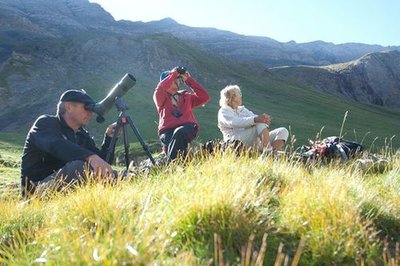
Jean-Philippe Telmon anime une sorties observation des bouquetins - Pierre Masclaux FaunaThe alpine ibex
In 1995 several ibex were introduced into the Champsaur. Since then, their population has steadily progressed to the valleys of the massif. A small group of ibex spend the summer season on the cliffs of the Chanteloube valley that overlooks the Jas Lacroix hut, on the left bank. They are more often than not perched on the rock faces and are difficult to see but from the hilltop above the hut, you might be lucky enough to see one on the rocks with the help of a telescope.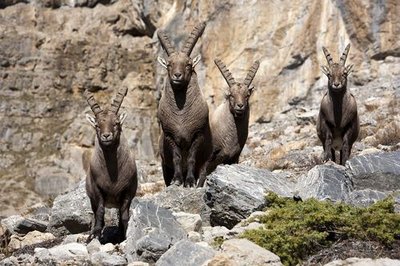
Quatre bouquetins dans le massif des Cerces - Cyril Coursier - PNE FaunaThe ibex, a survivor
In the face of danger, the ibex does not run away but takes refuge on a rock face where it thinks it will be safe. This strategy has enabled it to escape from land predators for thousands of years. However, it has proved to be inefficient against man since the invention of the crossbow or the rifle. As a result, the ibex was almost wiped out in the 19th century. The species owes it survival to Italy's protection in the creation of a royal reserve, that later became the Gran Paradiso National Park.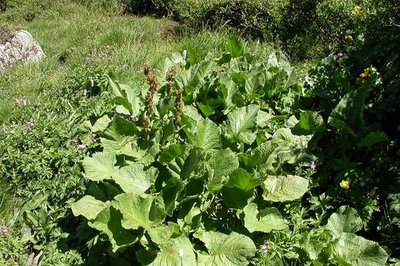
Rhubarbe des moines - Christophe Albert - PNE FloraMonk's Rhubarb
Around the pastoral hut, monk's rhubarb forms an ocean of bright green. This species along with Good King Henry and stinging nettles have a love for ample manure. They therefore create vast fluffy carpets on the animals' resting places and around the pastoral huts where they stifle out most of the other vegetation due to its vigorous germination and the damp shade of its large leaves. On its stem, the flower heads that look like candles are made up of uncountable greenish flowers that, when mature, will become winged, three-sided brown fruit. The leaf petioles of this wild rhubarb, which are fleshy, juicy and tangy, can be used in cooking.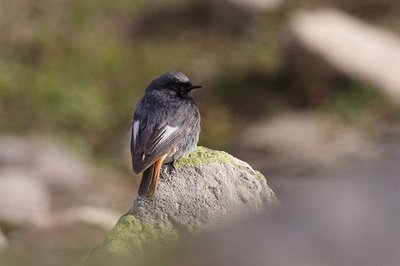
Rougequeue noir mâle - Jean-Philippe Telmon - PNE FaunaBlack redstart
The black redstart has a grey crown, a white patch on its wings and a tan tail and rump. A lively and active common bird, it likes the rocky environments and constantly hunts insects in flight or on the ground. Perched on a rock or a stone wall, it gives out brief cries of warning whilst folding it feet. Its chatty song interrupted by "paper rustling" is characteristic. This partly migratory bird can be seen at high altitude during the summer but heads to the lower valleys for the winter.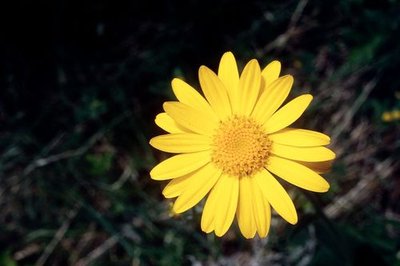
Séneçon doronic - Bernard Nicollet - PNE FloraChamois ragwort
In June it impossible not to see these large yellow sun-like flowers on the edge of the path. Their greyish, fleshy leaves look like they have grown through a spider's web. At the end of July they are unrecognisable: the leaves turn green and no longer have the grey fluff. Once the flowers have wilted, they give way to a fluffy white seed head that is easily scattered by the wind. Our elders used to compare them to an old man's hair (senex in Latin) which lead to the French name "séneçon".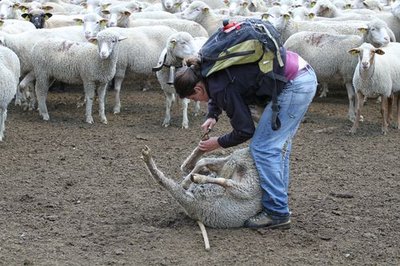
Soin aux brebis - Jean-Philippe Telmon - PNE PastoralismPastoral activity in the Selle valley, dale
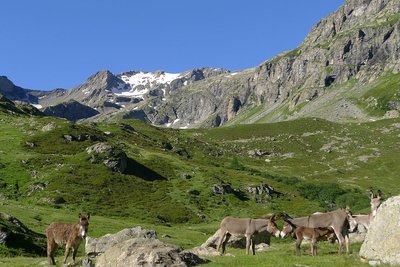
Between l’Aup Martin pass and Entre les Aygues, the Selle valley is the communal pasture for Vallouise. During the summer, the pasture is grazed by a flock of sheep, a herd of cows, a few horses and the donkeys that accompany the shepherds. The shepherd's role is to not only keep and guide the sheep on the pasture with the help of dogs. She also nurses them, in particular to avoid foot-rot, a bacterial infection of the hooves that could spread to wild animals.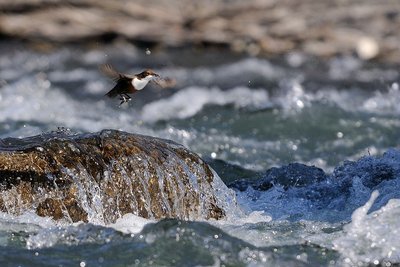
Cincle plongeur - Mireille Coulon - PNE FaunaWhite throated dipper
Stocky, short-tailed with a slender beak, it has a white patch from chin to chest and the rest of its plumage is ginger to slate grey. This is the portrait of this fantastic stream-loving bird. Standing on a large, half-immersed stone, it rocks with its tail out. Then suddenly it dives head first into the turbulent water. One of its features is walking upstream in the water in search of food such as small invertebrates that it uncovers by moving pebbles with its beak.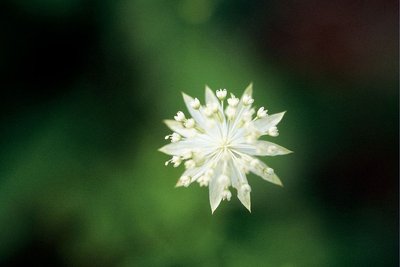
Petite astrance - Bernard Nicolet - PNE FloraAstrantia minor
At the top of a thin and fragile, divided stem, four or five small, delicate white stars move in the slightest breeze. The astrantia minor's umbels brighten up the shady areas that it likes under the shrubs on the moors. Its fanned, finely serrated leaves at the end of a long petiole, do their best to emerge from the vegetation.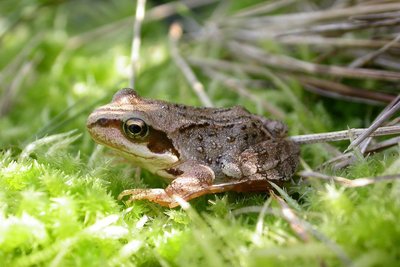
Grenouille rousse sur un lit de mousse - Jean-Philippe Telmon - PNE FaunaCommon frog
After the glacial cross-cliff above the Jas Lacroix mountain hut, not far from the footpath leading to the pass, there is a small lake that is home to the common frog. This is the most common frog in the Alps. It can live up to 2800 m in altitude, a record! It has a chocolate coloured mask around its golden eyes.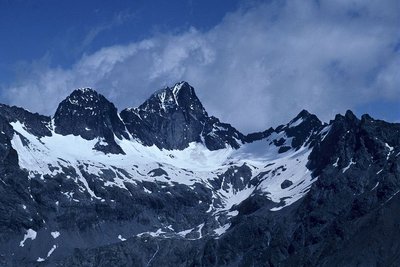
Pointe de Verdonne, face Sud, vue du Rouite - François Labande - PNE  Top
TopVerdonne Point
Above the Jas Lacroix hut, the Chanteloube valley opens up to the right in the form of a cirque. The highest peak in the cirque is the Verdonne point, which rises to 3328m. Sometimes a glittering object can be seen at its summit. This a Grand Réseau Radio des Alpes (GRA) radio relay station, serving the mountain rescue network. It is used to make radio contact with police and emergency services in Briançon.
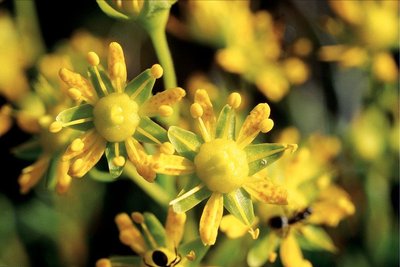
Saxifrage des ruisseaux - Bernard Nicollet - PNE FloraYellow (mountain) saxifrage
At the edge of the clear waters of the brook, a flowerbed of yellow stars catches the eye. When young, the flowers are male and only have 10 stamen and a large shiny disc full of nectar. Later, when the stamen have fallen off, they become female and two small nipples appear on the nectar disc, ready to welcome pollen from a younger neighbour. The small rare and protected apollo butterfly has chosen this plant to protect its eggs and feed its caterpillars.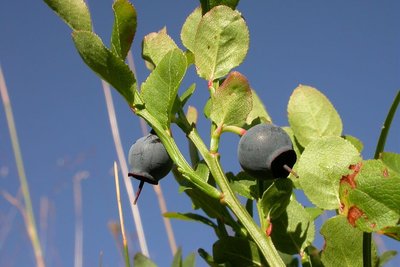
Myrtilles mûres - Christophe Albert - PNE FloraBlueberry
This shrub does not venture much higher than the last trees where it constitutes the moors that cover the ground along with other shrubs. Its finely serrated, light green leaves, ever green branches and juicy, sweet, black fruit that turn your tongue purple, make it possible to distinguish it from its cousins. The berries are a true treasure of the mountains and are used for many culinary and medicinal purposes.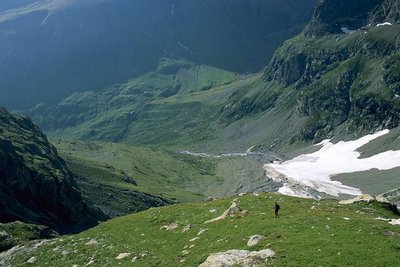
Le vallon de la Selle - Robert Chevalier - PNE PastoralismCattle
The Selle valley is the Vallouise communal pasture where breeders take their animals in the summer. The pasture is divided into sectors where sheep, cattle and horses graze. Each group moves according to the growth of the grass and they rarely mingle, if at all.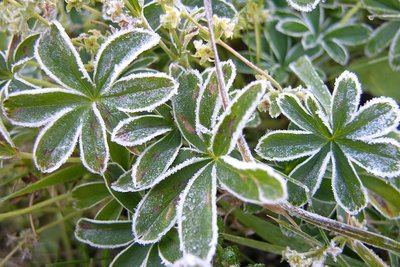
Feuilles d'Alchemille avec givre - Thierry Maillet - PNE FloraAlpine lady's-mantle
Lush foliage, five to seven elegant leaflets, simple inflorescence, this plant is also known as "satin lion's foot", and is common along the footpath. This nickname comes from the underside of the leaves. Its flowers are not very attractive to insects. It does not need them for pollination. Its seeds develop spontaneously, without being fertilised: this is called apogamy. Is this why it is used as an infusion by the women of the high areas in all fields of gynaecology?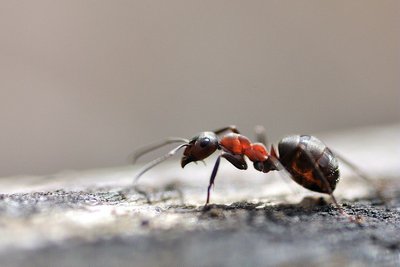
Fourmi rousse des bois - Mireille Coulon - PNE FaunaRed ants
A mound of twigs abounds with life at the edge of the footpath. An anthill in full action. On average it will house 300 000 red ants. This sociable insect is the epitome of perfection. It has strong jaws for digging, cutting and transporting; antennae for communicating and orientating; three pairs of non-slip feet for getting about; compound eyes to see as with a kaleidoscope; a chitin armour and a reserve of formic acid with which to attack. A simple experiment: put your hand close to the anthill, without touching it. Let the ants react then put your tongue to your hand...formic acid!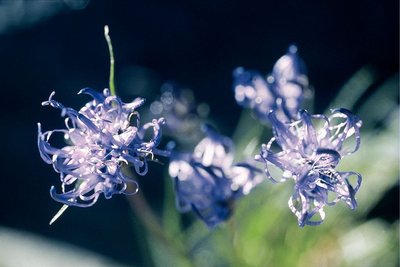
Raiponce hémisphérique - Bernard Nicollet - PNE FloraRampion
Rampion is a pretty, blue flower. On the way up to the Aup Martin pass, it is possible to admire rampion in the prairies and rocky areas at high altitude. A small ball of shiny purple-blue petals and scruffy stamen, it is perched on the top of a short stem surrounded by short narrow leaves.- History
Walls
Above the Saume ravine, the footpath’s tight loops are supported by stone walls, the remains of the mule-driver’s path that the army once kept maintained, just in case, between Vallouise and Champoléon...
Champoléon farmers once took their livestock along the path to the Vallouise sheep fair on 4 October.
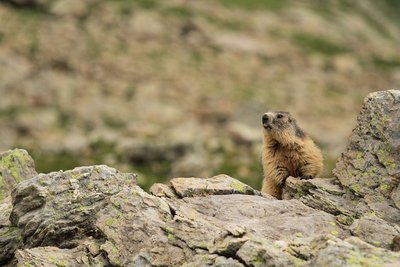
Marmotte des Alpes - Jean-Philippe Telmon - PNE FaunaMarmot
Along the footpath, the marmot makes the rambler jump with its high-pitched whistle. They live in families made up of a couple of dominant adults and subordinates from successive litters. Grooming, games and fights ensure the cohesion of the group and the respect for the hierarchy. All participate in the delimitation of the territory by urinated or defecating at the boundaries or by rubbing their cheeks against the rocks in order to leave their scent.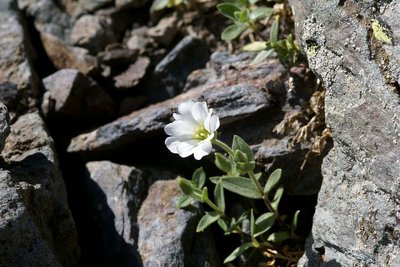
Céraiste à larges feuilles - Cédric Dentant - PNE FloraChickweed
It illuminates the scree that the névé take their time to free. Nestled and sticking in the rock, it amazes walkers who admire its delicate foliage and pure white flowers in such a grey environment. How does it manage to produce such exuberant flowers in such a hostile environment though? Beneath the stones, it develops a network of roots that enable it to get vital nutriments from the waterlogged soil when the snow melts. It also produces pliable shoots that always find a place to latch on in the scree.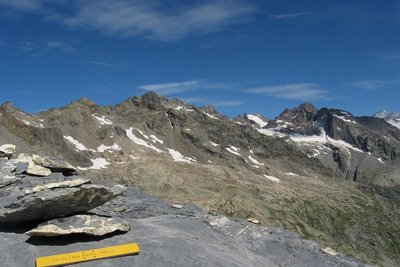
Vue depuis le col de l'Aup Martin - Thierry Maillet - PNE Geology and geographySchist sheets
The Col de l'Aup Martin is a surprising desert of dark grey, shiny schist forming fine parallel sheets. The rock was formed under techtonic influence that laid down the minerals making up the rock in parallel layers. Highly friable, the rock makes access to the col slippery or even dangerous, according to the weather conditions, and has given the col its poor reputation: a monstrous col according to Simon. Exactly like the Mordor region described by Tolkien in The Lord of the Rings, says François!
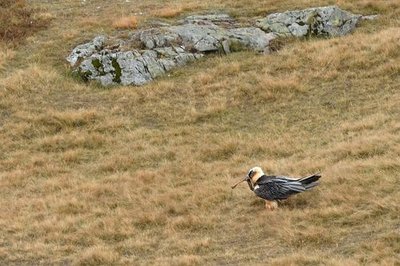
Gypaète barbu posé avec un os - Mireille Coulon - PNE FaunaBearded vulture
During a worldwide count organised in October each year, an observation post is set up in Le Pré de la Chaumette. The bearded vulture has already been spotted, but alas not each time! Falsely accused of carrying off lambs and children, this large bird with a wingspan of 2.80 m has been persecuted by man. Shooting, capture, poison, together with the scarcity of its food sources led to the bird’s extinction in the Alps in 1930. A European programme to reintroduce it was launched in 1986. Since then, the bearded vulture has been regaining ground.
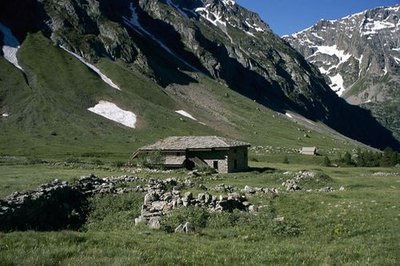
Le refuge du Pré de la Chaumette, Champoléon - Marc Corail - PNE PastoralismChaumette Meadow
The refuge is situated in a vast meadow formed by alpine grasslands that benefit from deep soil, on gentle slopes that are covered with snow on an average of eight months a year.
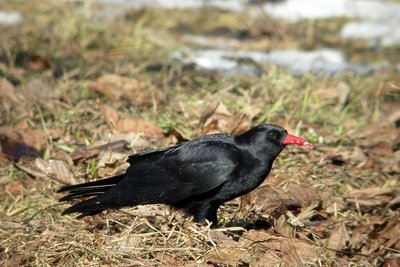
Crave à bec rouge - Damien Combrisson - PNE FaunaRed-billed chough
The red-billed chough is in many ways a surprising bird. It lives near cliffs and plays among the clouds, breaking the silence with a brief, strident, almost metallic cry. Hearing the echo from the cliff walls, its companions reply. With its confident gait and regular step, the red-billed chough patrols the Alpine pastures in small groups, meticulously searching for small worms and meadow grasshoppers. Apart from a few brief seasonal excursions in search of available food, the chough is a sedentary bird.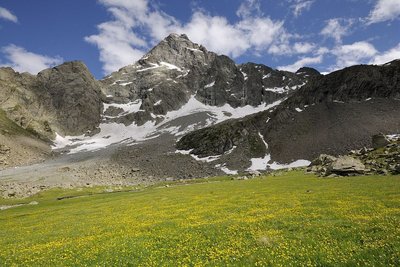
Le Sirac depuis Vallonpierre - Mireille Coulon - PNE TopThe Sirac
To the south of the Ecrins mountains, the Sirac is the last major summit at 3441 m. It stands proudly at the end of the Séveraisse valley. Often during the hike, you will lift your head in wonder and greet this noble lord with its crown. You will walk at its foot and see its hanging glaciers above you. It’s magic!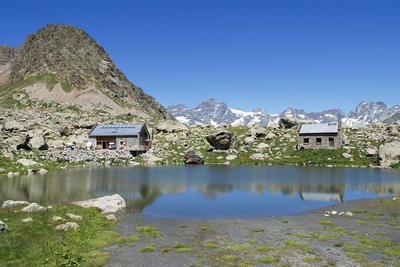
Le refuge de Vallonpierre - Dominique vincent - PNE  Hut
HutThe Vallonpierre refuge
A small lake, pretty meadows and the benevolent Sirac... This magical setting would lead to the construction of a refuge at an altitude of 2270 m in 1942. However, it was a victim of its own success and in 2000 the decision was made to build a second, bigger one. It can accommodate 37 instead of 22. This new building was the first modern mountain refuge to be built using stones on site rather than imported materials. It copies the simplicity and the crow-stepped gable from the "small refuge" which has been kept as lodgings for a warden's helper.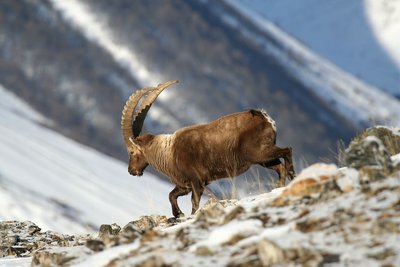
Bouquetin des Alpes - mâle - Jean-Philippe Telmon - PNE FaunaAlpine ibex
The species had almost completely disappeared from the French Alpine regions, and they survived thanks to our Italian neighbours, the kings of Savoy. Until the mid-15th century, they were still to be seen, but they were not wary of mankind and were hunted for their meat. Superstitious medical practice at the period also hastened their decline: their horns were ground into powder and used as a remedy for impotence, while the cross-shaped bone over their hearts was thought to ward off sudden death.
Successfully reintroduced into the Vanoise area in 1960, they were also brought back into the Champoléon valley over 20 years ago.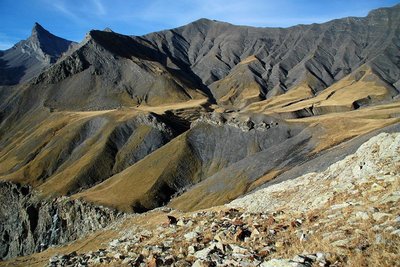
Vallon Plat, Col de Vallonpierre, Aiguille de Morges - Bernard Guidoni - PNE Geology and geographyImpressive geology
From chabournéite, the native mineral of Valgaudemar, to the crystalline rock from the Sirac's gneiss, from the hollow of Vallonpierre made in sedimentary rock to the show that is given by the shale and tuffs on the Chevrettes pass, this circuit will take you back in time. The folds and the colours appear before you like an impressionist’s work of art.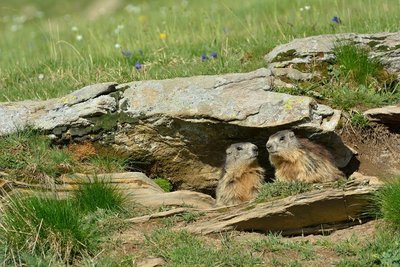
Marmottes à leur terrier - Mireille Coulon - PNE FaunaMarmot
A high-pitched whistle sounds in the mountain pastures it is the cry of the marmot on guard, warning its companions of the arrival of imminent danger from the sky. Any inattentive creature failing to take note should beware a golden eagle will carry them away in its talons to feed its young.
Native to the Alpine grassland, colonies of marmots live with their young until their third year. Gnawing and digging are their favourite pastimes, along with rolling down the slopes. And not forgetting an afternoon nap on a nice, warm rock and their long hibernation between October and March.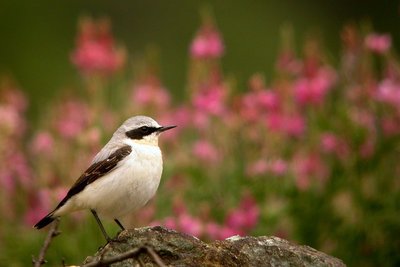
Traquet motteux - Damien Combrisson - PNE FaunaHigh altitude birds
Autumn is migration season. The mountains, which are too harsh in winter, loses their inhabitants. Some opt for a change in altitude and go lower down the valley or to the coast. This is the case for the alpine accentor, the redstart, the redpoll, or the Eurasian linette. Others head off on a long journey to warmer countries. The Sahara offers a milder winter to the common rock thrush, whinchat and wheatear. The lesser whitethroat will head to the east. In the summer, this fine bunch will meet up again in the mountains. It finds a sanctuary where the diversity of plants and invertebrates is preserved. The alpine pastures seem to be favourable for the reproduction of all of these species that are diminishing and need to be protected.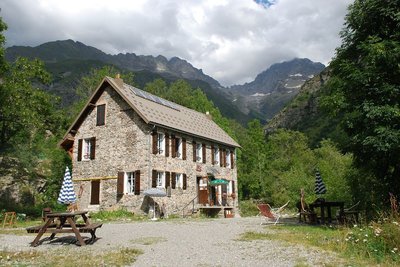
Refuge du Clot Xavier Blanc - Dominique Vincent - PNE HutClot Xavier Blanc mountain refuge
What a strange idea to build this mountain refuge below the road leading to Gioberney, at an altitude of "only" 1397 m. In fact, it was already there more than a century ago, long before the road was built. This simple, sturdy building belonged to the Valgodemar Mining Company that operated in the area extracting copper and lead. When the business closed, the Club Alpin Français bought the building and named it after Xavier Blanc, in recognition of one of the founder members of the CAF, senator of the Hautes Alpes.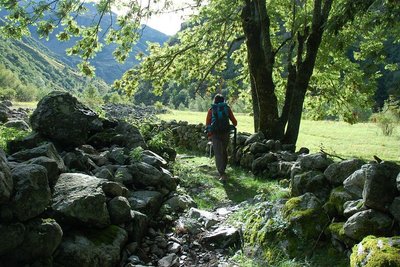
Via Clause du Clot - Dominique Vincent - PNE Vernacular heritageWalled paths
On certain stretches of the route, you will walk between two stone walls. Such "via clause" were built to stop the domestic animals, on their way up to the pastures, from walking on or eating the grass in the prairies that was intended for them in the winter. The most remarkable "via clause" is on the way out of the hamlet of Le Clot. It has been restored by the Ecrins National Park.
.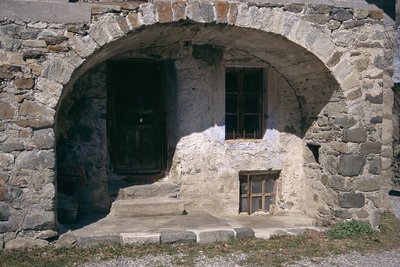
Architecture traditionnelle - Yves Baret - PNE Architecture"Toune"
This is an architectural feature of the Champsaur-Valgaudemar area and is the barrel-vaulted porch on the main facade of the house. It sheltered the entrance to the dwelling and stable and was sometimes used to stock items, such as wood, to keep it dry. The "toune" was often painted white to reflect the sunlight. They inhabitants would sit in them to do embroidery or darning, etc.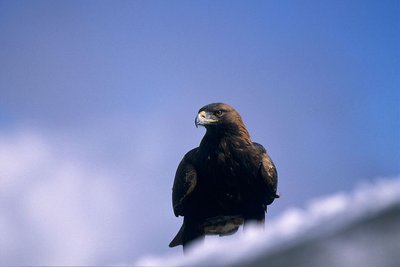
Aigle royal - Robert Chevalier - PNE FaunaGolden eagle
Between La Chapelle and Le Clot, it is not rare to see the golden eagle flying over the sunlit slopes. In the summer, this majestic bird of prey with its dark plumage (some have lovely white rosettes on the underside of their wings) mingles with the short-toed eagle, which is smaller and lighter-coloured, and the griffon vulture, which is larger, with a short tail and often flies in groups. There is nothing surprising about this as the south facing slopes provides thermal lift that enables them to fly high and far.
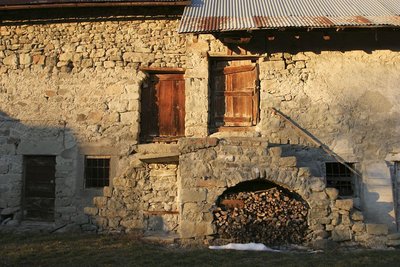
Maison aux portes, Valgaudemar - Stephan D'houwte - PNE ArchitectureTraditional dwellings
A few typical, old Valgaudemar houses can be seen in the hamlets of Casse, Le Bourg and Le Rif du Sap. A few thatched roofs, vaulted entrances to dwellings ("tounes"), and stone paving, are some fine examples of architecture that are worth saving. Cheaper and requiring less maintenance, sheet metal gradually replaced the thatch on the rooftops.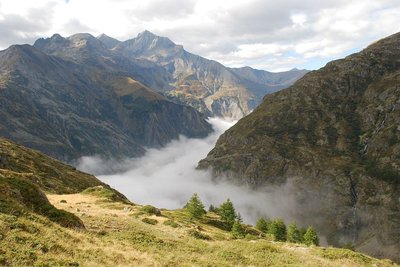
Itinéraire de Tirière vue sur la vallée de Valgaudemar - Olivier Warluzelle - PNE HistoryToponymy in the Valgaudemar area
Valgaudemar! The sound of this name resonates in our ears. Some claim that it is in reference to the valley of Mary "Gaude Marie" or "Rejoice Mary!" It is more reasonable to think that it is in reference to Gaudemar, the last king of the Burgundians (524) a Germanic tribe that invaded this area in 406...Vallis Gaudemarii can be read in texts as early as 1284. Poetic licence, legends and imagination are often red herrings when it comes to researching the origins of names.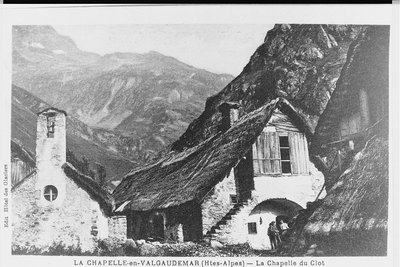
Chapelle et maisons du hameau du Clot avant l'incendie de 1934 - Jean-Claude Catelan (collection) HistoryAn itinerary packed with history
The Casset bridge is the oldest remaining bridge over the Sèveraisse that has not been washed away by floods. On the right bank of this magnificent "Roman" structure, the hamlet of Casset gets its name from the "casse" (large steep scree deposits at the foot of slopes) that surround it. This village, like that of Le Bourg, was partly covered by a landslide. As for Le Rif du Sap, an avalanche swept away the houses from the top of the hamlet in 1944. The hamlet of Le Clot, was flooded in 1928, and was totally abandoned in 1934 when a fire destroyed most of the dwellings.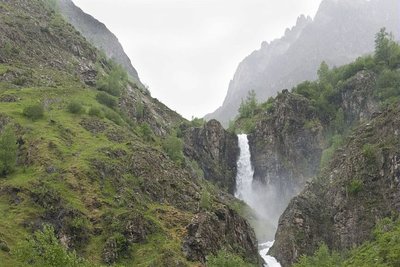
La cascade de Combefroide - Olivier Warluzelle - PNE PanoramaWaterfalls and view points over the valley
Along the itinerary, you will see the Combefroide and Casset waterfalls that are situated on the south facing slopes of the valley. The route also gives a good view to the east and the west of the Sèveraisse valley from the hamlet of Casset. Downstream, from the hamlet of Rif du Sap, a good example of a U-shaped valley is proof of shaping by the quaternary glaciers.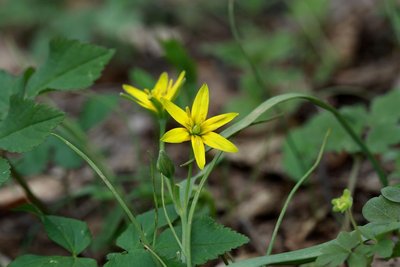
Gagée jaune - Cédric Dentant - PNE FloraHayfields
Hayfields surround the village of La Chapelle. Unfortunately, such natural hayfields, and their flowers and insects, are more and more frequently replaced by temporary hayfields, in other words, certain years they are sowed. These prairies are still watered by the irrigation canals that are well maintained by the users with the help of the National Park. You will see the floodway of the Grande Levée canal not far from the stream as it nears the Sèveraisse. The canals are of great importance for preserving wetland flora, such as alternate-leaved golden saxifrage or yellow star-of-Bethlehem, both of which are protected species.
- Know-how
Sundial by Rémy Potey
A real open-air museum piece in the rural landscape, the pictorial art of the sundial aims to foster silence and to be accessible to all. For walkers today and for travellers yesterday. A sundial is a call to reflection and meditation, visible in all its magnificence on religious buildings or carefully hidden, in the little streets of a mountain village. The the Hautes-Alpes department, with its sun-rich climate, has the highest concentration of this example of the people’s art. Today, through the work of the sundial maker Rémy Potey, chamois and golden eagles can be beside the imaginary birds of the mysterious and famous Zarbula, the 19th century Piedmont artist.
Forecast
Altimetric profile
Sensitive areas
- Impacted practices:
- Aerial, Aquatic, Land, Vertical
- Sensitivity periods:
- JanFebMarAprMayJunJulAugSepOctNovDec
- Contact:
- Parc national des Écrins.
Alpine ibex
- Impacted practices:
- Aerial, , Land, Vertical
- Sensitivity periods:
- JunJulAugSep
- Contact:
- Parc National des Écrins
Julien Charron
julien.charron@ecrins-parcnational.fr
Golden eagle
- Impacted practices:
- Aerial, , Vertical
- Sensitivity periods:
- JanFebMarAprMayJunJulAug
- Contact:
- Parc National des Écrins
Julien Charron
julien.charron@ecrins-parcnational.fr
Bearded vulture
- Impacted practices:
- Aerial, , Vertical
- Sensitivity periods:
- JanFebMarAprMayJunJulAugNovDec
- Contact:
Parc National des Ecrins - Yoann Bunz- 06 99 77 37 65 yoann.bunz@ecrins-parcnational.fr
Golden eagle
- Impacted practices:
- Aerial, , Vertical
- Sensitivity periods:
- JanFebMarAprMayJunJulAug
- Contact:
- Parc National des Écrins
Julien Charron
julien.charron@ecrins-parcnational.fr
Bearded vulture
- Impacted practices:
- Aerial, , Vertical
- Sensitivity periods:
- JanFebMarAprMayJunJulAugNovDec
- Contact:
- Parc National des Ecrins - Yoann Bunz- 06 99 77 37 65 yoann.bunz@ecrins-parcnational.fr
Alpine ibex
- Impacted practices:
- Aerial, , Land, Vertical
- Sensitivity periods:
- JunJulAugSep
- Contact:
- Parc National des Écrins
Julien Charron
julien.charron@ecrins-parcnational.fr
Golden eagle
- Impacted practices:
- Aerial, , Vertical
- Sensitivity periods:
- JanFebMarAprMayJunJulAug
- Contact:
- Parc National des Écrins
Julien Charron
julien.charron@ecrins-parcnational.fr
Golden eagle
- Impacted practices:
- Aerial, , Vertical
- Sensitivity periods:
- JanFebMarAprMayJunJulAug
- Contact:
- Parc National des Écrins
Julien Charron
julien.charron@ecrins-parcnational.fr
Golden eagle
- Impacted practices:
- Aerial, , Vertical
- Sensitivity periods:
- JanFebMarAprMayJunJulAug
- Contact:
- Parc National des Écrins
Julien Charron
julien.charron@ecrins-parcnational.fr
Golden eagle
- Impacted practices:
- Aerial, , Vertical
- Sensitivity periods:
- JanFebMarAprMayJunJulAug
- Contact:
- Parc National des Écrins
Julien Charron
julien.charron@ecrins-parcnational.fr
Golden eagle
- Impacted practices:
- Aerial, , Vertical
- Sensitivity periods:
- JanFebMarAprMayJunJulAug
- Contact:
- Parc National des Écrins
Julien Charron
julien.charron@ecrins-parcnational.fr
Golden eagle
- Impacted practices:
- Aerial, , Vertical
- Sensitivity periods:
- JanFebMarAprMayJunJulAug
- Contact:
- Parc National des Écrins
Julien Charron
julien.charron@ecrins-parcnational.fr
Golden eagle
- Impacted practices:
- Aerial, , Vertical
- Sensitivity periods:
- JanFebMarAprMayJunJulAug
- Contact:
- Parc National des Écrins
Julien Charron
julien.charron@ecrins-parcnational.fr
Golden eagle
- Impacted practices:
- Aerial, , Vertical
- Sensitivity periods:
- JanFebMarAprMayJunJulAug
- Contact:
- Parc National des Écrins
Julien Charron
julien.charron@ecrins-parcnational.fr
Short-toed snake eagle
- Impacted practices:
- Aerial,
- Sensitivity periods:
- MarAprMayJunJulAugSep
- Contact:
- Parc National des Écrins
Julien Charron
julien.charron@ecrins-parcnational.fr
Short-toed snake eagle
- Impacted practices:
- Aerial,
- Sensitivity periods:
- MarAprMayJunJulAugSep
- Contact:
- Parc National des Écrins
Julien Charron
julien.charron@ecrins-parcnational.fr
Black grouse - winter
- Impacted practices:
- , Land
- Sensitivity periods:
- JanFebMarAprDec
- Contact:
- Parc National des Ecrins
BERGEON Jean-Pierre
jean-pierre.bergeon@ecrins-parcnational.fr QUELLIER Hélène
helene.quellier@ecrins-parcnational.fr
Membre de l'Observatoire des Galliformes de Montagne
Virginie DOS SANTOS
ogm.vds@gmail.com
Blandine AMBLARD
ogm.amblard@gmail.com
Recommandations
The best period for undertaking this tour is from late June to mid-September.
Find out about weather and snow conditions on the passes in early summer.
Some stretches, in the upper reaches of the mountains, pass through tricky terrain.
It is possible to bivouac along the GR route (see the regulations for the heart of the National Park) or to overnight at campsites, hotels, gîtes or refuges.
The Stages require that you carry your own food.


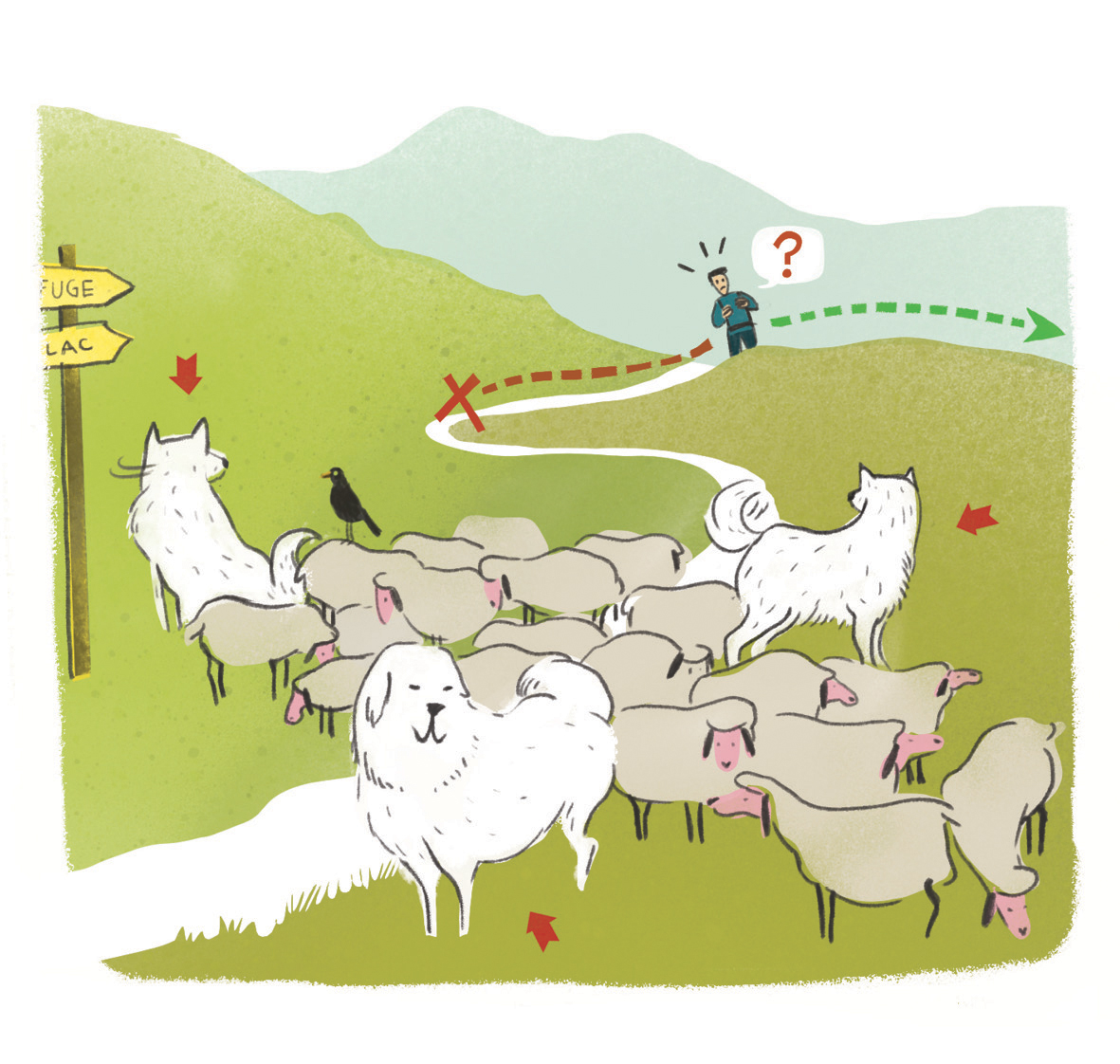 In mountain pastures, protection dogs are there to protect the herds from predators (wolves, etc.).
When I hike I adapt my behavior by going around the herd and pausing for the dog to identify me.
Find out more about the actions to adopt with the article "Protection dogs: a context and actions to adopt".
Tell us about your meeting by answering this survey.
Information desks
Valgaudemar Park house
Ancien Asile Saint-Paul, 05800 La Chapelle-en-Valgaudemar
Information, documentation and a reception area with permanent and temporary exhibitions. La Maison du Parc is labeled "Tourism and Disability". Free admission. All animations of the Park are free unless otherwise stated.
Transport
From Gap and Grenoble:
Bus line Gap-Grenoble, Saint-Firmin bus stop : https://www.itinisere.fr/ or https://carsisere.auvergnerhonealpes.fr/
From here, possibility of taking a summer shuttle to La Chapelle. The shuttle can be booked in advance via the ticket office on the Champsaur Valgaudemar tourist office website: https://www.champsaur-valgaudemar.com/offres/navette-du-valgaudemar-saint-firmin-fr-2301984/m/ .
Access and parking
On the N85, after the Les Richards bridge, turn right onto the D985a (towards Saint Firmin). La Chapelle is approximately 18 km from this crossroads.
Parking :
More information

Source

Report a problem or an error
If you have found an error on this page or if you have noticed any problems during your hike, please report them to us here: