

Port St-Pierre
 Easy
A dramatic start, with a sweeping view over the Serre-Ponçon dam and its surrounding mountains. An indispensable ride along the Chemin des Amoureux before dropping down to Port St-Pierre. You reach this site by following the lake shore, first through an open section and then through forest.
Important information
Dans le Parc national des Écrins, les sentiers sont généralement praticables de la mi-juin à fin septembre.
Toutefois, les périodes d'accessibilité des itinéraires et les dates de pose des passerelles varient d’une année à l’autre en fonction de l’enneigement, des dégâts survenus en hiver et des conditions météorologiques. Par ailleurs, l’état des sentiers n’est pas contrôlé quotidiennement et peut évoluer rapidement après un évènement météorologique (orage, crue...). Il est nécessaire de se renseigner auprès des maisons du parc national et des offices de tourisme du territoire avant votre sortie. Pendant la randonnée, en cas de passage dégradé ou dangereux, faites demi-tour et signalez-le.
Description
From the car park on the road leading to the belvedere, take the road on the left which runs into the village.
- At the water fountain, take the road on the right. Go down the Chemin des Amoureux and then head left downhill to the Pied de Vière wash house. At the bottom, take the path on the right leading towards the beach ("Plage de Port St-Pierre").
- At the next intersection, where you come to some narrow wooden steps, go straight ahead (to the left of the wooden table).
- Carry on downhill and when you come to an intersection in the tracks, turn right to the Port Saint Pierre recreation area.
- Departure : Belvedere, Le Sauze-du -Lac
- Arrival : Belvedere, Le Sauze-du -Lac
- Towns crossed : Le Sauze-du-Lac
5 points of interest

Lézard vert sur son rocher - Mireille Coulon - PNE  Fauna
Western green lizard
This very handsome bright green lizard is the biggest in our territory, measuring 30 cm in length. It can be spotted from April to September. The rest of the time, it hibernates underground. It hunts in areas with dense vegetation and feeds primarily on insects and invertebrates. It exhibits sexual dimorphism, that is to say, during the breeding season only, the males have bright blue colouring on the throat and sides of the head. Mating takes place around May. The males engage in ferocious fights in which they occasionally lose their tails. That's not a problem for the Western green lizard as its tail grows back naturally.

Pastoralisme - Joêl Faure - PNE  Pastoralism
Grazing
Pastoralism is a livestock rearing technique extensively practised by farmers here. They exploit the local natural resources to feed their flocks, thereby shaping the landscapes. It is estimated that this practice started approximately 10,000 years ago. Sheep could be domesticated because they have a natural tendency to herd together. An annual migration called transhumance, which optimises the animals' food intake, involves moving the livestock to high-altitude grazing grounds in the summer when the vegetation is dry lower down in the valley. Grazing helps to keep habitats open, favouring certain animal species, reducing fire risk and maintaining the landscapes, making them a paradise for hikers.
Lièvre variable - Pascal Saulay - PNE FaunaEuropean hare
Morphologically, the hare can be distinguished from the rabbit by its larger and more slender body. It doesn't dig a burrow, but shelters in "forms", a shallow depression it makes in the ground or among tall plants. It can be found in the mountains up to an altitude of 2,000 metres. It feeds on grasses, fruits and seeds. So as to make the most of the nutritional qualities of these foods, it re-ingests some of the droppings it defecates during the night, in order to digest them a second time.
Faucon Crecerelle - Damien Combrisson - PNE FaunaCommon kestrel
This small falcon with an 80-centimetre wingspan is very common. It has adapted to many natural habitats such as fields and cliffs, in pursuit of small rodents. It has a slender silhouette, with pointed wings. It is predominantly fawn in colour. The upper side of its wings is cream with black speckles. The male's head and the top of its tail are blue-grey. It flies rapidly, beating its wings almost continuously and constantly changing its direction, gliding for short distances and plummeting suddenly. Its characteristic attribute is its ability to hang motionlessly in flight, its tail fanned out and its wings beating very rapidly, on the lookout for prey. This is called the «Flight of the Holy Spirit».
Poisson Chevaine - Pascal Saulay - PNE FaunaChub
The chub (Leuciscus cephalus) is a gregarious fish that lives in oxygen-rich flowing water. It lives quite close to the surface during the summer and drops to the bottom at the first frosts, where it stays until the spring. The breeding season of the chub is between April and June. Its young live in shoals, becoming solitary when they reach maturity. This fish has rayed fins. It has a varied diet, feeding on plants (phytophage), but also other fish.
Forecast
Altimetric profile
Information desks
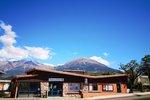
Tourist office Savines-le-Lac
9 Avenue de la Combe d'Or, 05160 Savines-le-Lac
October to march : Monday to Saturday, 9.00 - 12.30 & 13.30 - 17.00.
April, may, june & september : Monday to Saturday, 9.00 - 12.30 & 14.30 - 18.00
July and August : Monday to Saturday, 9.00 - 13.00 & 15.00 - 19.00. Sundays, 10.00 - 13.00 & 15.00 - 18.00
Closed on French national holidays, except 14th of July, and 15th of August
Closed on Thursdays outside French holidays’ periods
Transport
Public transport: www.pacamobilite.fr
Consider car-sharing: www.blablacar.fr
Access and parking
After entering the village of Sauze du Lac, park in the parking area immediately on your right, on the road side.
Parking :
Accessibility
- Emergency number :
- 114
More information


Source


Report a problem or an error
If you have found an error on this page or if you have noticed any problems during your hike, please report them to us here: