
Tour du Champsaur-Valgaudemar
 Medium
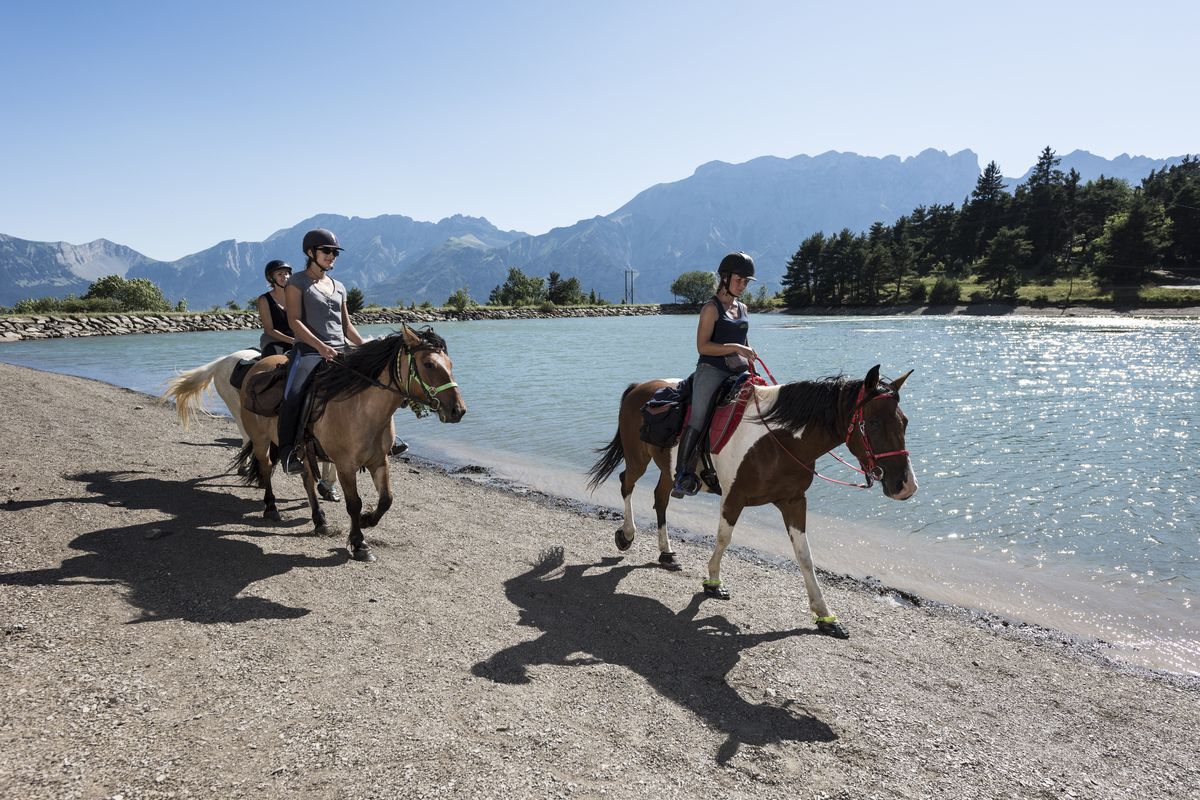
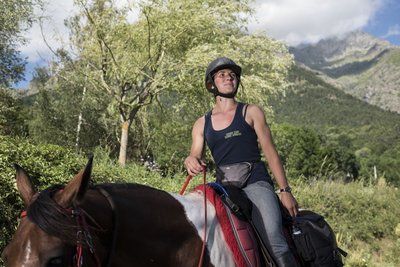
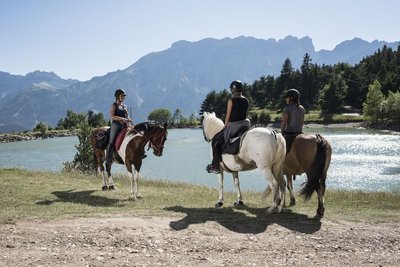
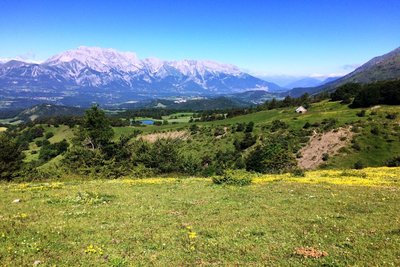
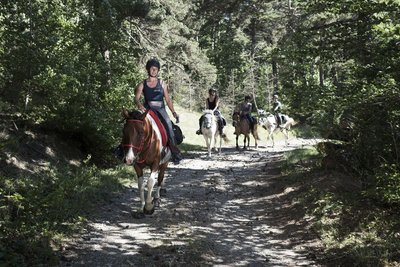
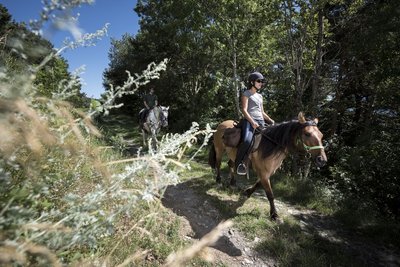
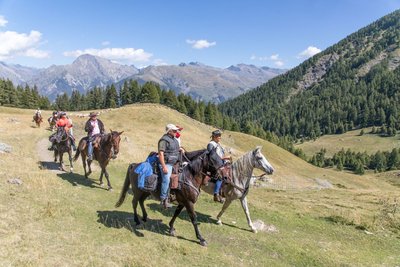
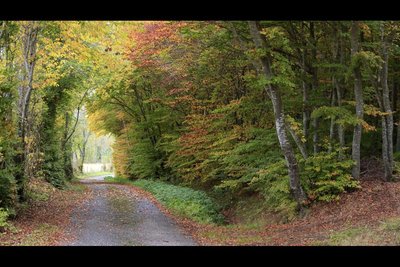
Experience the best of the Champsaur and Valgaudemar valleys on horseback, what an appealing prospect! This route, which circles around the Drac river, takes you from the banks of turbulent mountain streams to balcony pathways with unrivalled views and offers unique landscape environments. Wend your way at your own pace through forests and hedged farmlands, surrounded by towering peaks, each more magnificent than the last, and a preserved built heritage bearing testimony to a long history of mountain life. A delight for horse and rider alike.
10 steps


Description
From Bayard, head uphill to the Col de Gleize, taking the time to enjoy beautiful views over the Gap region. The route continues through woods as far as Le Noyer and then on through the agricultural plain to the Château de Lesdiguières. After the Lac du Sautet, head downhill through the woods and then uphill to St-Firmin. At Le Séchier, follow the Canal des Herbeys. Return to the Champsaur and the Petit Chaillol at the Lac de Roaffan, ride through the wooded landscapes as far as Charbillac and then take to the heights though the unspoilt surroundings of Les Infournas and the Maison Forestière de Subeyrannes. Drop back down towards St-Bonnet past the Lac de Barbeyroux and carry on through this farming valley until you reach Chabottonnes. Head uphill towards Chaillol and then carry on, overlooked by the Aiguilles de Famourou and Le Palastre, until you come to the plateau of La Coche. Then drop back down to Le Clapier and follow the banks of the Drac Blanc until you reach Les Gondouins. Retrace your steps and follow the Drac Noir before reaching the Serre-Eyraud belvedere. Climb up to a higher level to follow the balcony track which passes through the fabulous alpine pastures of Combeau and takes you to the vantage point at L'Abeille. Drop back down to Saint-Léger-Les-Mélèzes and then follow the canal side until you come to the old railway line and Serre-Richard. Finally, return to the Bois de St-Laurent and the Bayard Plateau.
- Departure : Gap Bayard
- Arrival : Gap Bayard
- Towns crossed : Gap, Laye, La Fare-en-Champsaur, Poligny, Le Noyer, Le Glaizil, Aspres-lès-Corps, Saint-Firmin, Saint-Jacques-en-Valgodemard, Saint-Maurice-en-Valgodemard, Chauffayer, Les Costes, La Motte-en-Champsaur, Bénévent-et-Charbillac, Les Infournas, Saint-Bonnet-en-Champsaur, Saint-Julien-en-Champsaur, Buissard, Chabottes, Saint-Jean-Saint-Nicolas, Saint-Michel-de-Chaillol, Champoléon, Orcières, Saint-Léger-les-Mélèzes, Forest-Saint-Julien, and Saint-Laurent-du-Cros
22 points of interest

 Know-how
ONF
The work of the Office National des Forêts (National Forestry Office) is not limited to the forests. After buying a large amount of land following the rural exodus (public land), the state delegated to the Water and Forestry agency the difficult task of preserving the natural heritage of a large number of areas (restoration of land and building, maintenance of paths, etc.)
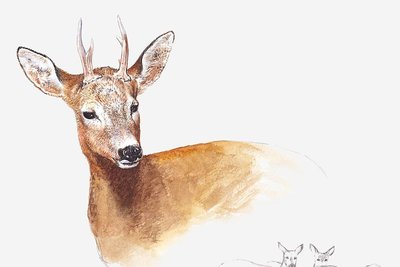
Chevreuil - Pierre-Emmanuel Dequest -PNE  Fauna
FaunaRoe deer
Walnut forests are a favourable home for roe deer. They came from Italy, the Isère and Drôme regions, and were added to some forty animals that were released between 1969 and 1975 in the neighbouring forests of Durbon and Morgon. This timid animal can be recognised by its red-brown coat and white patch on its rear.
 History
Dominique Villars
The botanist Dominique Villars was born in Noyer in 1745. From an early age he was interested in botany, and with his friend, Dominique Chaix, a priest and botanist from Roche des Arnauds, he discovered many new species. He wrote "L'histoire des plantes du Dauphiné" (History of Plants in the Dauphiné), bringing together 3,000 species. Shortly before his death in 1814, Napoleon Bonaparte appointed him botany professor at the Strasbourg Special Medical School.
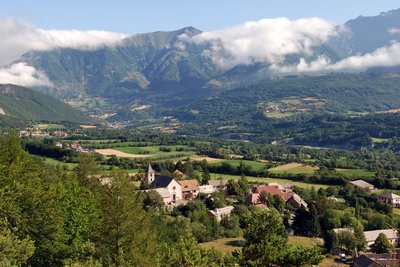
Village du Glaizil et en arrière plan, Aspres-les-Corps et le hameau de la Broue - Parc national des Écrins - Jean-Pierre Nicollet HistoryVillage of Le Glaizil
The name "Le Glaizil" is thought to derive from the Vulgar Latin term glitia, meaning loam or clay. Like La Fare, Poligny and Le Noyer, Le Glaizil was once part of a district of church- controlled land, that is to say, the Bishop of Gap had joint lordship - and therefore authority - over the land.
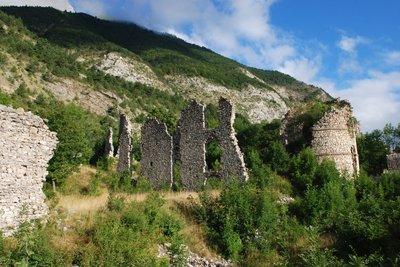
Ruines du château de Lesdiguières - Parc national des Écrins - Jean-Pierre Nicollet HistoryChâteau de Lesdiguières
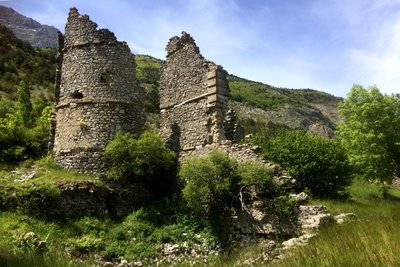
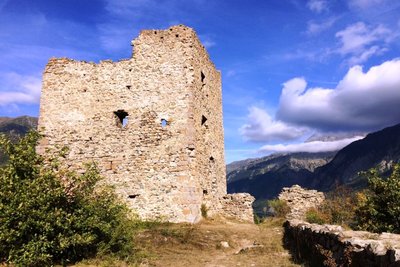
This château was built in 1580 by François de Bonne, the Duke of Lesdiguières and Protestant leader, on the site of a fortified house owned by his family.
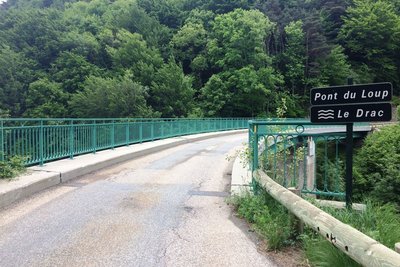
Pont du Loup - Parc national des Ecrins - CDTE05  Vernacular heritage
The "Pont de Loup"
The "Pont de Loup" waterfall was intended to provide the electricity required for the operation of the Gap-Grenoble railway line. The advent of the automobile rendered this project pointless and the Gap-Corps section was never completed.
Le canal des Herbeys - Olivier Warluzelle - PNE Vernacular heritageHerbeys canal
Inhabitants of Valgaudemar have long tried to control water to compensate for dry summers. The Herbeys canal still functions and is well used. With more than 600 litres per second, it waters 289 ha in the districts of Chauffayer and St-Jacques. It is 28km long and was started and finished on the initiative of François Dupont de Poncharra des Herbeys'. It is maintained every year by the members of the users' union who spend several days cleaning out the canal as well as consolidating the vaults.
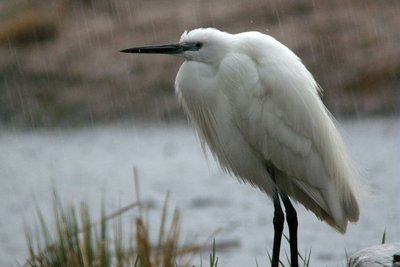
Aigrette garzette - Damien Combrisson - PNE FaunaOrnithologial diversity
Thirty years of careful inventories have identified 220 species of bird in the valley. This exceptional variety is not only due to the landscapes (hedges, wetlands, forests and high mountains) but also to the Champsaur's geographical position: not quite north-alpine, wide open to the south with the Manse and Bayard thresholds, ideal for exchange and for migratory birds such as herons, ducks, red-footed falcons or flycatchers.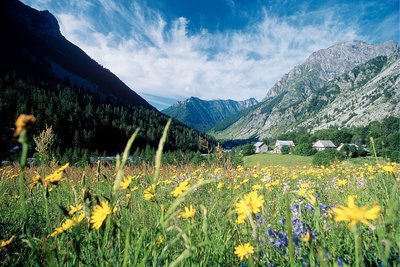
Prairie de fauche dans la vallée de Champoléon - PNE  Flora
FloraHayfields
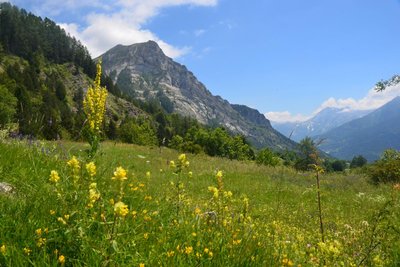
When they have not been disturbed by modern fertilisation techniques and silage, around fifty species of plant can still be found in the hayfields. The most symbolic are the poet's daffodil, alpine salsify, meadow sage, sainfoin and globeflower that punctuate the landscape with their different colours.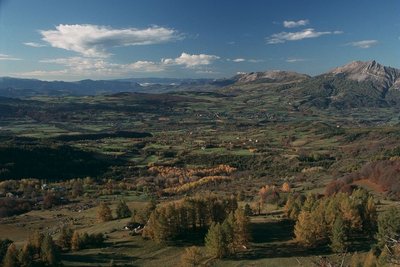
Le bocage du Champsaur, Saint-Michel-de-Chaillol - PNE FloraHedging
Hedged landscapes were quite common in France before the war, but here, above an altitude of 1000 m, a wonderful diversity has been maintained. A patchwork of hedgerows, prairies and woods are home to an array of birds. Amongst them are many common sparrows (red-backed shrikes, stonechats, sparrows, quails and wrynecks) whose numbers are in decline in France, sometimes alarmingly so. Richness is therefore not solely due to rarity.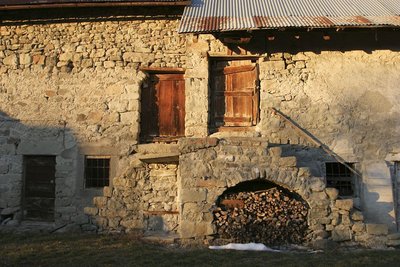
Une ferme aux Roranches, Champsaur - Marc Corail - PNE  Architecture
Champsaur architecture
Today's landscapes and the houses are no accident. They bear the trace of humans, who were less concerned with building attractive places, than with striving to find the best rigorously functional solutions for the area. In the northern part of the Drac valley, an area often faced with a cold wind, hedges were planted, buildings were close together and almost blind on the north-facing side. On the balconies to the east, as in St-Michel-de-Chaillol or St-Julien-en-Chapsaur, the aim was to find sunlight and the facade often had a large porch.- Vernacular heritage
Les Richards
Perched up at an altitude of 1548 m above Pont-du-Fossé in the commune of Saint-Jean-Saint-Nicolas, the village of Les Richards is a haven of tranquillity. The view is breathtaking over the Autanes and the Champsaur woodlands. This is the starting point for a very popular hiking trail around the mountains or to the summit of the Palastre, and a take-off area for long-distance hang-gliders. It is not unusual for a hang-glider to land in Grenoble and sometimes even in Chamonix after a long day's flight from Les Richards! The record is 162 km, with a landing in Chamonix in 2002.
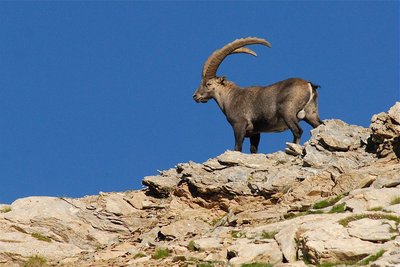
Bouquetin en été - Rodolphe Papet - PNE FaunaAlpine ibex
If you take a few minutes' walk at the end of the valley, you will be able to see some Alpine ibex. In September 1994, in Champoléon, some thirty animals from Vanoise area were released by Ecrins National Park rangers. This superb animal is heavier (100 kg) and less timid than the chamois, and is closely related to the domestic goat. It was almost extinct in the Alps. Today it is totally protected in France and is now safe extinction.
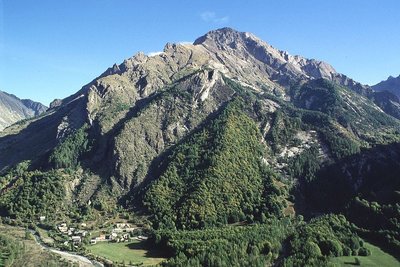
Le village des Borels - Marc Corail - PNE HistoryLes Borels
This is most important village in the Chamoléon district (no hamlet bears this name). Until towards the first world war in 1914, the valley lived in a closed circuit for all everyday items. At the Borels there was a weaver (wool and hemp), a miller-baker, an ironmonger, a mason, a breeches-maker and in the other hamlets, a cobbler, two millers, a joiner and two shoemakers. The latter worked from home.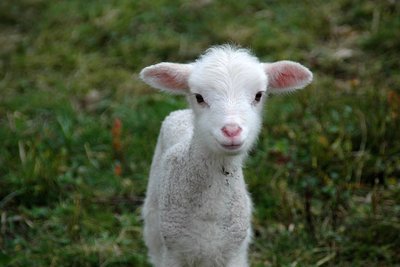
Agneau - Dominique Vincent - PNE  Pastoralism
Tardons
"Tardons" are lambs that are raised on mother's milk in the pastures of the Ecrins massifs. These lambs are celebrated every autumn at the Champoléon agricultural fair. This event spotlights pastoralism and assembles breeders, shepherds and the general public. On the agenda: the sale of sheep, produce market, lamb-based meals and entertainment.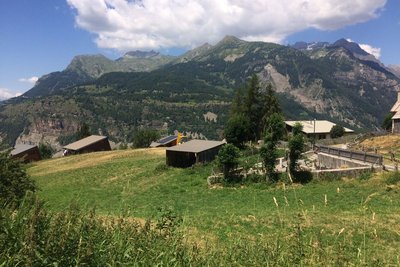
Serre-Eyraud - Parc national des Ecrins - CDTE05 HistorySerre-Eyraud
Serre-Eyraud is both a mountain village and a winter sports resort which overlooks
the Champsaur and the confluence of the Drac Noir and the Drac Blanc, 1,450 metres above sea level, opposite the Champoléon valley.
The resort was created in 1962 by a handful of inhabitants: eight runs lead through a larch forest which is exposed to the north, which helps to conserve the snow cover. Serre- Eyraud is the smallest ski resort in the Champsaur valley.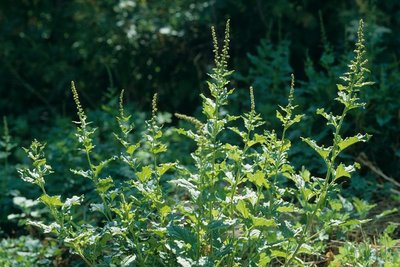
Chenopode du Bon roi Henry - Marcel Chaud - PNE Know-howPastoral plants
Around the shepherds' cabins can be found plants with pale colours that are useful in the kitchen : nettles, which cause rashes, but are used to make delicious soups, wild spinach, also known as Good King Henry , a plant eaten as a gratin (the famous 'oreilles d'âne' (donkeys' ears) dish), with the sour leaves of the Alpine dock. For dessert, the petioles of Monks' rhubarb leaves are served as jams and compotes.
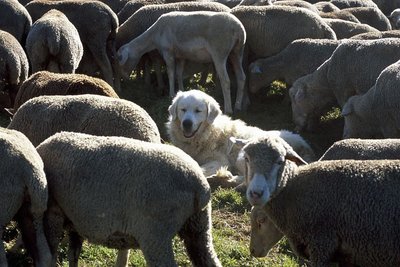
Patou surveillant le troupeau - Jean-Pierre Nicollet - PNE FaunaPatou
The patou is once again being used in the Alpine pastures by breeders and shepherds, following the reintroduction of wolves. Its role is to protect the sheep, not to herd them together like a sheep dog. The dog lives with the sheep from a very young age and considers them as members of its family. It barks and stands between the flock and whatever it sees as a threat. Since it is very protective towards the flock, hikers should make sure they keep their distance.
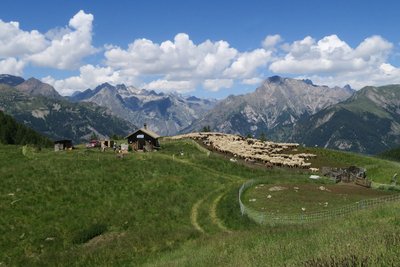
Alpage de Combeau - Parc national des Écrins - Marc Corail  Panorama
The Combeau alpine pasture
The Combeau alpine pasture, lying 2,000 metres above sea level.
Don't miss the superb panoramic view from the Croix de Combeau belvedere.- Architecture
Protestant Church of Saint-Laurent du Cros
This is the only Protestant church in the Champsaur and it witnessed the dark period that followed the Revocation of the Edict of Nantes in 1685. Today, with the religious wars firmly in the past, this building is a place of worship and assembly for the valley's Protestants.
Prior to 1685, there were three Protestant churches in the territory, in Saint-Bonnet, Orcières and Ancelle. At that time, when the Duke of Lesdiguières, Jean-François de Bonne, was extending his rule over the Champsaur, Protestants represented a significant proportion of the population. Since this major figure was also the leader of the Protestants, forced conversions were common. But when Louis XIV decided to revoke the Edict of Nantes, all over France pastors were hanged, shot and sometimes sent to the galleys, and Protestant churches were destroyed. In 1789, freedom of religious practice was finally restored.
In the valley, it was not until 1834 - and a ministerial order allocating the sum of one thousand francs for this purpose - that a new church for adherents of the Reformed Church was constructed. But by 1880 the building had become too small and a new church, inaugurated on 26 May 1886, was constructed on its present site, provided by Mr Victor Cesmat.
In 2003 significant restoration work was carried out by the municipality on the entire building.
- Fauna
Mouflon
If you make a detour to the Col de Gleize, you may well see some mouflons. An ancestor of the sheep with ammonite horns, it was introduced from 1949 into the Alps from herds in Corsica and central Europe, and seems well settled in the Chaudun area. Even though the European Union recommends strict protection of the mouflon, it is still hunted during the hunting season. Its populations are ill-adapted to extreme Alpine conditions and can fluctuate according to the winter weather.
- Panorama
Bayar golf course
The Gap-Bayar golf course is located at an altitude of 1,250m. In the view of specialists, it is one of the finest golf courses in the south of France. The 18-hole course is surrounded with forests filled with wild fruit, mushrooms and wild animals. Near the pastures, where the cows graze, there is a clear view over the Champsaur, the Ecrins and the town of Gap.
Forecast
Altimetric profile
Sensitive areas
Peregrine falcon
- Impacted practices:
- Aerial, Vertical
- Sensitivity periods:
- FebMarAprMayJun
- Contact:
- Parc National des Écrins
Julien Charron
julien.charron@ecrins-parcnational.fr
Golden eagle
- Impacted practices:
- Aerial, , Vertical
- Sensitivity periods:
- JanFebMarAprMayJunJulAug
- Contact:
- Parc National des Écrins
Julien Charron
julien.charron@ecrins-parcnational.fr
Short-toed snake eagle
- Impacted practices:
- Aerial,
- Sensitivity periods:
- MarAprMayJunJulAugSep
- Contact:
- Parc National des Écrins
Julien Charron
julien.charron@ecrins-parcnational.fr
Short-toed snake eagle
- Impacted practices:
- Aerial,
- Sensitivity periods:
- MarAprMayJunJulAugSep
- Contact:
- Parc National des Écrins
Julien Charron
julien.charron@ecrins-parcnational.fr
Golden eagle
- Impacted practices:
- Aerial, , Vertical
- Sensitivity periods:
- JanFebMarAprMayJunJulAug
- Contact:
- Parc National des Écrins
Julien Charron
julien.charron@ecrins-parcnational.fr
Golden eagle
- Impacted practices:
- Aerial, , Vertical
- Sensitivity periods:
- JanFebMarAprMayJunJulAug
- Contact:
- Parc National des Écrins
Julien Charron
julien.charron@ecrins-parcnational.fr
Golden eagle
- Impacted practices:
- Aerial, , Vertical
- Sensitivity periods:
- JanFebMarAprMayJunJulAug
- Contact:
- Parc National des Écrins
Julien Charron
julien.charron@ecrins-parcnational.fr
Peregrine falcon
- Impacted practices:
- Aerial, Vertical
- Sensitivity periods:
- FebMarAprMayJun
- Contact:
- Parc National des Écrins
Julien Charron
julien.charron@ecrins-parcnational.fr
Peregrine falcon
- Impacted practices:
- Aerial, Vertical
- Sensitivity periods:
- FebMarAprMayJun
- Contact:
- Parc National des Écrins
Julien Charron
julien.charron@ecrins-parcnational.fr
Peregrine falcon
- Impacted practices:
- Aerial, Vertical
- Sensitivity periods:
- FebMarAprMayJun
- Contact:
- Parc National des Écrins
Julien Charron
julien.charron@ecrins-parcnational.fr
Short-toed snake eagle
- Impacted practices:
- Aerial,
- Sensitivity periods:
- MarAprMayJunJulAugSep
- Contact:
- Parc National des Écrins
Julien Charron
julien.charron@ecrins-parcnational.fr
Short-toed snake eagle
- Impacted practices:
- Aerial,
- Sensitivity periods:
- MarAprMayJunJulAugSep
- Contact:
- Parc National des Écrins
Julien Charron
julien.charron@ecrins-parcnational.fr
Short-toed snake eagle
- Impacted practices:
- Aerial,
- Sensitivity periods:
- MarAprMayJunJulAugSep
- Contact:
- Parc National des Écrins
Julien Charron
julien.charron@ecrins-parcnational.fr
Recommandations
Well-trained horses (changes in level, varied surfaces, duration, changeable climate); Some narrow and slightly slanting paths;
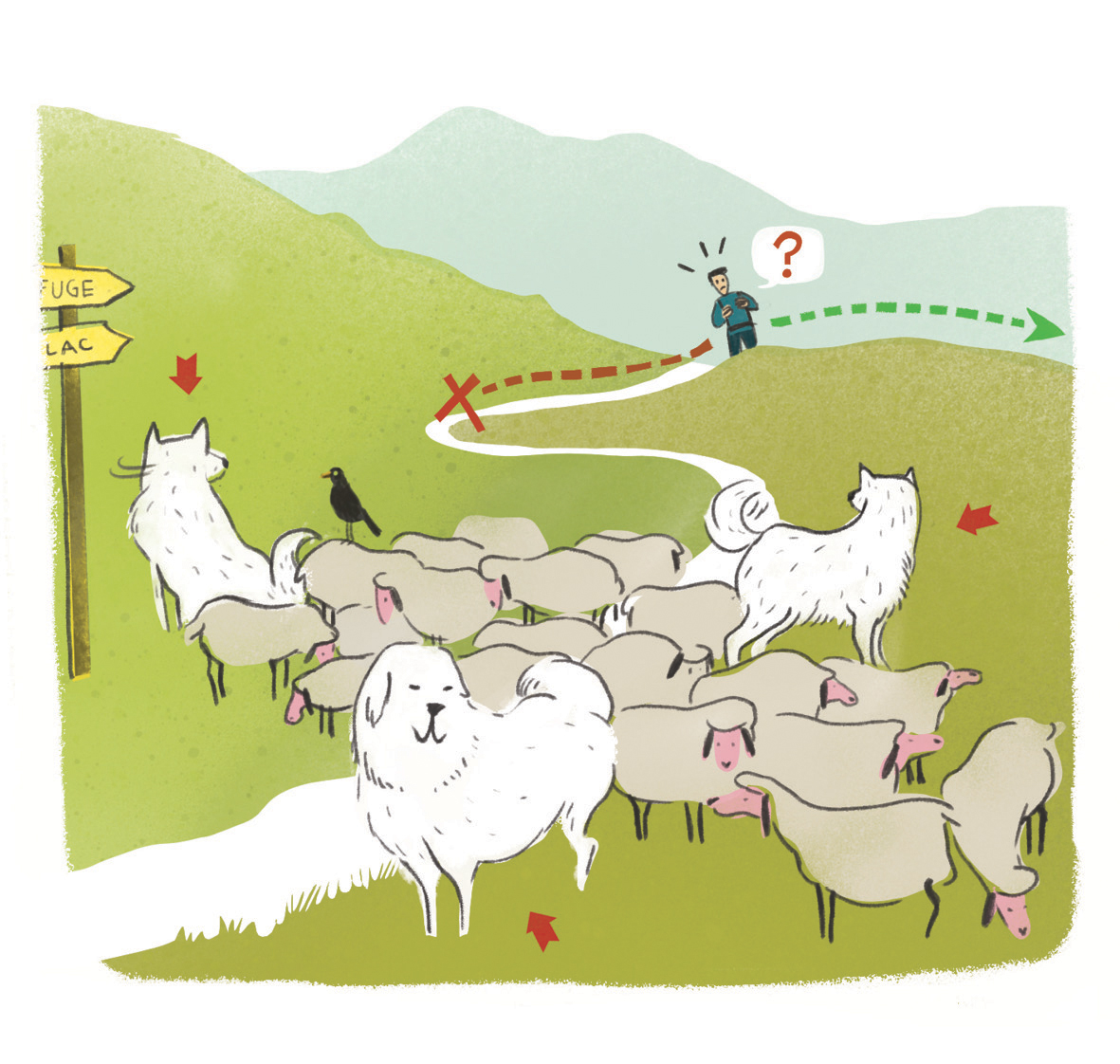 In mountain pastures, protection dogs are there to protect the herds from predators (wolves, etc.).
When I hike I adapt my behavior by going around the herd and pausing for the dog to identify me.
Find out more about the actions to adopt with the article "Protection dogs: a context and actions to adopt".
Tell us about your meeting by answering this survey.
Access and parking
Parking :
Source

Report a problem or an error
If you have found an error on this page or if you have noticed any problems during your hike, please report them to us here: