

4-day tour of the Plateau d'Emparis from Mizoën
 Hard
HardImportant information
Dans le Parc national des Écrins, les sentiers sont généralement praticables de la mi-juin à fin septembre.
Toutefois, les périodes d'accessibilité des itinéraires et les dates de pose des passerelles varient d’une année à l’autre en fonction de l’enneigement, des dégâts survenus en hiver et des conditions météorologiques. Par ailleurs, l’état des sentiers n’est pas contrôlé quotidiennement et peut évoluer rapidement après un évènement météorologique (orage, crue...). Il est nécessaire de se renseigner auprès des maisons du parc national et des offices de tourisme du territoire avant votre sortie. Pendant la randonnée, en cas de passage dégradé ou dangereux, faites demi-tour et signalez-le.
4 steps
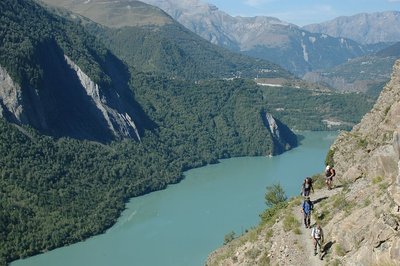

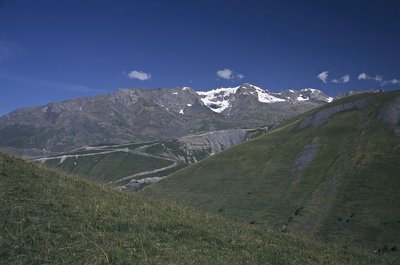
Description
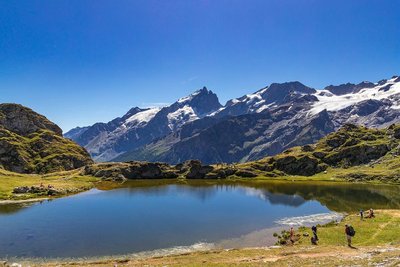
The second stage first follows the banks of the mountain stream La Pisse, taking you above the famous petrifying waterfall. From here, it is a short walk to the refuges of Le Fay and Les Mouterres along a country track. The path then leads to the Plateau d'Emparis and its two iconic lakes, Lac Lerié and Lac Noir, offering a view of the glaciers of Les Écrins and La Mieje.
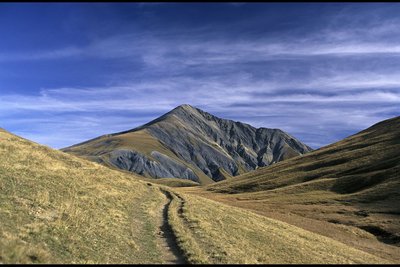
The third day is dominated by the imposing presence of the Pic du Mas de La Grave (3,020m). From the Buffe valley, the climb up to the Pic is a must for experienced hikers, and offers a 360° view. Then back to overnight in the refuges of Le Fay and Les Mouterres.
The last stage brings this trek to a gentle close. The descent runs through alpine pastures, leading to Mizoën along shaley footpaths. You return to civilisation as you pass by signs of life as it was once lived, through the ruins of alpine pasture huts and hand-crafted terraces.
- Towns crossed : Mizoën, La Grave, and Besse
6 points of interest
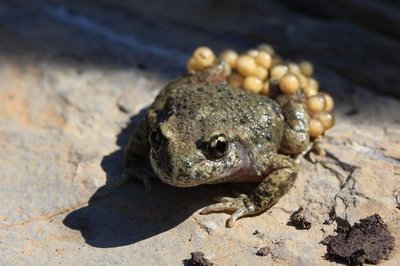
Alyte accoucheur - Marc Corail - PNE  Fauna
FaunaCommon Midwife Toad
In Spring, a short note emitted at regular intervals resonates around the lake. It is the mating season for this small terrestrial grey toad, mottled with black and brown; it is the male toad’s song to attract the females. A peculiarity of this anuran is that the male uses his back legs to surround the string of ova laid by the female to fertilize them with a jet of semen mixed with urine. In this way he watches over the eggs for several weeks. When they are on the point of hatching, he goes to the water and frees the young frogspawn.
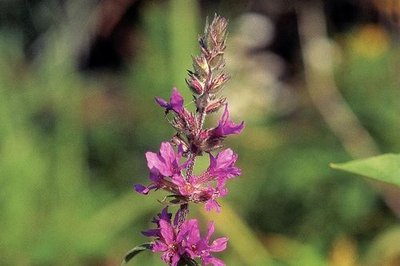
Salicaire - PNE  Flora
FloraPurple Loosestrife
During the whole summer, the Purple Loosestrife, with its beautiful purple spikes, sprinkles the small Lovitel lake with colour. Considered to be a weed to be destroyed, it does however hold a position among the most useful plants (plants with medicinal properties). Its astringent properties, among others, deem it to be a good remedy against colic in infants when teething. In the kitchen, its young shoots and the flesh of its stalks used to be consumed as a vegetable. The leaves could also be infused like tea.
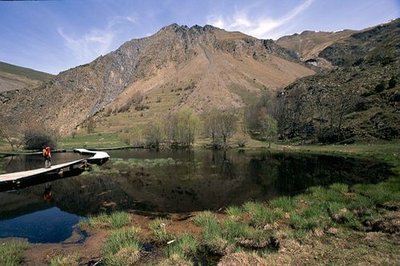
Le sentier de découverte des Clots, Mizoën - Cyril Coursier - PNE  Lake
LakeLovitel Lake
In addition to being one of the rare wetlands at altitude on the highest part of the Romanche, Lovitel Lake unusually partially dries out during the summer and turns in to a marsh. In this way it becomes ideal for the development of amphibians who benefit from the absence of fish, their predators. Furthermore, the ecological quality of the environment is remarkable... Several species of great natural value are present at this site, notably the Adder’s Tongue Fern and the Small Meadow Rue, both protected regionally.
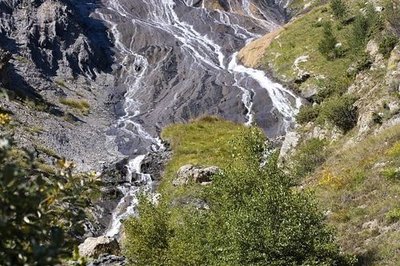
Les Clots, la fontaine pétrifiante - Gérald Lucas  Geology and geography
Petrifying Fountain
The water that crosses the Emparis plateau which is composed of permeable sedimentary rock, fills up with Calcium bicarbonate. When, lower down, it comes in to contact with the impermeable crystalline rock layer of the Hercynien granitic base, the water follows a fault plane established between two layers and finishes in an aerial waterfall. The dissolved carbonates are transformed into a soft rock called Tuff by their contact with the air which has accumulated there for millennium. This resurgence, or petrifying fountain, is one of the most beautiful in France.
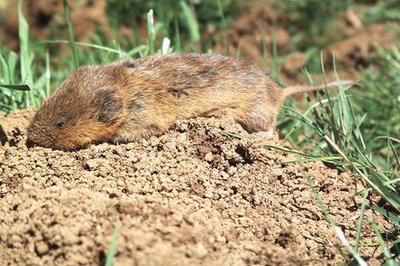
Campagnol terrestre - Eric Vannard - PNE FaunaA “plague” of voles
The European water vole, also called the rat taupier (mole-like rat) in French, is one of the biggest species of voles. Its breeding cycle is such that the species can undergo phases of infestation. Although the causes are not fully understood, this cyclic problem started a few years ago in the valley of La Buffe, at an altitude of 2,000 metres. Although the first signs of the presence of voles in a meadow are undoubtedly the "molehills" they create, when they constitute a plague, they can completely overturn the earth, which could be mistaken for ploughed land.
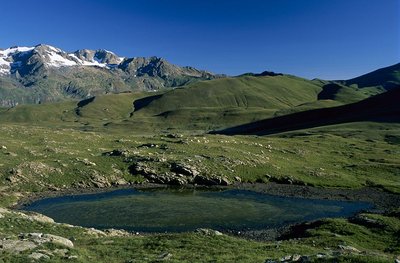
Zones humides du Rif Tort - © Parc national des Écrins - Jean-Pierre Nicollet FloraThe wetlands of the Rif Tort
Temperatures on the Emparis plateau are characteristic of a cool steppe climate. It is a very windy plateau with an average annual temperature only just above zero degrees. Winter lasts for eight months, during which it freezes almost every day. The particularly severe temperature constraints in the Rif Tort catchment area have favoured the maintenance of a relic flora adapted to these extreme conditions since the last ice age. «Arctic-Alpine»plant formations are found here. This is a relic flora inherited from advancing glaciers in the Quaternary period, comparable to the flow found on the coasts of the Far North. These formations are particularly rare in Europe and are of very high heritage value. You might see numerous protected species here: bicoloured sedge, sweet grass (a boreal relic species, sole colony in Isère) and the sago pondweed. Livestock grazing in the marsh is necessary because it limits the development of herbaceous plants which could squeeze out the Arctic-Alpine species. A delicate balance needs to be found between the trampling likely to destroy the plant species growing in the low marshes and the passage of the flocks to encourage rejuvenation of the area, and thus maintain this habitat.
Forecast
Altimetric profile
Sensitive areas
Bearded vulture
- Impacted practices:
- Aerial, , Vertical
- Sensitivity periods:
- JanFebMarAprMayJunJulAugNovDec
- Contact:
Parc National des Ecrins - Yoann Bunz- 06 99 77 37 65 yoann.bunz@ecrins-parcnational.fr
Bearded vulture
- Impacted practices:
- Aerial, , Vertical
- Sensitivity periods:
- JanFebMarAprMayJunJulAugNovDec
- Contact:
Short-toed snake eagle
- Impacted practices:
- Aerial,
- Sensitivity periods:
- MarAprMayJunJulAugSep
- Contact:
- Parc National des Écrins
Julien Charron
julien.charron@ecrins-parcnational.fr
Recommandations
Camping, fires and water sports (including swimming) are prohibited on the Emparis plateau during the summer. Dogs must be kept on a lead. Bivouacs are permitted between 7pm and 9am.
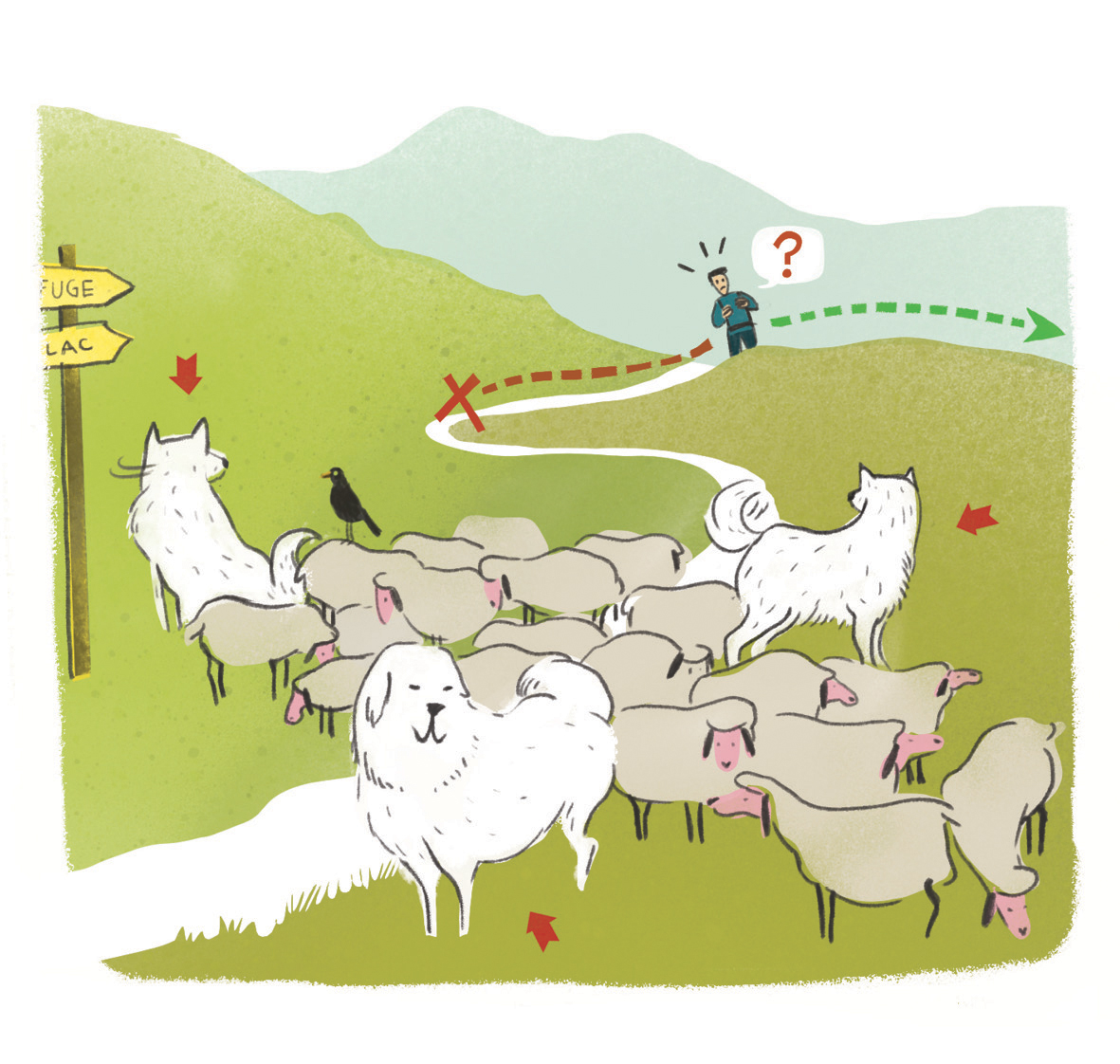 In mountain pastures, protection dogs are there to protect the herds from predators (wolves, etc.).
When I hike I adapt my behavior by going around the herd and pausing for the dog to identify me.
Find out more about the actions to adopt with the article "Protection dogs: a context and actions to adopt".
Tell us about your meeting by answering this survey.
Information desks
Rue Principale, 38142 Besse en Oisans
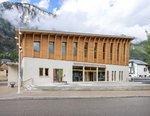
Oisans Park house
45 avenue de la République, 38520 Le Bourg d'Oisans
Video presentation of the natural resources of the Oisans mountain and its crafts. Information, documentation about the Park, projections, reading space for children. Accessible to people with reduced mobility. Free admission. All animations of the Park are free unless otherwise stated.
Transport
By bus :
Bus lines in Région Sud : https://zou.maregionsud.fr/
Bus lines in Auvergne-Rhône-Alpes : https://carsisere.auvergnerhonealpes.fr/
Bus lines in Isère : https://www.itinisere.fr/
Access and parking
Parking :
More information


Source

Report a problem or an error
If you have found an error on this page or if you have noticed any problems during your hike, please report them to us here: