
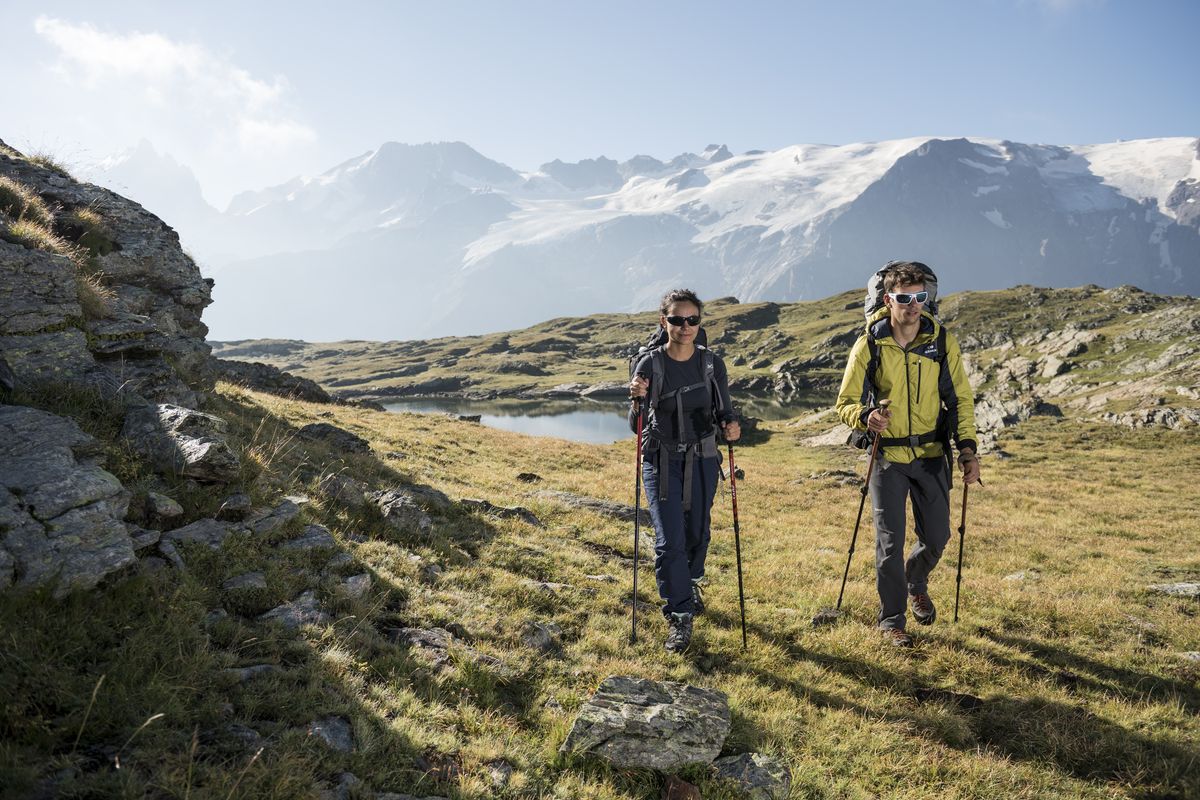
Tour from La Grave to the Plateau d'Emperis via the Pic du Mas de la Grave
 Medium
Important information
Dans le Parc national des Écrins, les sentiers sont généralement praticables de la mi-juin à fin septembre.
Toutefois, les périodes d'accessibilité des itinéraires et les dates de pose des passerelles varient d’une année à l’autre en fonction de l’enneigement, des dégâts survenus en hiver et des conditions météorologiques. Par ailleurs, l’état des sentiers n’est pas contrôlé quotidiennement et peut évoluer rapidement après un évènement météorologique (orage, crue...). Il est nécessaire de se renseigner auprès des maisons du parc national et des offices de tourisme du territoire avant votre sortie. Pendant la randonnée, en cas de passage dégradé ou dangereux, faites demi-tour et signalez-le.
3 steps


Description
The second day is dominated by the imposing presence of the Pic du Mas de La Grave (3,020m). From the valley, the climb up to the Pic is a must for experienced hikers, and offers an imposing 360° view. Then back to overnight in the refuges of Le Fay and Les Mouterres.
The last stage merges with the GRⓇ54 before running back uphill, offering hikers an unrivalled view from the Plateau d'Emparis and its two iconic lakes, Lac Nerié and Lac Noir. Here the high peaks of the massif come into view and the glaciers of Les Écrins and La Meije. This stage ends by passing through Le Chazelet and Les Fréaux, marking a return to civilisation through the Romanche valley.
- Towns crossed : La Grave, Besse, and Mizoën
15 points of interest
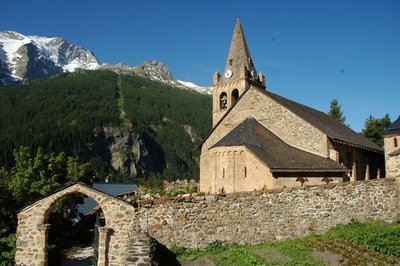
Eglise ND de l'Assomption à la Grave - Jenny Selberg - OT Hautes Vallées  Architecture
Notre-Dame de l’Assomption Church
Listed as an historic monument, Notre Dame de l'Assomption church towers over La Grave. In First Romanesque style, this remarkable building is thought to date from the 11th century, making it the oldest building in the town. All around the church is a cemetery with graves marked by wooden crosses and decorated with brass hearts, facing the giants of ice.
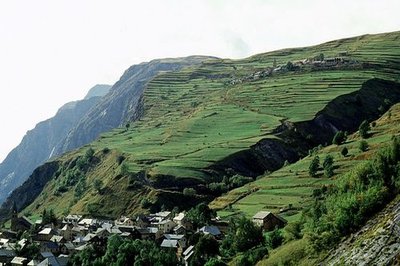
Terrasses, au hameau des Terrasses - Jean-Pierre Nicollet - PNE  Vernacular heritage
La Grave terraces
On the south-facing slope of La Grave, terraced farmland and villages are inseparable. This is a European-wide landscape uniting many architectural, archaeological and natural elements. This mountain farming system was shaped mainly by past and present agricultural activity. The steep terrain at the time required terracing for it to be farmed. These former planted terraces are today natural meadowland, which is mowed or used for grazing. It is highly sensitive to this new pastoral usage, and is little by little showing signs of soil erosion.
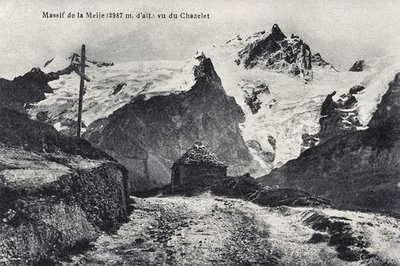
Massif de la Meije vu du Chazelet - PNE ArchitectureSainte-Anne du Chazelet oratory
Although it stands beside an ordinary road, the Chazelet oratory is famous for one of the most beautiful panoramas of the Alps and the Meije mountains. Built in dry stone, the edifice is at 1 834 m and overlooks the valley and the Ecrins and Meije mountains. It has been sketched, photographed and painted many times, including in the famous Meije by the Japanese painter Foujita.
Recently a new orientation table was placed a few metres above the oratory. In two parts, it shows the northern slope of the Meije and the southern slope in the direction of Chazelet and Savoie.
 Panorama
Chazelet perch
To test your head for heights, there is nothing like this new, life-size game played facing the Meije a steel walkway suspended over empty space. The first few steps are daunting, but reaching the end of the walkway – or rather, empty space – calls for even more courage! Beneath your feet, all the way down below is the village of Les Fréaux, nestling against the Romanche, and above you, the giants of ice. If you add in the element of air, with gusts of wind blowing all around you, then strong sensations are guaranteed!
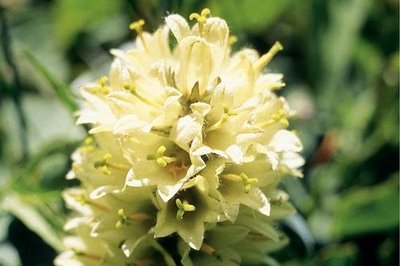
Campanule en thyrse - Bernard Nicollet - PNE  Flora
FloraCampanula thyrsoide
This flower is an emblem of the area of La Grave and is recognisable among all others thanks to its yellow flowers that form a compact flower head also known as "thyrse". It is edible in a cheese-topped bake and is one of the rare biennial alpine plants. The seeds are scattered in the autumn and in the first year grow into big long leaves that form a rosette. Blossoming only occurs in the second year, when after ensuring reproduction, the plant dies.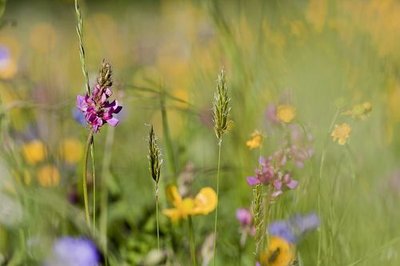
Prairie de fauche - Marc Corail - PNE FloraAltitude hayfields
Natural hayfields are of great biological variety and are home to associations of plants that blossom freely. From this botanical variety come a multitude of insects and more particularly butterflies that find an ideal environment for their development. Maintaining the balance of these zones is essential, even more so at this altitude and in such a valley.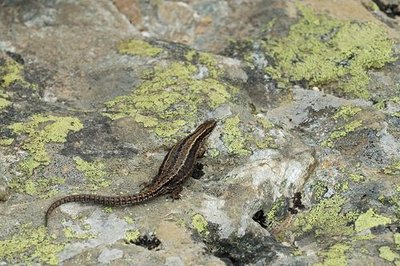
Lézard vivipare - Mireille Coulon - PNE  Fauna
FaunaViviparous lizard
The viviparous or common lizard is present in the north of the park where it lives in cool, damp zones (moors, alpine and subalpine meadows, or at the edge of streams). It has this name as the females, in certain populations, keep the eggs in their abdomen until they hatch. Affected by any development that leads to the destruction of wet zones, it is a protected species all over France and considered vulnerable on a regional level.- Fauna
Common quail
Generally present in fields of cereal crops, the common quail also occupies the mountain meadows up to 2000 m or more. In the long grass, it pecks at insects and later on at the seeds as they reach maturity. A very discreet bird, it nests in the ground in a little dip, where it can lay twice to replace eggs in the case of destruction. Its song, that can be heard night and day, often gives it away: "pay your debts" is the male's song to keep its rivals at bay. 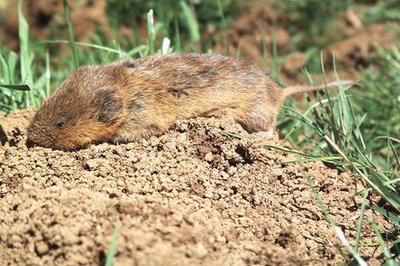
Campagnol terrestre - Eric Vannard - PNE FaunaA “plague” of voles
The European water vole, also called the rat taupier (mole-like rat) in French, is one of the biggest species of voles. Its breeding cycle is such that the species can undergo phases of infestation. Although the causes are not fully understood, this cyclic problem started a few years ago in the valley of La Buffe, at an altitude of 2,000 metres. Although the first signs of the presence of voles in a meadow are undoubtedly the "molehills" they create, when they constitute a plague, they can completely overturn the earth, which could be mistaken for ploughed land.
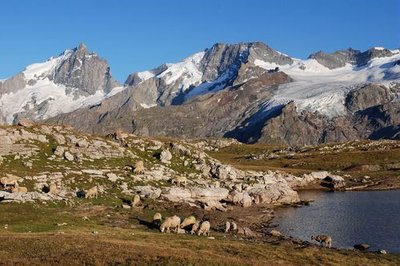
Troupeau d'ovins sur le plateau d'Emparis - Denis Fiat - PNE PanoramaThe Emparis Plateau
The mule path follows the edge of the Southern border of the plateau which is completely dedicated to pastoralism and tourism. It offers an exceptional view of the Meije whose marked relief contrasts with this gentle landscape. It welcomes 7 refuges and pastoral cabins as well as remarkable fauna, like the Mountain Hare and the Mountain Apollo butterfly. The challenge for this site is to preserve its pastoral character.
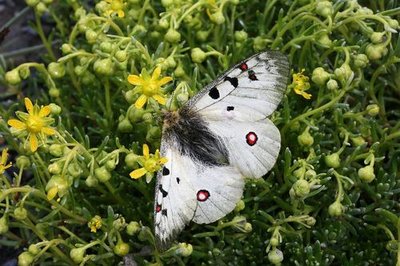
Petit apollon sur sa plante hôte (saxifrage faux aizoon) - Bernard Nicollet - PNE FaunaSmall Apollo
The Small Apollo is a rare and protected butterfly. It has finely striped black and white antennae, and a tiny red ocellus (eye) on each of its forewings. With a wingspan of 60 to 80 mm, it is the lord and master of the orangey-yellow beds of mountain saxifrages where it takes care of its eggs and feeds its caterpillars.
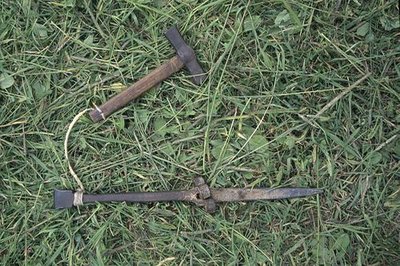
L'enclume et le marteau pour battre la faux - Cyril Coursier - PNE  Know-how
Agricultural work in Spring and Summer
In Spring the soil had to be moved up the land using crates pulled by mules. Ploughing, sowing, planting followed rye (which stayed in the ground for two years), barley, oats and potatoes. Summer was not finished until the barns were full of hay. Scythes that had been beaten on an anvil, rakes, and nets were used every day. In order to ensure the overwintering of the animals, a certain number of loads (around 80 kg of hay) were necessary: 25 for each dairy cow and 5 for each sheep.
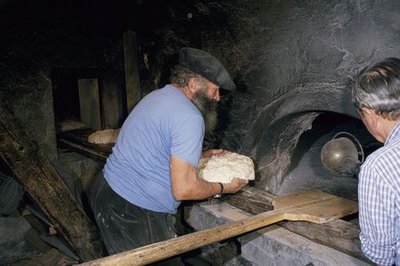
La cuisson du pain noir - Jean-Pierre Nicollet - PNE Know-howAgricultural work in Autumn and Winter
From September, cereal crops were cut with the scythe and the sickle, dried in “bourles” (small stacks of ten sheafs) on the top of the land (fields). Once beaten, the grains of rye were dried in the sun «soleillaient », they were taken to the mill and then to the oven to be made in to black bread. From the end of November until the beginning of May, the animals had to be tended to in the stables. The manure from the cows was transported to the fields using sledges, while the sheep dung was dried and cut in to, pieces, and burnt to produce heat and energy for cooking. In the dairy, milk was made in to butter and cheese.
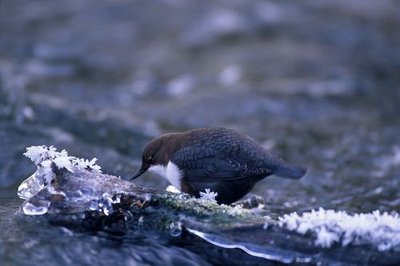
Cincle plongeur - Robert Chevalier - PNE FaunaWhite-throated dipper
Perched on a large, partly immersed pebble, the dipper sways to and fro with its tail aloft, and then dives down head first into the swirling water. This surprising passerine is unusual in moving underwater against the current in search of food. Thanks to a thin membrane protecting its eyes from the water, it can spot its prey (worms, small shellfish, water insect larva), before lifting its head out of the water and letting the current carry it gently along. It then takes up a new surveillance position and starts the process all over again.
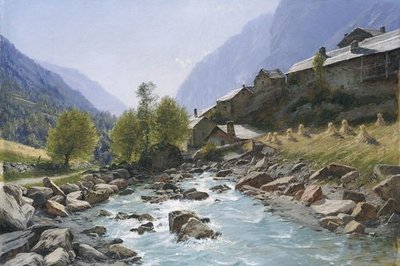
Les Fréaux près de la Grave, Charles Bertier - © Musée de Grenoble  History
Les Fréaux près de la Grave, Charles Bertier
The Romanche valley was a source in inspiration for numerous painters of mountain landscapes. It inspired Charles Bertier (1860-1924) to paint the oil on canvas Les Fréaux près de la Grave in 1894. Introduced to landscape painting by J. Achard and to mountain landscape painting by Laurent Guétal (who was a priest so was also known as L'Abbé Guétal) this Grenoble-born artist thought nothing of setting up his easel on the highest peaks of the Dauphiné Alps. With canvases such as L'approche de l'orage en Oisans (1900), he made it his mission to give his contemporaries an understanding of the mountains.
Forecast
Altimetric profile
Sensitive areas
Bearded vulture
- Impacted practices:
- Aerial, , Vertical
- Sensitivity periods:
- JanFebMarAprMayJunJulAugNovDec
- Contact:
Parc National des Ecrins - Yoann Bunz- 06 99 77 37 65 yoann.bunz@ecrins-parcnational.fr
Bearded vulture
- Impacted practices:
- Aerial, , Vertical
- Sensitivity periods:
- JanFebMarAprMayJunJulAugNovDec
- Contact:
Golden eagle
- Impacted practices:
- Aerial, , Vertical
- Sensitivity periods:
- JanFebMarAprMayJunJulAug
- Contact:
- Parc National des Écrins
Julien Charron
julien.charron@ecrins-parcnational.fr
Short-toed snake eagle
- Impacted practices:
- Aerial,
- Sensitivity periods:
- MarAprMayJunJulAugSep
- Contact:
- Parc National des Écrins
Julien Charron
julien.charron@ecrins-parcnational.fr
Recommandations
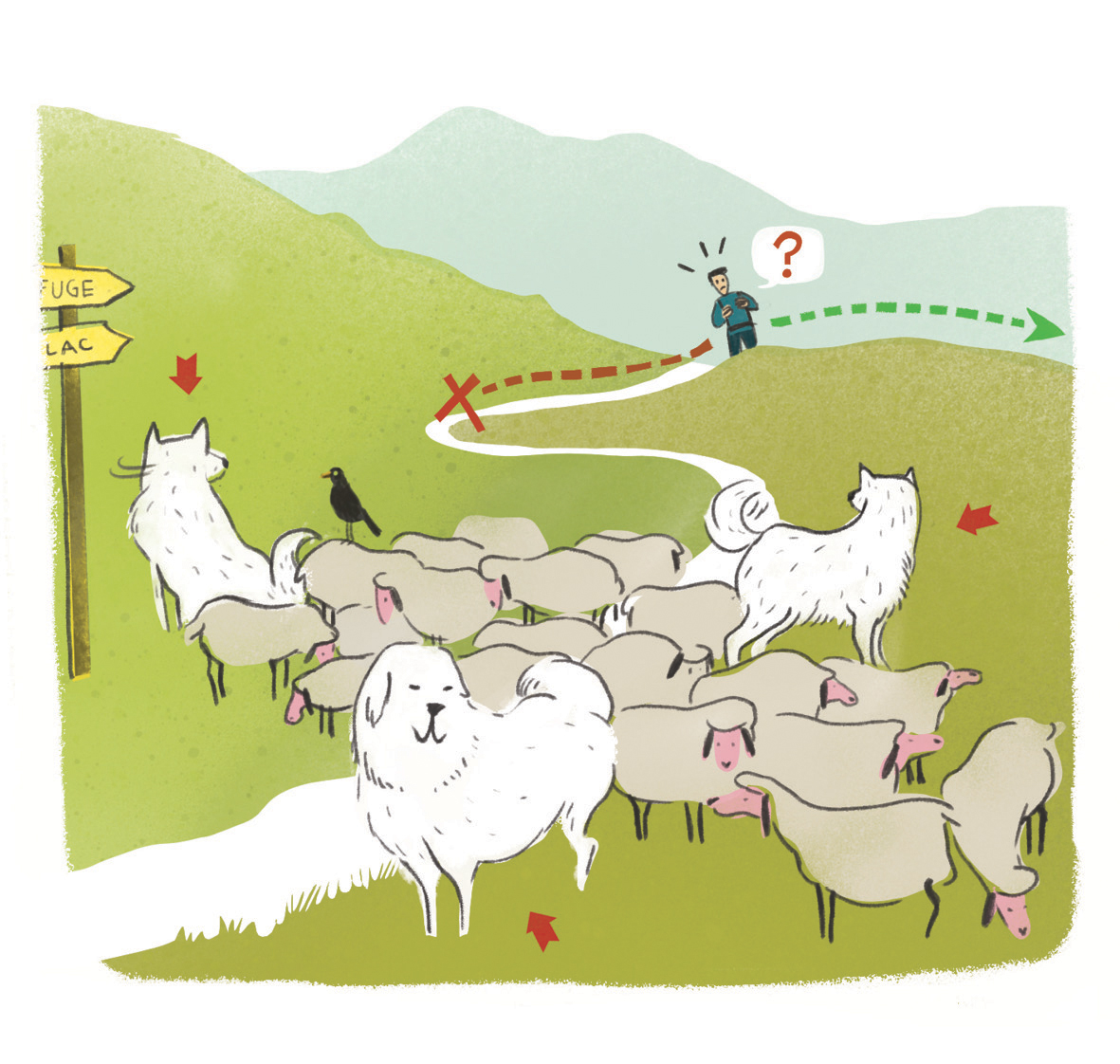 In mountain pastures, protection dogs are there to protect the herds from predators (wolves, etc.).
When I hike I adapt my behavior by going around the herd and pausing for the dog to identify me.
Find out more about the actions to adopt with the article "Protection dogs: a context and actions to adopt".
Tell us about your meeting by answering this survey.
Information desks
Tourist information office of La Grave
RD1091, 05320 La Grave
Opening hours:
- May to mid-June: from Tuesday to Saturday from 9 am to noon and from 2 pm to 5 pm.
- Mid-June to mid-July and mid-August to mid-September: Monday to Saturday from 9 am to noon and from 2 pm to 5.30 pm.
- Mid-July to mid-August: every day from 9 am to noon and from 2 pm to 5.30 pm.
Information center "Col du Lautaret" (summer only)
Col du Lautaret, 05220 Le Monêtier-les-bains
Under the gaze of the Meije (3983 m) and surrounded by beautiful meadows celebrated in the great names of botany, the former hospice of the Lautaret called "refuge Napoleon" houses the reception and information Park center - Projections, documentation, books of the Park. Accessible to people with reduced mobility. Free admission.
Transport
By bus :
Bus lines in Région Sud : https://zou.maregionsud.fr/
Bus lines in Auvergne-Rhône-Alpes : https://carsisere.auvergnerhonealpes.fr/
Bus lines in Isère : https://www.itinisere.fr/
Access and parking
From Briançon, follow the D1091 until you reach La Grave.
More information


Source

Report a problem or an error
If you have found an error on this page or if you have noticed any problems during your hike, please report them to us here: