
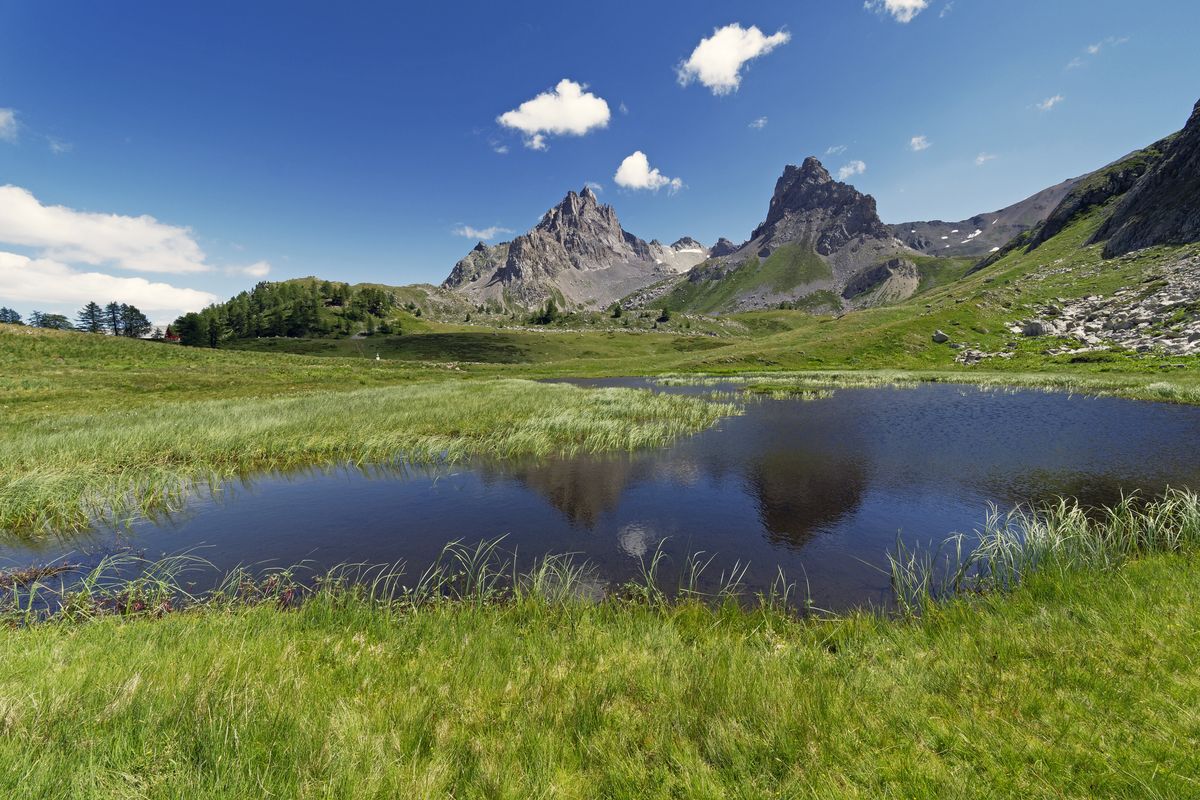
6-day tour between Écrins and Clarée
 Medium
6 steps
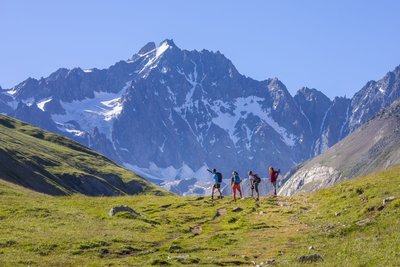

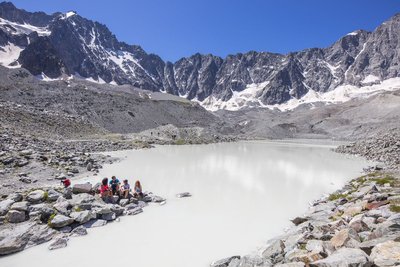
Description
- Departure : Col du Lautaret
- Arrival : Col du Lautaret
- Towns crossed : Le Monêtier-les-Bains, Villar-d'Arêne, and Névache
38 points of interest
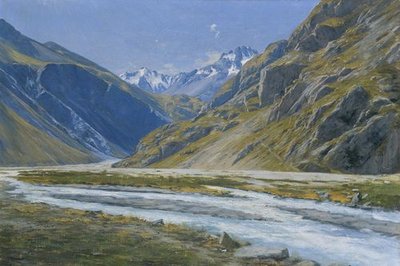
Vallée de la Romanche, Charles Bertier - © Musée de Grenoble  History
Romanche valley, Charles Bertier
The Romanche was a source of inspiration for many mountain artists and it have been painted repeatedly. Charles Bertier (1860-1924) was inspired to paint Vallée de la Romanche au Pied-du-Col and Les Fréaux près de la Grave, two oil paintings that were painted in 1894. The artist from Grenoble learnt to paint landscapes with Jean Achard, and mountains with the abbot Guétal and did not hesitate to set up his easel on the high summits of the Dauphiné Alps. More to the point, his mission was to make his contemporaries 'understand the mountains'!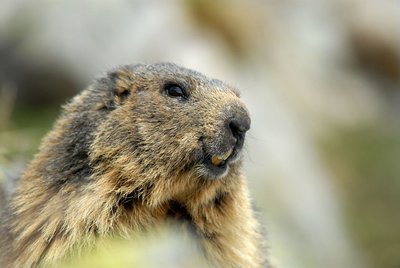
Marmotte au printemps - PNE - Papet Rodolphe  Fauna
FaunaThe marmots’ "bosse"
The alpine marmot is naturally present on grass at altitude. Here, it occupies a singular place which we call the marmots’ "bosse». This hibernating rodent is only visible between April and October. The marmot lives in a family and respects a hierarchy. Games, grooming, fighting and biting ensure the dominance of a couple as well as the cohesion of the group. Each animal participates in the delimitation of the territory by rubbing its cheeks on rocks and also by urinating and defecating there. When there is danger, the marmot emits a high and powerful whistle in order to warn the others.
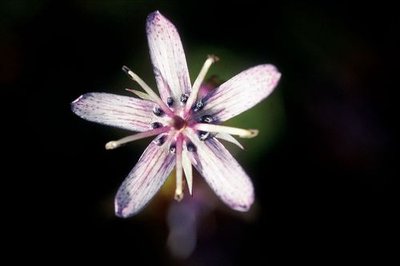
Swertie vivace - Bernard Nicollet - PNE  Flora
FloraFelwort
In early August, the felwort’s violet stars open in the sunshine. At the base of each of its five petals, two shiny pits full of nectar attract insects. A member of the gentian family, this beautiful flower is a perennial that survives the cold season with its persistent winter bud close to the ground, surrounded by a rosette of protecting leaves.
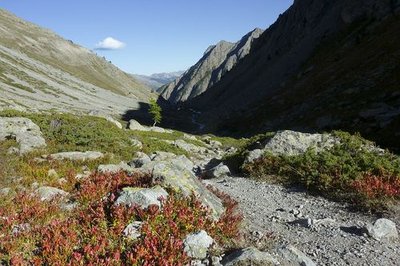
En descendant du col d'Arsine, sous les chalets du même nom. Vue plein est. - Cyril Coursier - PNE  Pass
PassArsine pass
The Arsine pass, is an important crossing point to visit on the GR54 Tour des Ecrins et de l'Oisans. It gives a remarkable viewpoint over the Angeaux massif. The pass is part of an old itinerary that was used instead of the crossing point by the Lautaret pass. It is also a crossing point between the Guisane and the Romanche area. This is an area that was mentioned as early as the Middle Ages as a place of conflict between the districts of Villar d'Arène and Monétier-les-Bains.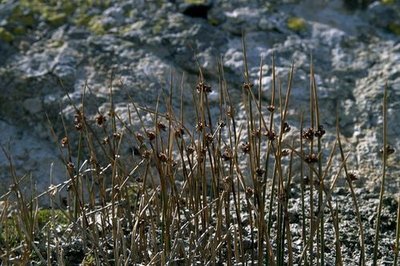
Jonc arctique - Bernard Nicollet - PNE FloraArctic rush
Even though it is relatively common in some acidic marshland, the Arctic rush is nonetheless protected throughout the Rhône-Alpes and Provence-Alpes-Côte-d’Azur regions. It can be recognised because of its total absence of leaves and by the few blackish flowers in the upper third of the stalk. The flower tepals open at an obtuse angle and are a little shorter than the capsule.
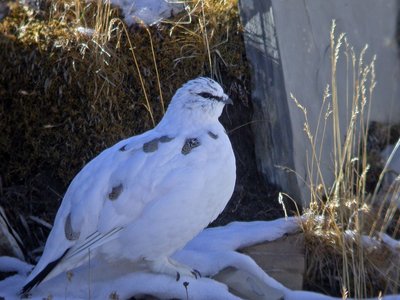
Le lagopède alpin en plumage d'hiver - PNE - Combrisson Damien FaunaRock ptarmigan
At five in the morning in the month of May, at an altitude of over 2,000 m, the sun rises over the fields of blueberry, which appear above the patches of snow. All of a sudden, a hoarse, almost metallic cry cuts through the peaceful dawn atmosphere: the rock ptarmigan is in the midst of its nuptial parade. Originating from the Arctic tundra, the rock ptarmigan, sometimes called the snow partridge, was to be found all over Europe during the ice ages, before its living space was limited to the mountains. Even today, it finds the conditions it needs to survive. The national Alpine parks have a great responsibility in conserving this species. The inventory carried out by the Haute-Romanche nature unit in 2005 showed there was a large core group of birds on the site.
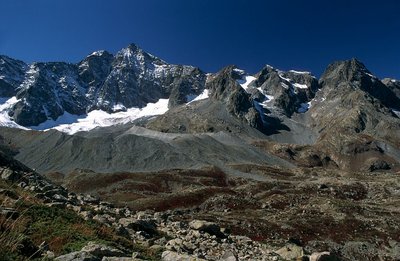
Anciennes moraines colonisées - PNE - Nicollet Bernard  Glacier
Moraines
The site of Arsine offers a complex moraine environment with a parade of ice margin flowers. The frontal moraine of the Arsine glacier is on a glacial vegetated rock complex that occupies about forty hectares at the bottom of the cirque. This complex is likely to have come about through a shifting of abandoned glacial deposits after permafrost was established. This means that the ground maintains a temperature of 0°C or less over several years. This phenomenon is likely to have taken place during the recent Dryas climatic cooling, that is to say 11 000 – 10 000 years BC.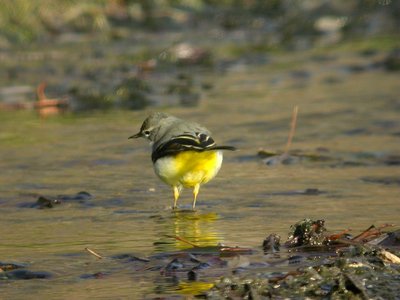
Bergeronnette des ruisseaux - PNE - Combrisson Damien FaunaAquatic diet
The grey wagtail is "hyperactive" and has a diet of flies, mosquitoes, dragonflies and all sorts of aquatic insect larvae. It hunts at the edge of the water, by jumping from stone to stone or hovers to catch its prey. It sometimes fishes for shellfish, molluscs, or even small fish to complete it meals. It does not leave the damp banks to build its nest either, and even looks for somewhere close to a waterfall or to flowing river.
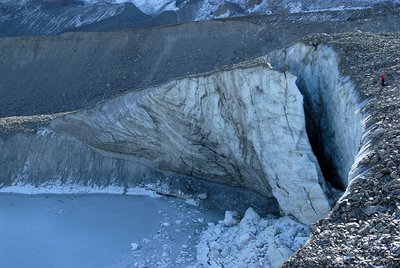
Détachement imminent d'un bloc du glacier - PNE - Masclaux Pierre GlacierIce calving
When the lake is frozen and the air temperature rises, the ice expands, provoking what is called the “song of the lake". The Lac Ouest is the last lake in the mountain range where it is still possible to see the fall of seracs (the front of the glacier) into the water, giving rise to this muffled noise.
 Glacier
The melting Arsine glacier
Lake Arsine came to life in the 1950s after the Arsine glacier melted. Due to its rapid development, it was measured more accurately in 1969 and 1985, showing 800,000 m3 of water contained in a moraine that had been weakened by the ice inside it. Since it threatened to break, emergency work was undertaken the following spring to stop the rise in the level of the lake using a regulation channel dug across the frontal moraine. Almost 30 years later, the glacier site is still carefully monitored by Park employees. And the risk is now completely ruled out.
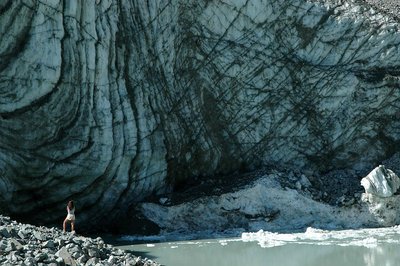
Le lac et le glacier d'Arsine - PNE - Masclaux Pierre  Lake
LakeArsine Glacier
The Arsine glacier is contained in the hollow of a vast corrie facing north, encircled by high walls reaching an altitude of between 3,200 and 3,600 metres. This is a glacier that is mostly hidden, with the front, currently at an altitude of about 2,470 m, behind lakes. The lakes are held back by an impressive series of old moraines, formed during the Little Ice Age (between about 1550 and 1850). Due to its size and preserved state, the old moraines of Arsine are an exception in the western Alps. Usually such morainic fronts are found in small, high-altitude glaciers, resulting water running too weakly to sweep away the accumulation of pre-glacier deposits (for example, the Réou d’Arsine glacier). The melting and shrinking of the Arsine glacier posed problems in the 1980s concerning water retention and therefore safety. RTM teams carried out work to lower the level of the lakes, the size of which raised fears of a break in the moraine with the risk of flooding the village of Le Casset.
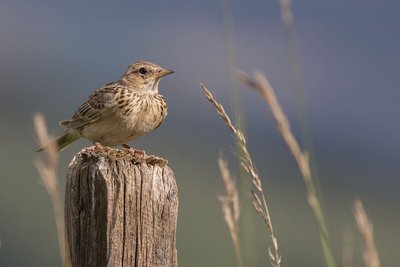
L’alouette des champs - PNE - Saulay Pascal FaunaSkylark
This bird is like a tightrope walker suspended in the sky, sounding out a long chorus of notes. Then, triangular wings back, and in a perfect spiral, the bird lands in the middle of the prairie. On the ground, it is difficult to see: its varying shades of brown means it is very well camouflaged. In its search for food, its movements, which are a succession of small sprints and sudden halts, enable it to spot possible predators.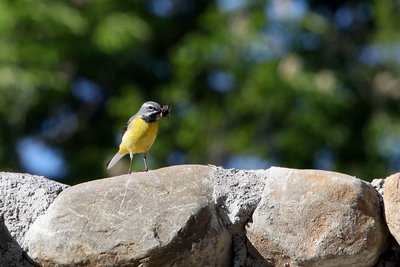
La bergeronnette des ruisseaux - PNE - Saulay Pascal FaunaGrey wagtail
The grey wagtail elegantly hops along the rocks at the riverside. They are found in mountain streams, but also near all waterways in the mountains, in the countryside or in towns, and even small high-altitude lakes. Like other wagtails, they continually wag their long black tails edged with white. They have yellow breasts like the western yellow wagtail, but their backs are ash grey. In the mating season, males proudly show off their black throats, making it easier to tell them apart from females, whose throats and breasts are partly white. Their pinkish claws are specific to the breed, since other wagtails’ claws are black.
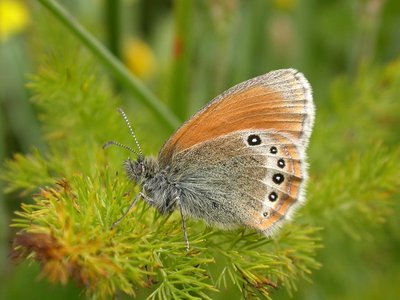
Satyrion (papillon de jour) - PNE - Delenatte Blandine FaunaButterflies and moths
Butterflies can be distinguished from moths by the shape of their antennae. You will also notice that when resting, the butterflies wings are vertically folded over the body for necessary discretion while the moth's cover them. The moorland clouded yellow butterfly has another unusual habit: as soon as it becomes too cold to fly, it settles and bends its side to the sun to absorb energy. It can even lean slightly, whereas others tend to fully, and dangerously spread themselves out.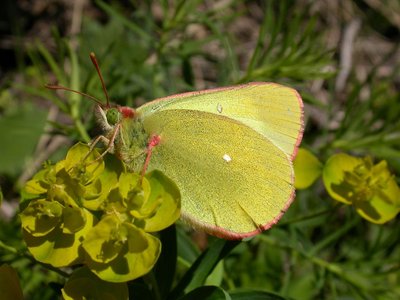
Solitaire mâle sur une euphorbe - PNE - Delenatte Blandine FaunaMoorland clouded yellow
The heath surrounded by heather and willows is the home of a population of unusual and protected butterflies: the moorland cloud yellow. Elsewhere, it lives in different environments, such as blueberry heaths and peatland, where the moorland clouded yellow is rare and hard to spot. It can be recognised by its yellow display delicately sprinkled with grey under the rear wings of the male, while the female of the species has adopted almost purely white wings. They both wear a simple pink border highlighting the edge of their wings, with a tiny white ocellus (eye) encircled with brown and a discrete grey crescent.
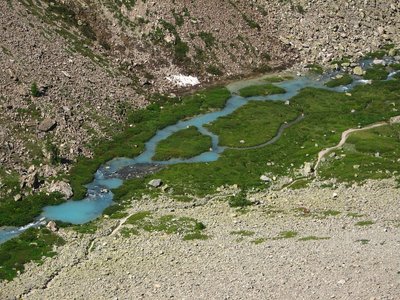
Eaux turquoises du Petit Tabuc - PNE - Coursier Cyril  Water
WaterWater colour in the meanders
The turquoise colour of the water that meanders from the Petit Tabuc stream gives a special character to this remarkable site. The valley is popular among photographers and artists for its photographic and pictorial quality.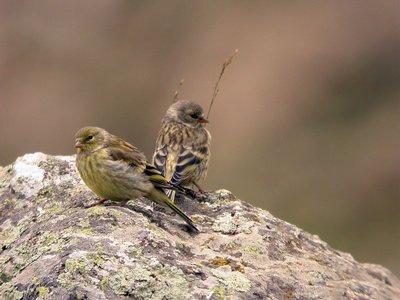
Deux venturons montagnards - PNE - Combrisson Damien FaunaAlpine citril finch
A small green-yellow-grey bird sways on a tall branch. Chet! The Alpine citril finch flies off to land on a scrap of threadbare grass. It looks like a small greenfinch, but the strident cry it makes during its short flight clearly sets it apart. Its head and breast flanks are a pretty blue-grey colour. Its yellow wing stripes can be easily seen. When flying over longer distances, its undulating flight is reminiscent of a goldfinch’s. And just like its cousin, the finch is sociable and moves about in small groups when exploring some sparse group of nettles or grass.
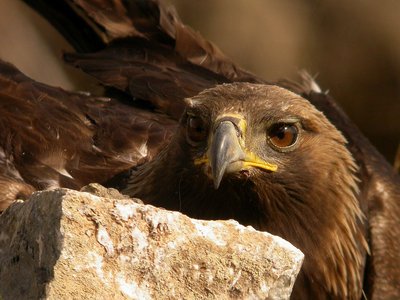
Aigle royal - PNE - Combrisson Damien FaunaGolden eagle, the Ecrins' mascot
The Petit Tabuc site is ideal for the golden eagle to nest. The golden eagle is amongst the protected species that are considered rare in Europe. The size of the populations that have been registered in the Ecrins massif, bestow a strong responsibility on the Park for conservation of the species. Counting takes place regularly since 1985 along with monitoring of reproduction, causes of disturbance and mortality.
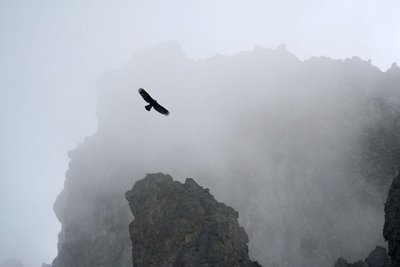
Aigle royal dans la brume - PNE - Telmon Jean-Philippe FaunaA flying predator
The eagle is the archetypal predator. Everything about it suggests strength and daring. Its appearance, of course, with its impressive expression highlighted by the prominent brow ridge, but above all its fearsome weapons: rapid flight, which can be adapted to even the most acrobatic situations, and sharp, powerful talons. Its keen eyesight helps it detect its prey, from the marmot to the young chamois, ptarmigans and hares. In winter, it often takes its food from the dead bodies of animals, helping towards the natural cleansing of nature.
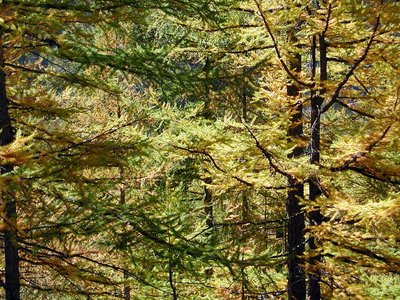
Mélezin - PNE - Quellier Hélène FloraLarch
The larch is the only European resinous tree to lose its needles in winter. Its wood is red-brown. It stands out in the landscape with its leaves ranging from a soft green colour in spring to gold in autumn. Its pink flowers attract naturalists and photographers in the spring. The larch tree is a coloniser of mountain slopes. Although it is at home in the harsh conditions of the mountainside, it cannot bear competition from other trees. The Petit Tabuc site is a fine example of its colonising capacity, even though it is regularly hit by avalanches.
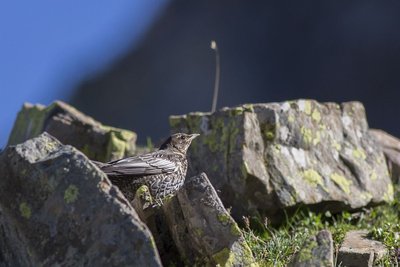
Jeune merle à plastron - PNE - Saulay Pascal FaunaRing ouzel
In the pastures covered with larch or 'bush", a cry of alarm followed the start of a song resounds. A blackbird? Yes, but more specifically a ring ouzel. This shy, swift mountain blackbird lives on the fringe of the larch, scots pine, spruce or Swiss pine forests between 1000 and 2500 m in altitude. The ring ouzel is a migratory bird that spends winter in Spain or North Africa before coming back to the mountains around March.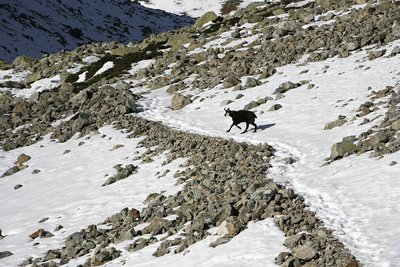
Chamois mâle au moment du rut dans le vallon du petit Tabuc, à proximité du Mônetier-les-bains - Cyril Coursier - PNE FaunaChamois
Rupicapra rupicapra, the mountain goat was not at first solely a creature of the mountains. The species is more attached to rocky escarpments and steep slopes than high altitude. But strong human pressure on chamois made them withdraw ever higher. Coveted as a hunting target, they have found refuge here in the Ecrins National Park.
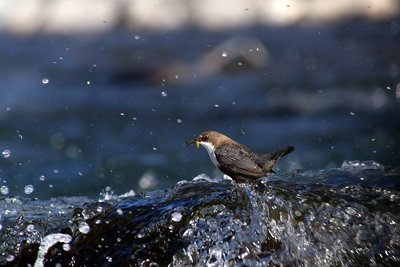
Cincle plongueur avec son repas dans le bec - Damien Combrisson - PNE FaunaWhite-throated dipper
The mountain streams relinquish their secrets to an attentive hiker. The master of this little world is a small brown, red and grey bird with a short tail and a pure white breast, separated from the darker abdomen by a light brown stripe. We can often see it in the air, flying close to the water to snap up insects. The dipper owes its name to its eating habits to find water larva, it dips its head into the water and grips the riverbed to walk against the current.
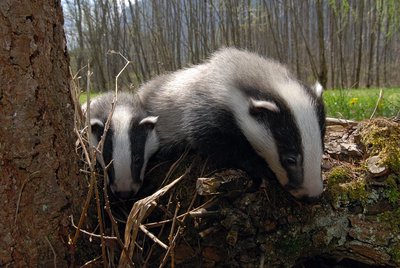
Deux jeunes blaireaux - PNE - Fiat Denis FaunaEuropean badger
You will often see a badger at nighttime on the edge of a path, a road or an embankment. The gentle pace and portly gait of this member of the mustelid family are reminiscent of a small bear you may get a glimpse of his black and the white stripes on his head before he hurries away. Worms, reptiles, frogs, fruit and plants are his staple diet. Families of badgers live in sometimes very extensive and very old burrows, with numerous chambers and galleries. They are tolerant animals, since they will sometimes share their home with rabbits and foxes. Badgers are among the unobtrusive neighbours whose presence goes undetected, except for their footprints made up of five nearly parallel toes and the tracks of their long claws.
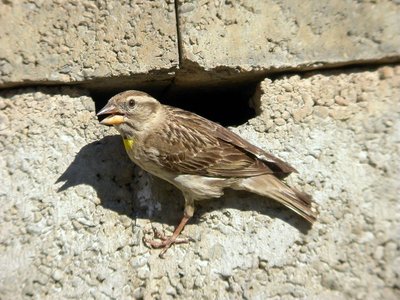
Le moineau soulcie - PNE - Combrisson Damien FaunaLover of old stones
The rock sparrow is a sedentary bird. It generally settles in well-exposed, agricultural areas where there are lots of stones, stone terraces, ruins, piles of stones, old buildings. This southern sparrow can be found up to an altitude of 2000 m provided there is an open landscape and many mineral elements. It nests in the hole of a rock, in a wall and sometimes under the roof of a house. It will then mingle with the house sparrow. A sociable bird, it lives in small, dispersed colonies.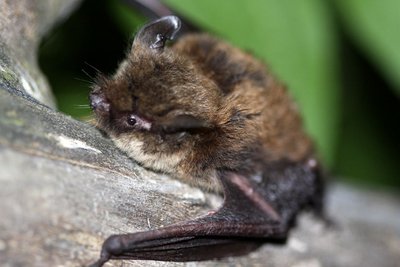
Le murin à moustaches - PNE - Corail Marc FaunaWhiskered bat
The whiskered bat is a dark-faced bat. It is quite common in certain mountain regions and is one of the most frequent species after it cousin the common pipistrelle. It likes trees, be they on the banks of a river or in the high altitude forests, but it is also possible to catch sight of them in gardens and villages such as the hamlet of Casset. This small mammal lives on flying insects and thus helps in controlling their numbers. Like all mammals, the female feeds her sole offspring with her milk.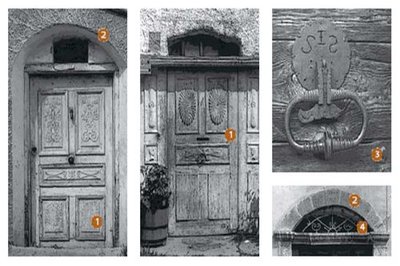
1.Ventaux de porte décorés, 2.Arcs en plein-cintre, 3.Marteau en bronze forgé, 4.Imposte en éventail - PNE  Architecture
Doors and courtyards
As you stroll through the streets of Le Casset, some house doors will attract your notice, as they bring together most of the decorative elements of the facades. Made of larch wood, they have been moulded or sculpted with geometric or floral patterns and have a tympanum above them, often with a grating. Behind the door is the courtyard, the shared entrance for people and animals. The way people lived and organised their homes resulted in this single entrance, an area giving access both to the stable and to the living quarters. Between the world inside and outside, the courtyard provided a passageway, insulation, but also storage space.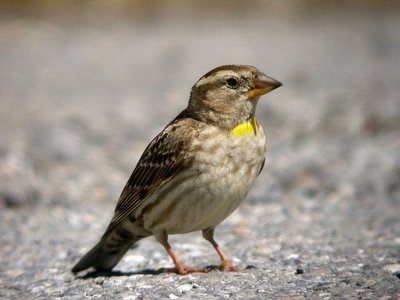
Le moineau soulcie - PNE - Combrisson Damien FaunaRock sparrow
The rock sparrow is here at the north-western limit and highest altitude of its home territory and regularly nests in the area. The species is in decline nationally and is on the endangered ‘red’ list in Rhône-Alpes and is being studied in the PACA region. People sometimes pay little attention to house sparrows since they are so familiar, which is a pity. The rock sparrow is bigger and although its plumage is similar to a female house sparrow’s, its call sets it apart at once: pi-yip or pi-yui or even a chay sound that is similar to a brambling’s!
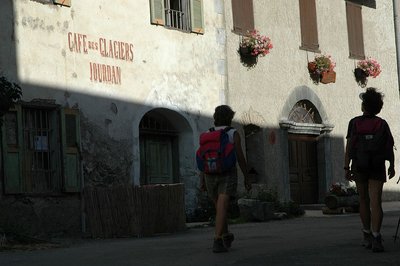
Dans le hameau du Casset - PNE - Masclaux Pierre HistoryLe Casset
At the entrance to the valley, Le Casset is a stone shell village surrounded by farming landscapes. Its name comes from the verb 'cassare' ('to break, to shatter' in late Latin), describing a place covered with stones. In fact there are many such villages in this mountain valley carved out by a vast glacier. Le Casset, on the left bank of the Guisane, is sheltered from avalanches beneath the watchful eye of the prestigious summits and glaciers that “move” in a different time scale from our own.
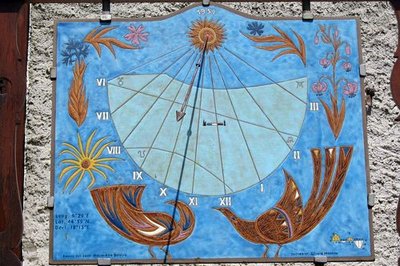
Cadran solaire au hameau du Casset - Claire Broquet - PNE ArchitectureSundials
As you walk through the village of Lauzet, you will see recently made sundials made in traditional style. Easy to see from the main village streets, they adorn the beautifully restored facades of the old houses.- Architecture
Saint Claude’s church in Le Casset
With its disproportionately high spire, the Casset church never goes unnoticed. Its four-sided Comtois steeple was modelled on the collegiate church in Briançon. The church is listed as a Historic Monument and is placed under the protection of Saint Claude. In its present condition, it dates from the 18th century. The previous building was constructed prior to the 16th century. Inside, the eye is immediately attracted by the choir ogives, creating an intimate atmosphere, particularly since the unusually large spire does not suggest an interior of such a small size. The choir was rebuilt in 1716-1717, probably after the previous chapel burnt down. Traces from this period can be seen on the keystone. The wrought-iron choir gate has the inscription "HM 1717", a date that can also be seen in the apse, on the wrought iron railing of the impost of the axial window, and on the baptismal font.
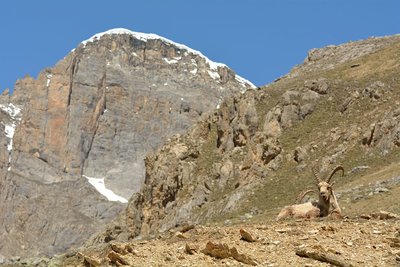
Bouquetin à l'Alpe du Lauzet - © Parc national des Écrins - Mireille Coulon FaunaThe Alpine ibex of L’Alpe du Lauzet
L'Alpe du Lauzet on the edge of the Massif des Cerces is the favourite wintering place for a colony of Alpine ibex. In 1959, when there were only ten animals left in France (in Vanoise), six Alpine ibex, four males and two females, were reintroduced from Switzerland, first to Le Combeynot on the right bank of the Guisane, then to Les Cerces. These six individuals multiplied and the total population has now reached around 300. While their territory is restricted in winter to save as much energy as possible and make the most of the sunny slopes, they are scattered in summer over all the mountain range and as far as neighbouring groups that they have gradually blended in with.
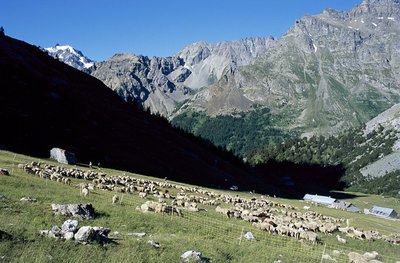
Troupeau de brebis à l'Alpe du Lauzet - © Parc national des Ecrins - Jean-Pierre Nicollet  Vernacular heritage
L'Alpe du Lauzet
L'Alpe du Lauzet is a mountain village at an altitude of 1,940 m, below the Aiguillette du Lauzet, which reaches 2,717 m, in the region of Monêtier-les-Bains. The village is aligned at mid-slope to avoid the avalanches that regularly fall into the bottom of the valley. The handful of houses were once used as summer pasture homes for the inhabitants of Le Lauzet in the Guisane valley. On the chapel door, a plaque recounts that five people were buried alive by an avalanche during the winter of 1892.
- Vernacular heritage
Madeleine Hospice
At an altitude of 1,810 m, below the present-day Col du Lautaret road, the Madeleine hospice helped travellers cross the pass in all weathers and provided pilgrims with a chance to rest on their way to Rome or the Holy Land. The foundation of the order of the Holy Penance in these buildings dates from 1228. There is a chapel on the site, and it is located on a former road from Briançon to Grenoble. An avalanche destroyed the Madeleine hospice in 1740, and the building was rebuilt, then abandoned, when the road to Lautaret was modernised.
 Panorama
View over the Pic de Rochebrune
The Guisane valley descends towards Briançon to the south-east. The view opens up in the distance towards the Massif du Queyras, with one of the summits clearly visible. The Pic de Rochebrune, at an altitude of 3,320 m, stands proudly above the Cervières valley, 10 km from Briançon and from the Guil valley in the Queyras region, linked by the Col de l'Izoard (2,361m). This enormous dolomite rock bastion is accessible to experienced hikers, since the last part is somewhat steep and you need to use your hands to climb up in places.
- History
Le Massif de Combeynot, W. Brockedon
In the work by W. Brockedon, Illustrations of the Passes of the Alps, published in 1828, one of the engravings illustrating the Col du Mont-Genèvre shows, according to the title: Mont d'Arcines and the Val de Guisane from the Col du Lautaret (p. 25). The view is described as follows: "Across a deep ravine, the River Guisane is seen tumbling down the mountains from its source in the distant glacier of Mont d'Arcines, and thence flowing on to the Durance, through the narrow valley which is bounded by rugged and pinnacled mountains ". On the previous page, it says that "Le Casset is near the foot of the Glacier de Lasciale, which descends from the Mont d'Arcines". So it is clear that Mont d'Arcines is the present-day Les Agneaux mountain, and the Lasciale glacier is the Casset glacier, which must have reached much lower down. However, Paul Guillemin thinks that this is the first printed depiction of La Meije, and he marks it as n° 2 in his inventory (PG: 2). This was an error of interpretation on his part. In fact, it is the view over the Massif du Combeynot from the old Lautaret road. From this viewpoint, Les Agneaux (or Mont d’Arcines) cannot be seen.

Le col du Lautaret vu depuis Laurichard - © Parc national des Ecrins - Cyril Couriser PassThe Col du Lautaret climate
The Col du Lautaret is a climatic limit between the northern and southern Alps. It works like a barrier for rough weather, and it is not unusual that the Romanche valley to the west is filled with snow, while the Guisane valley to the east is dry, and vice versa. The Romanche valley runs down directly to the region of Grenoble, where the climate at the same altitude has twice as much precipitation, and so works as a corridor for rough weather coming from the area. This explains why the Col du Lautaret and the neighbouring Col du Galibier mark the limit for many plants with Mediterranean affinities. This transitional position is characterised by a climate with a strong Mediterranean influence in the direction of Briançon.
 Geology and geography
The tuffaceous ground of the Col du Lautaret
Tufa is a sedimentary rock produced by the precipitation of limestone dissolved in water, which comes to the surface from a water course or spring. In the course of this mineral solidification of carbonates, a great deal of plant or animal debris is trapped and becomes fossilised. This is how an excavation operation carried out between 2008 and 2010 was able to reconstruct the flora on the pass when the rock was deposited long ago. Tufa is also a soft rock which can be sculpted easily and was highly valued for the construction of public buildings or the houses of local dignitaries. The church of Villar d'Arène is built from tufa from the Le Lautaret quarry, a resource it almost exhausted. The tufa zone of Le Lautaret is listed as a habitat of community interest within the Natura 2000 site «Combeynot Lautaret Ecrins».
Forecast
Altimetric profile
Sensitive areas
Alpine ibex
- Impacted practices:
- Aerial, , Land, Vertical
- Sensitivity periods:
- JunJulAugSep
- Contact:
- Parc National des Écrins
Julien Charron
julien.charron@ecrins-parcnational.fr
Alpine ibex
- Impacted practices:
- Aerial, , Land, Vertical
- Sensitivity periods:
- JunJulAugSep
- Contact:
- Parc National des Écrins
Julien Charron
julien.charron@ecrins-parcnational.fr
Alpine ibex
- Impacted practices:
- Aerial, , Land, Vertical
- Sensitivity periods:
- JunJulAugSep
- Contact:
- Parc National des Écrins
Julien Charron
julien.charron@ecrins-parcnational.fr
Peregrine falcon
- Impacted practices:
- Aerial, Vertical
- Sensitivity periods:
- FebMarAprMayJun
- Contact:
- Parc National des Écrins
Julien Charron
julien.charron@ecrins-parcnational.fr
Golden eagle
- Impacted practices:
- Aerial, , Vertical
- Sensitivity periods:
- JanFebMarAprMayJunJulAug
- Contact:
- Parc National des Écrins
Julien Charron
julien.charron@ecrins-parcnational.fr
Golden eagle
- Impacted practices:
- Aerial, , Vertical
- Sensitivity periods:
- JanFebMarAprMayJunJulAug
- Contact:
- Parc National des Écrins
Julien Charron
julien.charron@ecrins-parcnational.fr
Golden eagle
- Impacted practices:
- Aerial, , Vertical
- Sensitivity periods:
- JanFebMarAprMayJunJulAug
- Contact:
- Parc National des Écrins
Julien Charron
julien.charron@ecrins-parcnational.fr
Golden eagle
- Impacted practices:
- Aerial, , Vertical
- Sensitivity periods:
- JanFebMarAprMayJunJulAug
- Contact:
- Parc National des Écrins
Julien Charron
julien.charron@ecrins-parcnational.fr
Golden eagle
- Impacted practices:
- Aerial, , Vertical
- Sensitivity periods:
- JanFebMarAprMayJunJulAug
- Contact:
- Parc National des Écrins
Julien Charron
julien.charron@ecrins-parcnational.fr
Recommandations
Protect yourself from the sun in high summer, even on more shaded routes. Take sun cream.


Information desks
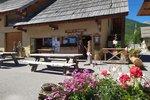
Tourist information office of La Clarée
Hameau de Ville-Haute, 05100 Névache
The office welcomes you from Monday to Saturday , from 9 a.m. to 12 p.m. and 1:30 p.m. to 5 p.m all year. The office is open every day during the summer holidays

Route de Grenoble, 05220 Le Monêtier les Bains
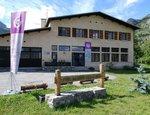
Information center "le Casset" (summer only)
Le Casset, 05220 Le Monêtier-les-bains
At the entrance of the hamlet of "le Casset" and near the core zone of the Park, a stop before or after your walk... Projections, documentation, books of the Park. Free admission. All animations of the Park are free unless otherwise stated.
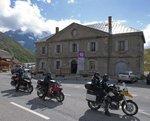
Information center "Col du Lautaret" (summer only)
Col du Lautaret, 05220 Le Monêtier-les-bains
Under the gaze of the Meije (3983 m) and surrounded by beautiful meadows celebrated in the great names of botany, the former hospice of the Lautaret called "refuge Napoleon" houses the reception and information Park center - Projections, documentation, books of the Park. Accessible to people with reduced mobility. Free admission.
Transport
Auvergne-Rhône-Alpes bus lines : https://carsisere.auvergnerhonealpes.fr/
Isère bus lines : https://www.itinisere.fr/
Access and parking
From Grenoble, take the D1091 towards Bourg d'Oisans and then continue straight on towards La Grave and on to the Col du Lautaret. Be aware that the Chambon tunnel is closed. You will have to take the emergency road.
Parking :
Source

Report a problem or an error
If you have found an error on this page or if you have noticed any problems during your hike, please report them to us here: