
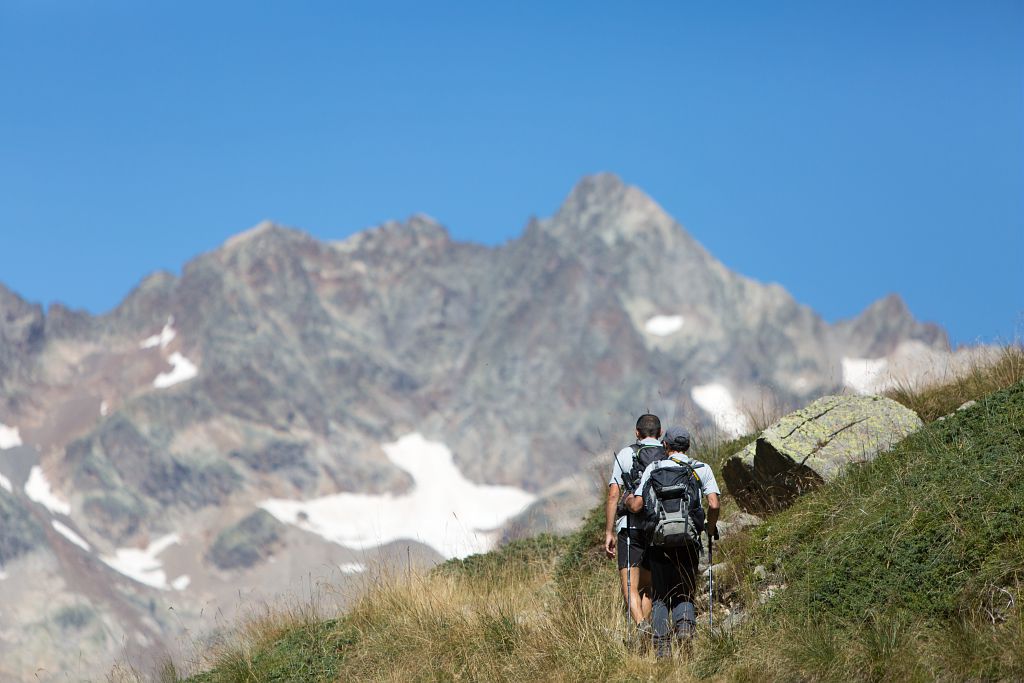
Tour of Pic de Valsenestre
 Medium
Important information
Dans le Parc national des Écrins, les sentiers sont généralement praticables de la mi-juin à fin septembre.
Toutefois, les périodes d'accessibilité des itinéraires et les dates de pose des passerelles varient d’une année à l’autre en fonction de l’enneigement, des dégâts survenus en hiver et des conditions météorologiques. Par ailleurs, l’état des sentiers n’est pas contrôlé quotidiennement et peut évoluer rapidement après un évènement météorologique (orage, crue...). Il est nécessaire de se renseigner auprès des maisons du parc national et des offices de tourisme du territoire avant votre sortie. Pendant la randonnée, en cas de passage dégradé ou dangereux, faites demi-tour et signalez-le.
5 steps

Description
- Departure : La Chapelle-en-Valjouffrey
- Arrival : La Chapelle-en-Valjouffrey
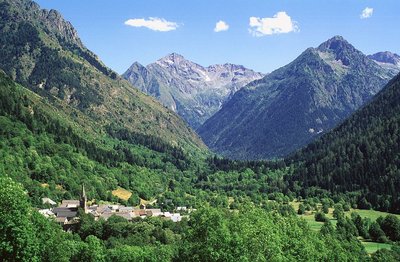
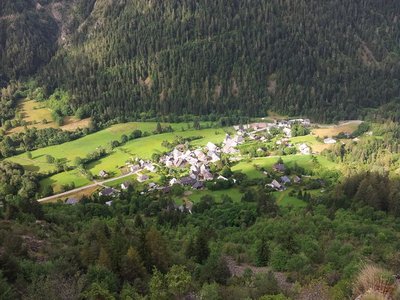
- Towns crossed : Valjouffrey
36 points of interest
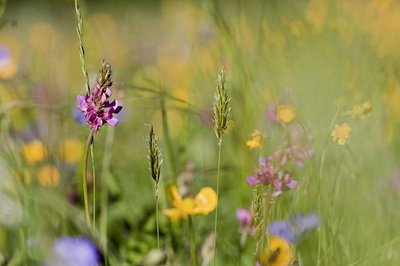
Prairie de fauche - Marc Corail - PNE  Flora
FloraNatural Hayfields
Agricultural specialists consider a meadow as natural if it has not been ploughed or fertilised over the last ten years. This is the case for those that you will see, surrounded by hedges, at the start of the hike. The meadows have an important variety of plant life and consequently attract multitudes of pollinating insects, including domesticated bees of course.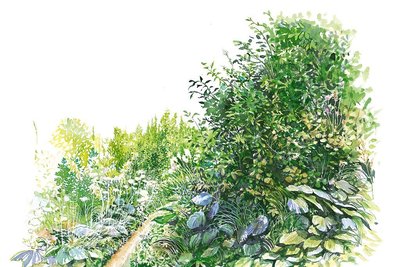
Mégaphorbiaie - Pierre-Emmanuel Dequest -PNE FloraTall herb fringe communities
Tall herb fringe communities form a landscape linked to very precise conditions in terms of climate (wet summers and snowy winters), topography (long ubac slopes where névé sometimes remains on the ground deep into the summer), altitude (subalpine tier from 1600 to 2100 metres) and soil (unsaturated soils with large water reserves).
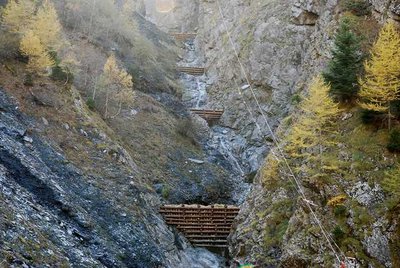
Barrages du torrent du Béranger - Samy Jendoubi - PNE  Water
WaterTimber dams
In the Combe des Echarennes, as you take the path to the left, you can see, in the gorges of the Béranger mountain stream, wooden dams made by the RTM (mountain terrain restoration department of the National Forests Office) to hold back the flow of debris carried down from the mountains during heavy rain and floods.
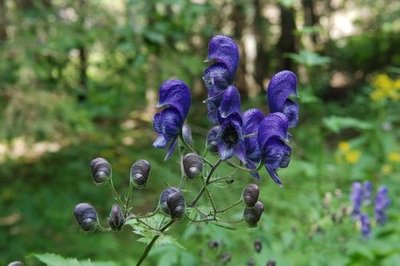
Aconit paniculé - Bernard Nicollet - PNE FloraMonkshood
This is a typical plant in tall herb fringe communities, measuring 50 to 100 cm. It has royal blue flowers shaped like helmets and grouped together in loose bunches. Their particularity is that they are highly toxic! Herbivores are aware of this and don’t eat them.
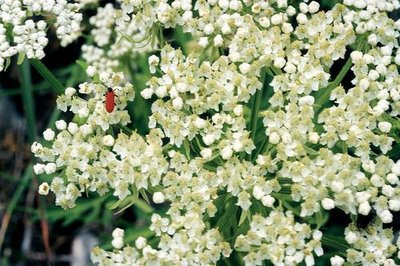
Pleurosperme d'Autriche - Bernard Nicollet FloraPleurospermum austriacum
This robust hardy perennial with a thick, hollow and grooved stalk belongs to the parsley and carrot family, and can grow from 60 to 150 cm high. Its large umbels of white flowers bloom from July to September. Very little known, in France it only grows in the Alpine areas and for this reason is worthy of attention.
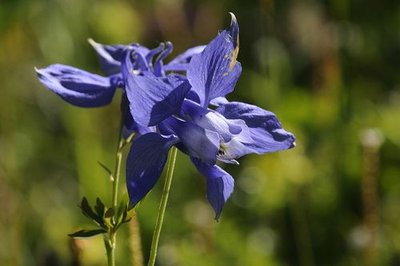
Ancolie des Alpes - Mireille Coulon - PNE FloraAlpine columbine
This is an uncommon and protected species, measuring 30 to 60 cm. The flowers are quite large and have a magnificent blue colour, blossoming at the head of the stem, and are the only ones with afive petals in the corolla. They are not to be confused with the common columbine, which has smaller flowers and is more widespread.
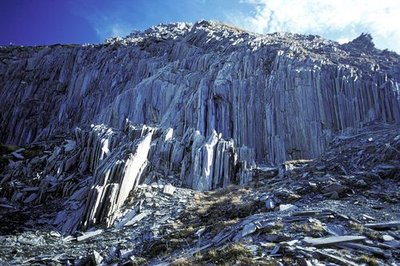
Les orgues au col de Côte Belle - Lucien Tron - PNE  Geology and geography
Côte Belle organs
A striking geological phenomenon, the big organs , also known as the big library, were formed when the Alps were born. They were formed by thin grey-blue limestone sheets and by more highly eroded soft schistose marl. A series of perpendicular cracks in the layers divide the slabs into remarkable columns.
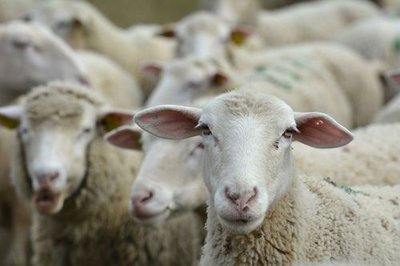
Troupeau de brebis - Mireille Coulon - PNE  Pastoralism
Flock of sheep
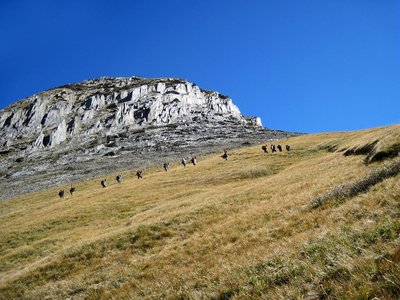
A flock of sheep belonging to local farmers graze at the summit of the mountain pass near the Pic de Valsenestre. In summer these animals with their thick woolly coats can enjoy the shade of the willows that you can see just before arriving at the col (alt. 2220 m).
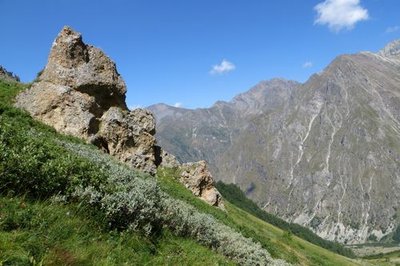
Saule soyeux - Bernard Nicollet - PNE FloraEuropean violet willow
This is a shrub in the subalpine tier. It is less than one metre tall and grows in small groups on the ubac. At lower altitude, it may grow taller. You can recognise it from a distance through its characteristic shiny, silvery colour and its growth in circular beds. Adult leaves feel very silky on both sides.
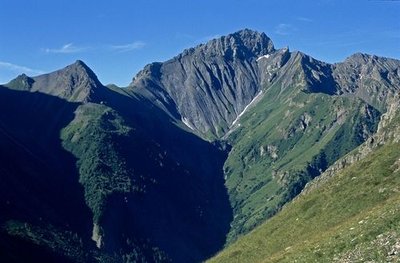
Pic de Valsenestre - Bernard Patin - PNE  Panorama
Landscape of the cirque de Valsenestre
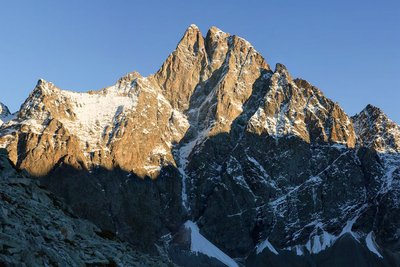
From the mountain pass, climb the little summit above to better see the landscape which shows the cirque de Valsenestre : on the left is the Signal du Lauvitel (2901m) and the Clapier du Perron (3169m), the mountain pass at Muzelle (2613m) where the GR54 is. At this level you can really see a geological fault separating the Grandes Rousses which are granite from the Muzelle block in gneiss. On the right, the principal summits are the Roche de la Muzelle (3465 m), and the pointe Swan (3294m). Le col de Côte-Belle separates the Pic de Valsenestre (2752m) on the left from the l’Aiguille des Marmes (3046 m) on the right.
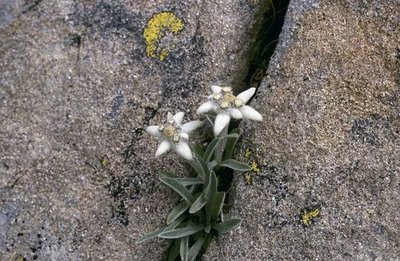
Edelweiss - Marie-Geneviève Nicolas - PNE FloraEdelweiss
In Latin léontopodium signifies the foot of the lion which is the general shape of the edelweiss. By looking at it closely, you realize that it is not one flower but a group of 5 to 10 flowers grouped in a flower head. The edelweiss is in the astéracées family like dandelions. It is a white plant, milky and perennial growing in rocky alpine meadows at subalpine level up to 2900 m. It often mixes with the Alpine Aster. The emblem of numerous guides, it symbolizes the high mountains and represents strength in the language of flowers...
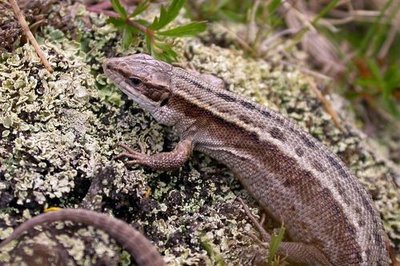
Lézard vivipare - Damien Combrisson - PNE  Fauna
FaunaViviparous Lizard
The viviparous lizard can be distinguished from the wall lizard by its rounded muzzle. It is capable of living at an altitude of 2500m and you will most often see them in the meadows. It likes to warm itself in the sun, resting on the grass or the dry moss to hunt grasshoppers, crickets or spiders. During the winter, it buries under the ground where in a lethargic state it can survive negative temperatures. The viviparous lizard is named like this because the females keep their eggs in their abdomen up until they hatch. So the young are completely formed when they are born, it is an adaptation to the cold environment.
 Geology and geography
New path
The last section of the path allows access to the mountain pass has required numerous days of maintenance since its creation. In fact the unstable character of the soil associated with the steepness of the slope have made it necessary for the rangers to create wooden benches to contain the weight of the earth.. In Autumn 2012, it was decided to create a new section of the path by using part of a sheep track further East in the direction of the Marmes mountain pass. The work was carried out by a team creating 50 m per day during 26 days with pick-axes and courage. In total, it is a section measuring 1300 m which has been created, which makes the path less steep and much more stable.
 History
Paravalanche
In 1961 and 1962 big avalanches descended as far as the riverbed of the Bonne, threatening the houses in the hamlet at Désert en Vajouffrey. In 1982 major works enabled the construction of a paravalanche in order to increase the safety of the hamlet and the prairies, by diverting possible threats coming from the Côte-belle valley.
 Know-how
Hay Fields
The hayfields where the grass is mown have been improved over the generations by the extraction of stones which have then been stacked in piles which are known locally as “clapiers”. These piles of stones mark the boundaries between the crops and the flocks.
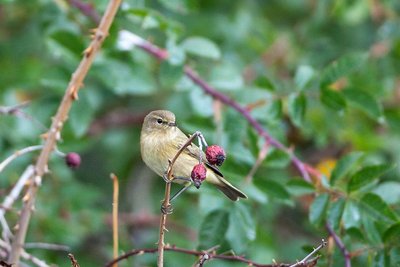
Pouillot véloce - PNE - Saulay Pascal FaunaCommon Chiffchaff
A bird that you hear but do not see, the Common Chiffchaff nicknamed the "écu counter”. Its song, which is very easy to identify, evokes the sound of gold coins falling one by one in to the cash register as they are counted. Green-brown and greyish on top, its feathers are off white underneath, beige on the chest with a barely visible pale brow.
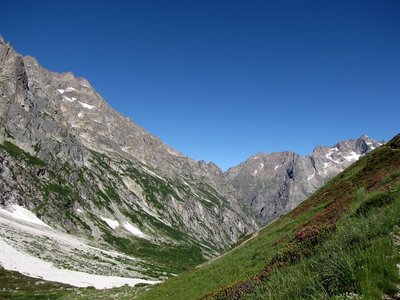
Le vallon de Font Turbat - PNE - Nicollet Bernard Geology and geographyGlacial valley
The high valley of Bonne, or Font Turbat, is a typical glacial valley in the form of a trough with morainic bars marking the stages of the retreat of the glacier. The lower shelves or glacial shoulders are suspended above the trough 500 to 600 m in size of which the steep sides dominate the layers of scree and the alluvial fans (mass of debris transported by the water It finishes upstream by a vast cirque at the imposing foot of the rocky wall of theOlan (3 564 m), hemmed in at its foot by the Maye black glacier. At the time of the last glaciation of Würm, 10 000 years ago , the two glaciers of Font Turbat and Maye joined together and fed into a powerful glacial tongue in the Bonne valley. It formed the valley in to the shape of a basin by scraping and polishing rocky walls in the granite. The lowest moraines, masses of rocky debris transported by the glaciers are situated around Châtellerat cabin.
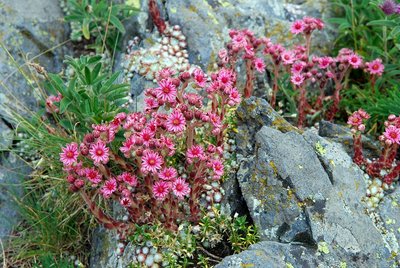
Joubarbe à toile d'araignée - PNE - Warluzelle Olivier FloraCob web House Leek
Thick leaves organized in tight rosettes shoot up towards the sky twists of white hairs which are quite similar to the traps woven by certain spiders. Not less competitive than the rhododendrons, The Cobweb House Leek is adapted to resist drought. The main rosette and the smaller shoots well grouped together; make a real water reserve which is then marvelously stocked by the fleshy leaves... It also develops many kinds of hairs that collect the dew.
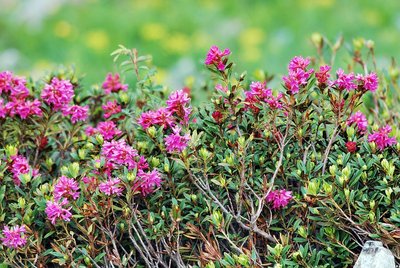
Rhododendron ferrugineux - PNE - Vincent Dominique FloraRhododendron
Nicknamed the rose of the devil, the rhododendron ferrugineum has the capacity of placing itself between the rocks and boulders where the soil is rare. It keeps its stiff leaves which are dark green and shiny and rust coloured underneath right through the winter. It gets its name from this rust colour. Every year, between the end of July and the beginning of August its branches are crowned with bouquets of flowers coloured rose and purple.
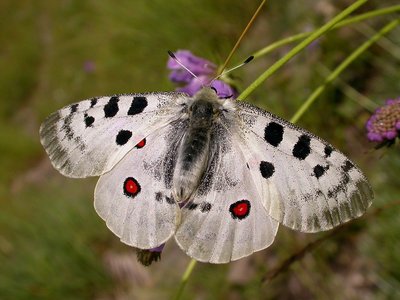
Grand Apollon - PNE - Combrisson Damien FaunaApollo
A big white butterfly with black and red markings is not shy; the Apollo is easy to see between the middle of June until the end of July... It lays its eggs on the White Stonecrop, a perennial plant with white flowers living on scree and gravel... The male Apollo is born before the female and waits patiently to procreate. It is to be noted that it benefits from national protection; its transport and destruction are forbidden.
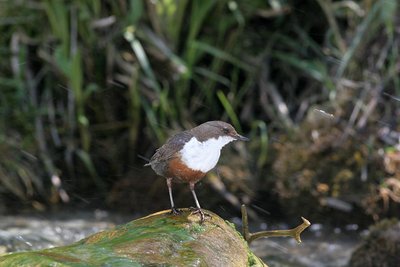
Cincle plongeur au printemps dans un torrent - PNE - Chevalier Robert FaunaWhite-throated Dipper
Easier to observe than the Common Chiffchaff, the White-throated Dipper lives beside rivers and mountain torrents... A little red and grey bird, with a short tail, it has a fine beak, a white mark on the chin and on the chest. This astonishing sparrow has the particularity of being able to walk under the water against the current in search of food. It flattens itself down and grips on to the bottom with its claws, opens its eyes, which are protected from the flow by a fine membrane and spots worms, larvae, little crustaceans and fish.
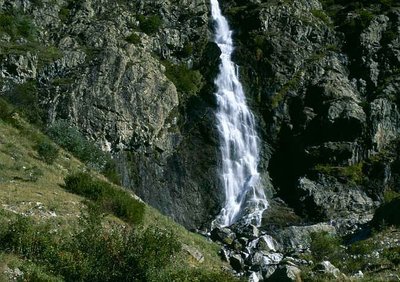
Cascade de la Pisse - PNE - Nicollet Jean-Pierre WaterCascade de la Pisse
With its origin in the high crystalline ground, the torrent bounces down waterfalls and cascades until it meets the Pisse at a height of 40 m.
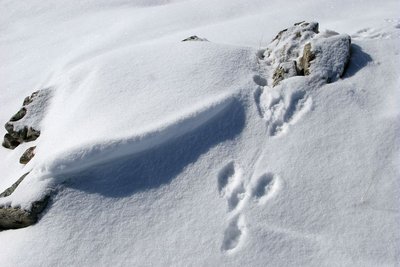
Trace de blanchon dans la neige - PNE - Corail Marc FaunaMountain Hare
There are many Mountain Hares or Blue Hares that observe you; the opposite is rarely true... Brown in summer, white in winter, the Mountain Hare is present across the Alps. Like the European Hare from which it differs being smaller, with a white tail and shorter ears, It leaves Y shaped tracks in the snow due to the way it moves in little jumps (it brings its back legs in front of the front legs.). However, it is often its tracks and its little dry, round droppings that indicate its passage. Its large fluffy feet are like snowshoes enabling it to stay on the surface of the snow even when it is powdery.
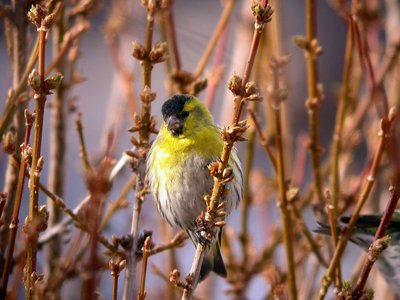
Tarin des aulnes - PNE - Combrisson Damien FaunaEurasian Siskin
Feeding principally on the seeds of the Alder, the Birch and conifers, the Eurasian Siskin only nests in conifer forests in the mountains of the Northern Alps during the reproduction period... The male, more colourful than the female, can be recognized from its bright green-yellow feathers its black forehead and its little white bib under the beak. It is in winter, that you can observe them, sometimes in big groups, descended from the mountains in search of food...
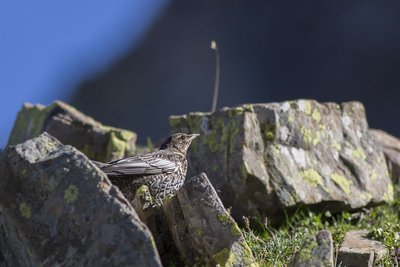
Jeune merle à plastron - PNE - Saulay Pascal FaunaRing Ouzel
The Ring Ouzel is easy to identify: it endorses the black feathering of the blackbird, but is distinguished from it by the big white bib on the chest, the light borders of its wings and abdomen. Insects, grasshoppers, worms and berries make up its menu. This shy mountain blackbird, that flies fast, lives at the edge of forests of larch, Scots pines, Spruce and Swiss Pines pins at an altitude of between 1 000 to 2 500 m. Present in the mountainous massifs it nests in the lower branches or in the hollow trunk of a tree, a crack in the rock or building. Essentially a migrator, the Ring Ouzel hibernates in Spain or in Northern Africa. It comes back to the Alps from the month of March.
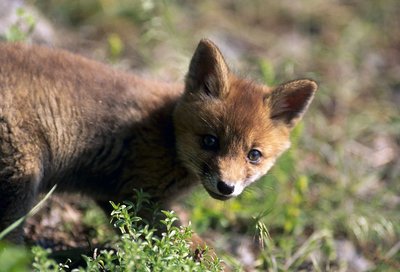
Renardeau - PNE - Chevalier Robert FaunaRed Fox
The Fox was originally called the goupil in French and this animal was the central character of the hugely famous “novel” written in the 12th century about a goupil called "Renart" (later “Renard”), who was, a clever knight tricking and making fun of the clergy and the powerful who were unable to deal with the people. Renart made fun of them and was sometimes cruel. He was so popular that his name became that of the animal species he portrayed. Another literary reference to this animal is by Jean de la Fontaine whose character « Maître Renard » features in twenty of his fables...
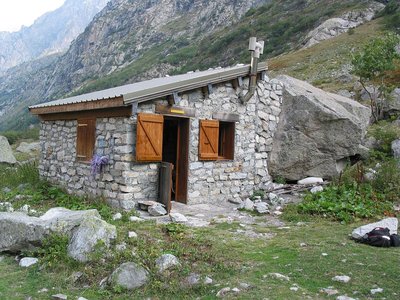
Cabane pastorale du Châtellerat - PNE - Nicollet Jean-Pierre  Hut
HutChâtellerat Cabin
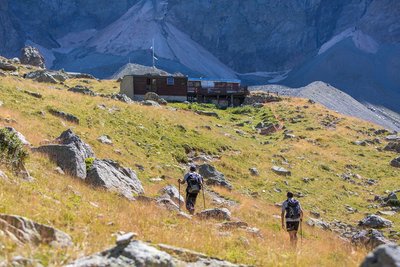
In 1908, Châtellerat pastoral cabin was hastily built by the community of Valjouffrey. Destroyed several times in avalanches, is still sheltered numerous mountaineers. It was rebuilt in 1921 in a less exposed place and already ideas about a « real » refuge were growing.
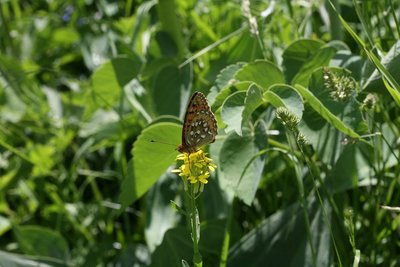
Papillon grand nacré - Bernard Nicollet - PNE FaunaDark green fritillary
Thanks to its impressive wingspan, the dark green fritillary makes its presence noticed! The top side of its wings is a beautiful orangey colour embellished with black spots. Underneath, they are marked with bands of mother-of-pearl against a background of greenish scales. This is a large butterfly with a wingspan of 50 to 60 cm. It is relatively common but is becoming less so due to loss of habitat, caused by changes in farming practices. In fact, its caterpillar which is black dotted with orange spots along its sides, essentially feeds on violet leaves which are only found in extensively grazed meadows.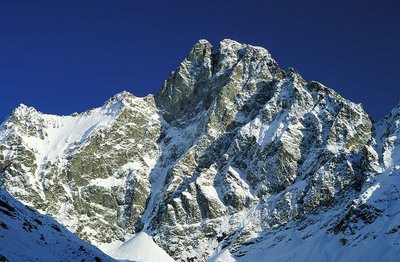
L'Olan, versant nord-ouest - PNE - Nicollet Jean-Pierre  Top
TopPic de l'Olan
It was on the 29th June 1877 that Coolidge, with Christian Almer father and son, carried out the first ascent of the pic de l'Olan. On the 5th August 1980, Arthur Cust with Pierre Gaspard and Roderon opened the Northern ridge. At that time the bivouac was still obligatory at the bottom of the Bonne valley.
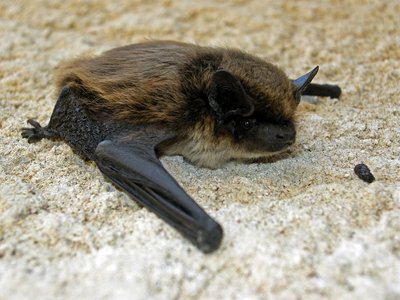
Vespère de savi - PNE - Combrisson Damien FaunaSavi Pipistrelle Bat
With a small size, and a contrasted coat, an off white abdomen and a golden brown back, Savi’s Pipistrelle can be recognized by the black membranes, it’s rather pointed muzzle and at the end of its tail from which several vertebrae are visible by the uropatagium, a skin membrane situated between the two hind legs... With a calm nature, this bat is a rock species mainly from the South, but it can also reach the high mountains at an altitude of more than 3 000 m.
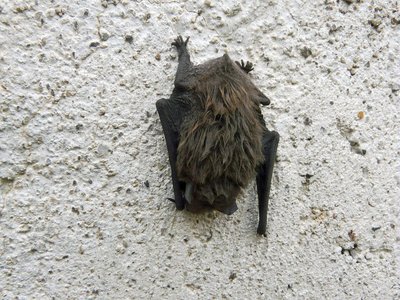
Pipistrelle commune - PNE - Nicollet Jean-Pierre FaunaCommon Pipistrelle
Brown with relatively short ears, the Common Pipistrelle and the Soprano Pipistrelle fight over the title of the smallest bat in Europe... The Common Pipistrelle can be seen in very diverse environments even above an altitude of 2 000 m At the time of Jules Ferry, school books boasted about the merits of bats .In fact, insectivores, they consume every day a quarter to a third of their own body weight in mosquitoes and other insects.. They emit ultra-sounds which are inaudible to the human ear but detectable thanks to a captor. This technique enables them to orient themselves when moving about at night to capture their prey. They can often be seen around street lighting hunting the insects that have been attracted by the light.
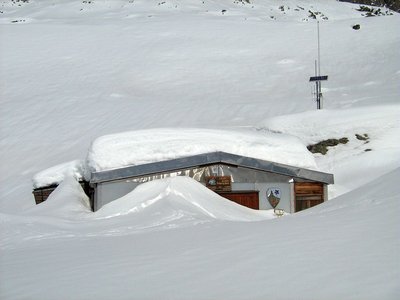
Le refuge de Font Turbat sous la neige - PNE - Albert Christophe HutFont Turbat Refuge
During the summer of 1923, the guide Célestin Bernard took charge of the construction of the refuge at Font Turbat. Several great mountaineering names are associated with it like Guery, Ripert, Frendo, Fourastier, Boell, who came to explore the mountains at Valjouffrey. In 1934, Devies and Gervasutti traced a historic itinerary in the North-West face of the Pic de l'Olan. 22 years later, the direct Couzy-Desmaison (ED) was opened to the left of the previous one, surmounting the steepest part of the face. The construction of the refuge As it stands now dates from 1962. It was extended and renovated in 1996-1997.
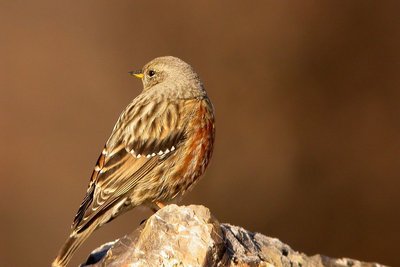
Accenteur alpin dans les rayons du soleil couchant - Damien Combrisson - PNE FaunaThe alpine accentor
The alpine accentor is a bird just slightly bigger than a sparrow, very hardy, grey in colour but speckled with russet on a grey belly. It lives in open alpine meadows and feeds on the ground on the many invertebrates, often close to the snow line. You might also spy it near the refuge because comes for the crumbs dropped by hikers.When winter comes, the cold and the snow force it to drop down into the valley and it often comes to the villages, seeking the protection offered by houses.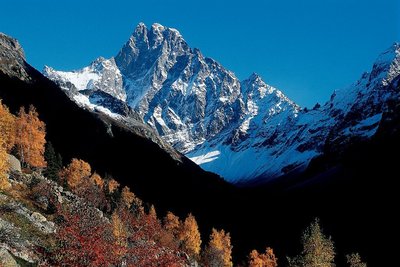
L'Olan qui ferme la vallée du Font Turbat - Parc national des Ecrins TopView of L'Olan
L'Olan stands at 3,564 metres above sea level and it consists of three peaks, the highest of which is the most northerly. For the first time L'Olan was climbed up to the top of the central peak on 8 July 1875, and then up to the top of the north peak on 29 June 1877, by the famous William August Brevoort Coolidge and his guide Almer. L'Olan is the iconic peak not only of the valley but also of the western part of the Les Écrins massif. From here, you can see the north slope which is one of the highest and wildest mountain faces in the Alps, like Les Drus (in the Mont-Blanc massif). Its name is a distortion of the word l’auran which used to mean «windy mountain».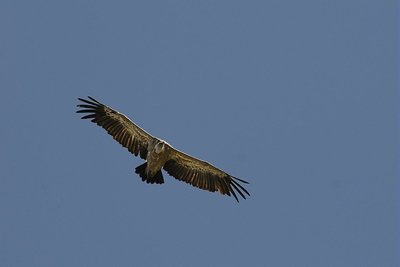
Vautour fauve en vol - Mireille Coulon - PNE FaunaThe griffon vulture
This enormous bird of prey with a wingspan of almost three metres is a relatively recent sight here in the mountains, after a reintroduction programme in the late 1990s. In summer, they constantly circle the skies in groups, on the lookout for the corpses of sheep or large wild mammal to take apart and devour. This impressive carrion bird plays a valuable cleaning-up role in the alpine pastures.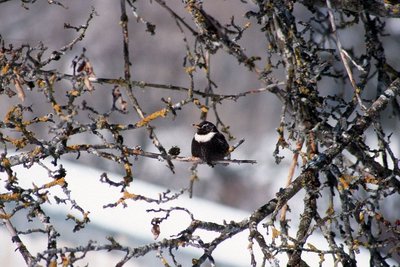
Merle à plastron - Pierre Dumas - PNE FaunaThe ring ouzel
The ring ouzel is easily identifiable: it sports the same plumage as the black ouzel but is distinguished from it by a large white bib on its breast and light edges on the feathers of its wings and underside. Its diet is largely made up of insects, grasshoppers, worms and berries. This shy, swift-flying mountain-dwelling ouzel lives on the edges of forests of larch, Scots pine, spruce and Swiss pine, at altitudes of between 1,000 and 2,500 metres. It nests in low branches or hollow tree trunks or crevices in rocks or buildings. Essentially a migratory bird, the ring ouzel overwinters in Spain or North Africa and returns to the Alps in March.
Forecast
Altimetric profile
Sensitive areas
Golden eagle
- Impacted practices:
- Aerial, , Vertical
- Sensitivity periods:
- JanFebMarAprMayJunJulAug
- Contact:
- Parc National des Écrins
Julien Charron
julien.charron@ecrins-parcnational.fr
Golden eagle
- Impacted practices:
- Aerial, , Vertical
- Sensitivity periods:
- JanFebMarAprMayJunJulAug
- Contact:
- Parc National des Écrins
Julien Charron
julien.charron@ecrins-parcnational.fr
Golden eagle
- Impacted practices:
- Aerial, , Vertical
- Sensitivity periods:
- JanFebMarAprMayJunJulAug
- Contact:
- Parc National des Écrins
Julien Charron
julien.charron@ecrins-parcnational.fr
Golden eagle
- Impacted practices:
- Aerial, , Vertical
- Sensitivity periods:
- JanFebMarAprMayJunJulAug
- Contact:
- Parc National des Écrins
Julien Charron
julien.charron@ecrins-parcnational.fr
Short-toed snake eagle
- Impacted practices:
- Aerial,
- Sensitivity periods:
- MarAprMayJunJulAugSep
- Contact:
- Parc National des Écrins
Julien Charron
julien.charron@ecrins-parcnational.fr
Recommandations
Reservations are recommended if you wish to sleep in a refuge.


Information desks
Maison du Parc du Valbonnais
Place du Docteur Eyraud, 38740 Entraigues
Reception, information, temporary exhibition room, reading room and video-projection on demand. Shop: products and works of the Park. Free admission. All animations of the Park are free unless otherwise stated.
Transport
Access and parking
More information

Source

Report a problem or an error
If you have found an error on this page or if you have noticed any problems during your hike, please report them to us here: